
Direct Answer: SB 222, the Heat Pump Access Act, requires California cities and counties to issue one unified permit for heat pump HVAC and water heaters, publish fees with no surprise costs, and cap heat-pump water heater permit fees at $150.
You quote a heat pump swap in Salinas, the homeowner likes the number, and then the permit question comes up. Nobody can say for sure what the city will charge or how long the counter will take, and the job sits there for two weeks while the homeowner thinks about it.
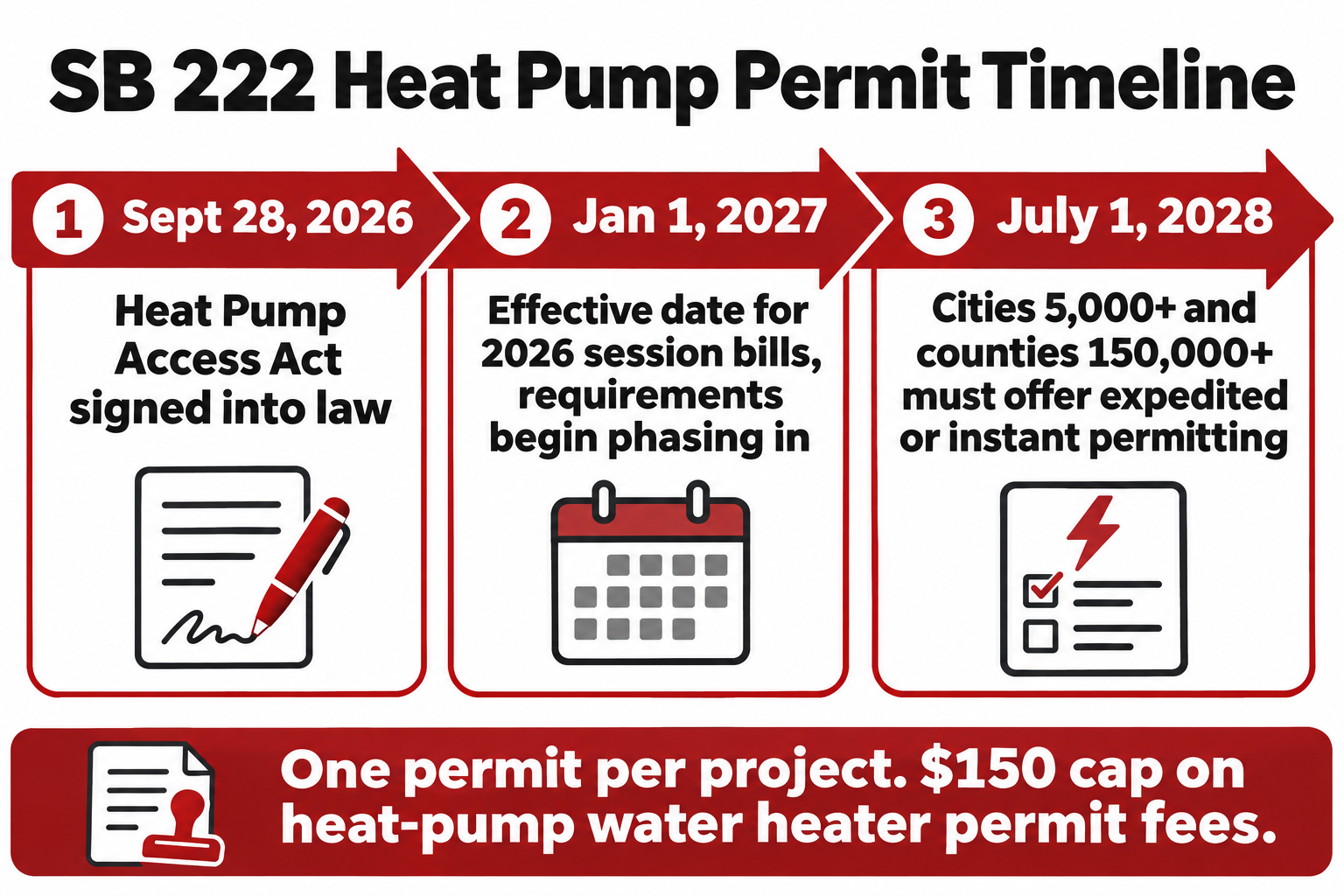
That friction is getting cut down. SB 222, the Heat Pump Access Act, was signed on September 28, 2026, and the first requirements land with the January 1, 2027 effective date for bills signed in the 2026 session.
Here is my position, and it is not about the paperwork. When permits stop being the reason a heat pump job stalls, the thing that decides who books the work is who the homeowner finds first on Google and in AI answers. Most contractors I talk to in Monterey County are not ready for that shift.
What the California heat pump permit new law SB 222 actually requires
SB 222 was authored by Senator Scott Wiener, and it is the first bill in the nation to streamline heat pump permitting statewide. It replaces a patchwork of requirements across roughly 600 jurisdictions with one standard.
What it puts in place:
- A single unified permit that covers both heat pump HVAC systems and heat pump water heaters, instead of separate filings
- One permit per project, so jurisdictions cannot stack plumbing, electrical, and structural permits on the same install
- Transparent permit fees with no surprise costs published up front
- A $150 cap on the permit fee for a heat-pump water heater
- Automated permitting for standard installations, with cities of at least 5,000 people and counties of at least 150,000 required to offer expedited or instant permitting for heat pump projects by July 1, 2028
- Limits on HOA restrictions and aesthetic requirements that have blocked outdoor units
The California Heat Pump Partnership covers the signed bill in detail. Reporting on the bill cited a SPUR finding that some jurisdictions require three permits for a heat-pump water heater, which can result in $400 in unnecessary fees.
Pieces phase in on different dates. The instant permitting requirement runs out to mid-2028, so do not promise a homeowner a same-day approval in January.
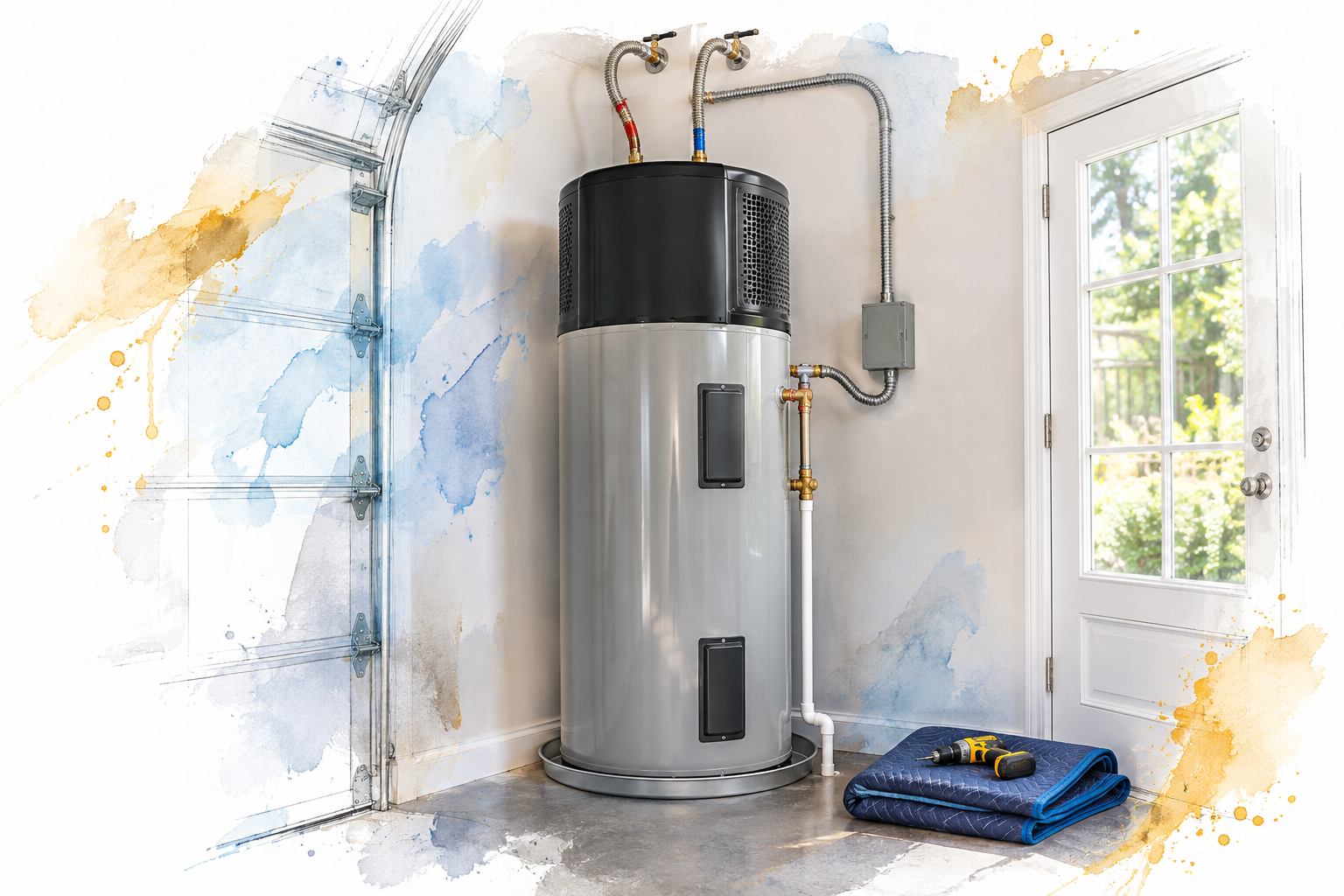
What changes on a Monterey County job, and what does not
Monterey County has roughly 435,000 residents, which puts it over the 150,000 threshold in the bill. Salinas, Seaside, Marina, Monterey, and Pacific Grove all clear the 5,000 person mark too. Carmel-by-the-Sea sits under 5,000, so the expedited permitting requirement may not reach it the same way.
For your estimates, three things get easier:
- The fee line stops being a guess. Published fees mean you can put a real number on the proposal instead of “plus permits, we will see.”
- One filing instead of three. Less office time per job, and fewer trips to the counter in Salinas or Monterey.
- Fewer HOA fights over where the outdoor unit goes, which matters in Carmel Valley and Pacific Grove.
What does not change: your license, your load calcs, your inspection. The work still has to pass. On the inspection side, video building inspections are becoming a right for heat pumps in California, which stacks with this nicely for crews driving between King City and the Peninsula.
And the biggest thing that does not change is this. Easier permits help every heat pump contractor in your service area at the same time, including the two down the street.
Before and after SB 222 at a glance
Here is the short version of what shifts for a standard residential heat pump install.
| Item | How it has commonly worked | What SB 222 requires |
|---|---|---|
| Number of permits | Up to three for a heat-pump water heater (plumbing, electrical, structural) | One permit per project |
| HVAC and water heater | Separate filings | A single unified permit covering both |
| Fee visibility | Varies by jurisdiction, add-ons common | Transparent fees with no surprise costs |
| Water heater permit fee | Stacked fees reported as high as $400 in unnecessary costs | Capped at $150 |
| Speed | Counter visits and multi week waits | Automated permitting for standard installs, expedited or instant by July 1, 2028 |
| HOA rules | Aesthetic restrictions could block outdoor units | Excessive restrictions limited |
The dates that matter
Three dates drive your planning for the next 18 months.
The demand window this opens, and who it goes to
When a homeowner no longer has to budget for a mystery permit bill, more of them pull the trigger. That means more searches for heat pump install, heat pump water heater replacement, and “is a heat pump worth it in Monterey” over the next two seasons.
Those searches do not get split evenly. Homeowners here either tap one of the three map listings or ask an AI assistant who to call, and AI tends to hand back one or two contractor names and skip everyone else.
What decides whether you are one of those names:
- Your site says the words out loud. If you install heat pumps, you need a real page about heat pump installs in your cities, not a line buried on a services page.
- Your Google Business Profile matches. Right categories, right service list, right service area, no duplicate listings competing with your own.
- Your reviews mention the work. Reviews that name the trade, the city, and the job carry more weight than a pile of generic five stars.
I see the duplicate listing problem constantly in this county, usually from an old office address or a profile a past marketer created. Two listings for one business will split your map visibility right when heat pump searches climb. This all sits under Demand Capture, getting the call before anyone else does.
What I would do in the next 60 days
You do not need a rebuild to move on this. You need your heat pump work to be findable and your proposal language to match the new reality.
A short list, in the order I would run it:
1. Check your local fee schedule in the cities you work most, Salinas and Monterey first, and see what they publish in January.
2. Rewrite your permit line on estimates. “Permit fee as published by the city” closes better than an open ended plus permits.
3. Build or fix one heat pump page per core city you serve, with the questions homeowners actually ask about cost, rebates, and noise.
4. Clean up your Google Business Profile categories and services so heat pump work is listed, and kill any duplicate profile.
5. Ask for reviews that name the job. A steady flow beats a burst, and there are ways to keep reviews coming without nagging customers.
If your site is on an older platform or has not been touched in three years, start with the page content and the profile. Those move fastest. A rebuild is a bigger call, and our Monterey website work explains what that project actually involves.
Frequently Asked Questions About SB 222 and Heat Pump Permits
Does SB 222 mean I can pull a heat pump permit online instantly starting January 1?
Not everywhere, and not on day one. The law requires automated permitting for standard installations and sets a July 1, 2028 deadline for cities of at least 5,000 and counties of at least 150,000 to offer expedited or instant permitting. Some jurisdictions will get there sooner than others, so check your local building department before you promise a timeline.
Does the $150 cap apply to heat pump HVAC systems too?
The cap stated in reporting on the bill is $150 for a heat-pump water heater permit. I would not quote a specific cap for an HVAC system until your local jurisdiction publishes its fee schedule under the new transparency requirement.
Does this help me if I am a plumber, not an HVAC contractor?
Yes. Heat pump water heaters are the piece of this bill with the clearest fee cap, and that is plumbing work in most shops. The single permit covering both HVAC and water heaters also helps general contractors and design-build firms running a whole-house electrification job.
Will easier permits actually bring me more calls?
It removes a reason homeowners stall, which usually lifts total demand in a market. Whether that demand reaches your phone depends on whether you show up on Google Maps and in AI answers for heat pump searches in your cities. The permit change is the same for every contractor in Monterey County, so visibility is the part you control.
What should I do with my current heat pump proposals before January?
Pull the vague permit language out. Once your city publishes fees with no surprise costs, you can put a real line item on the proposal, and that alone tends to shorten the gap between estimate and signature.
Planning for the heat pump season ahead in Monterey County?
If you want a read on where heat pump demand is heading in Salinas, Monterey, and the rest of the county, and where your visibility stands against the other shops bidding the same jobs, that is what a 30-minute strategy session with Phil Fisk’s team covers. We work with one company per trade in each service area, so we start by checking whether your territory is still open. You can reach us at (831) 789-9320 or request a market review at core6.marketing/work-with-us.