
Direct Answer: Contractor websites filled with generic AI content often see short-term ranking bumps followed by traffic drops and zero calls, because Google’s spam policies target pages that add no original value for users.
I’ve seen it play out the same way a dozen times on the Monterey Peninsula. A contractor hires someone who promises to ‘scale up the content,’ the website gets forty new pages in a few weeks, rankings tick up briefly, and then the phone goes quiet. The content looked real. It was just empty.
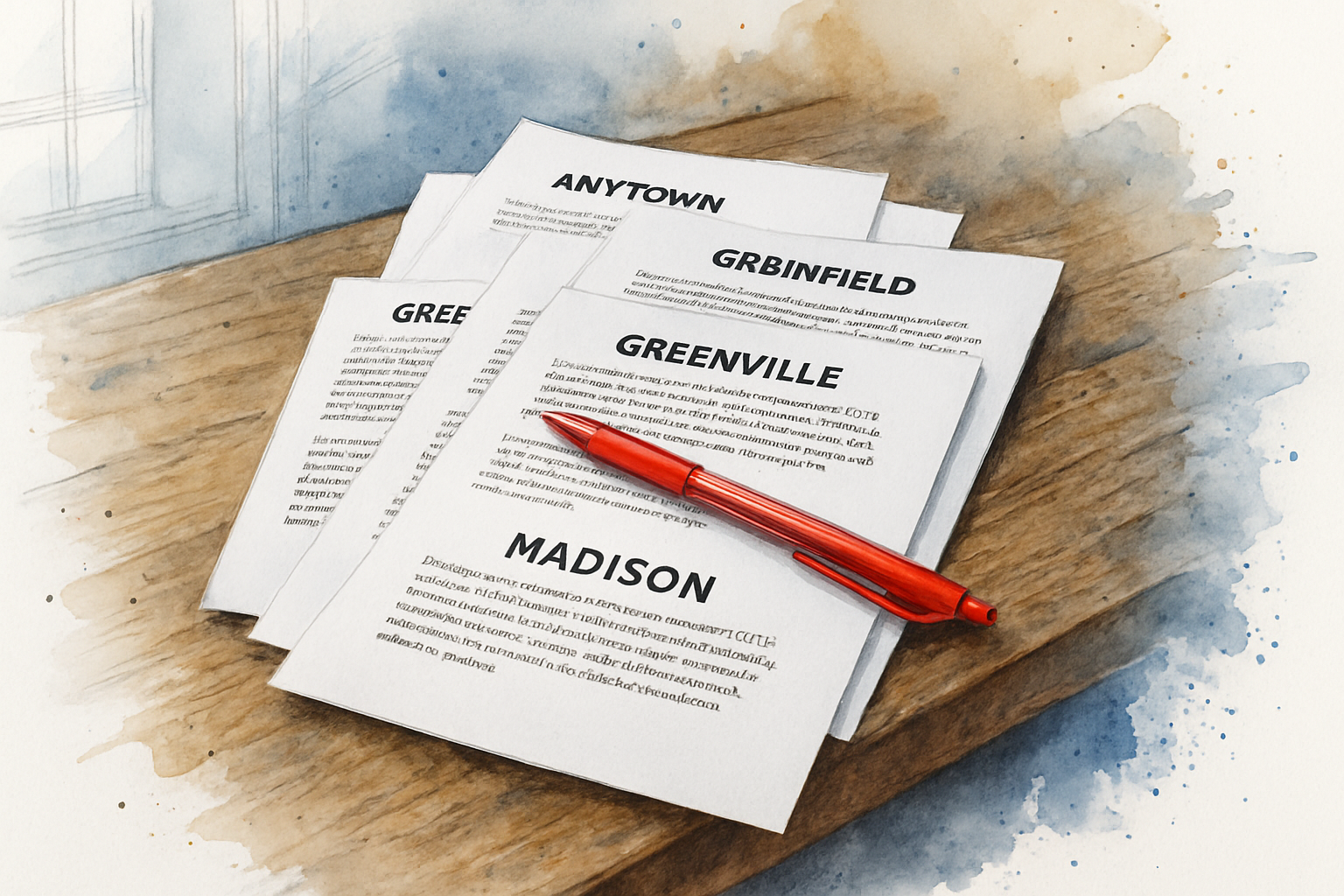
The economics of AI-generated content are genuinely hard to argue with on paper. One widely cited estimate puts the average cost of an AI-produced post at around $131, compared to roughly $611 for a human-written piece. That gap explains why contractor websites across Salinas, Seaside, and Carmel Valley are quietly filling up with pages that say the same things in the same order, city name swapped, nothing else changed.
But the cost comparison only makes sense if the content actually works. And for most home service contractors in Monterey County, it doesn’t, not in the way that matters, which is calls from real customers ready to book.
What Google Actually Penalizes (It’s Not What You Think)
There’s a misconception worth clearing up: Google does not penalize content because an AI model helped write it. The tool is not the problem.
What Google’s spam policies specifically flag is something called scaled content abuse, producing large volumes of pages that add no original information a user couldn’t find somewhere else. A contractor site with thirty city-swapped service pages, all reading identically, is exactly what that guidance was written to address. You can read the Google Search spam policies directly if you want the unfiltered version.
For a plumber in Salinas or a roofer in Watsonville, that distinction matters a lot. The risk isn’t that AI touched your content. The risk is that your content has nothing in it only your business could have written. If a page about water heater service in Marina reads exactly like a page about water heater service in Hollister, same structure, same sentences, different city, Google has no real reason to rank either one.
We’ve worked with contractors who came to us after exactly this scenario. The pages were indexed. Rankings showed up briefly. Then traffic flatlined, and the calls never really came. The content had done its job of filling space. But filling space and earning visibility are two very different things.
What’s Missing from Generic AI Content
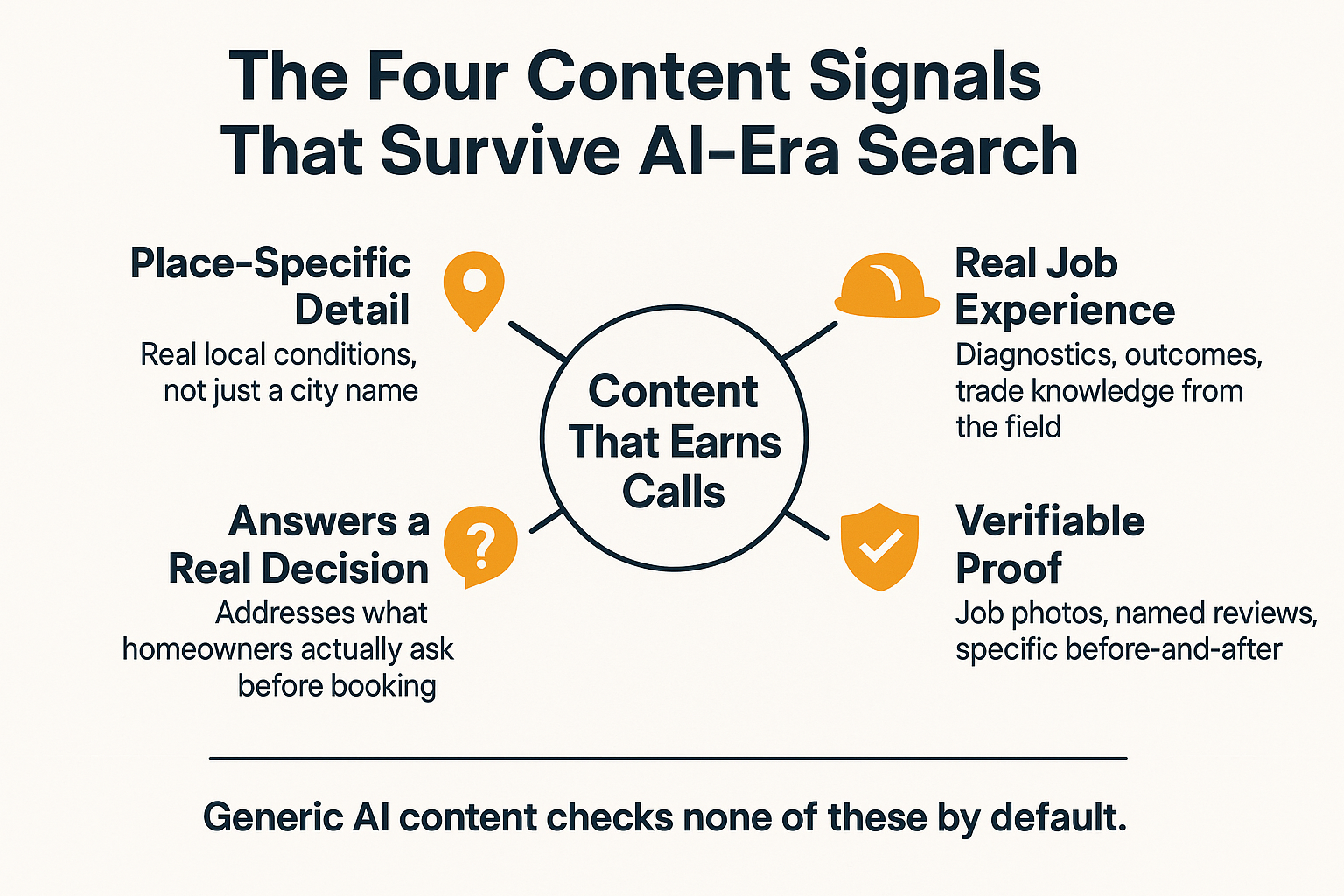
The content that actually survives in 2025 and 2026 has four things in common. I’ve seen this pattern hold across how local SEO actually works for home service contractors on the Central Coast and it tracks with what AI platforms are pulling from when they surface contractor recommendations.
The four things are:
- Specific to a place, not ‘we serve Monterey and surrounding areas,’ but actual local detail. Coastal humidity on the Monterey Peninsula accelerates coil corrosion in HVAC systems. That’s a real sentence an HVAC tech who works in Pacific Grove would write. A language model prompted to ‘write 500 words about HVAC service in Monterey’ won’t produce it.
- Rooted in real job experience, what actually happened on that job, what the diagnostic showed, what the fix was and why. That kind of detail can’t be assembled from general knowledge.
- Proof a homeowner can verify, job photos, specific outcomes, customer reviews with real detail. Not ‘we are a trusted local contractor.’
- Addressing a decision the homeowner is actually making, not a generic description of services, but an answer to the question they typed into Google or asked ChatGPT.
A page that checks all four is genuinely hard for a competitor to copy. And it’s the kind of content AI-powered search platforms cite when recommending contractors, because they’re looking for the same signals of credibility and specificity that Google rewards.
Generic AI content checks none of these boxes by default. That’s the actual problem.
Generic AI Content vs. Experience-Backed Content
This comparison shows what separates content that earns calls from content that fills space.
| Factor | Generic AI Content | Experience-Backed Content |
|---|---|---|
| Local detail | City name in headline only | Specific conditions, landmarks, or trade realities for that area |
| Job knowledge | General service descriptions | Real diagnostic details, common problems in this region, actual outcomes |
| Proof elements | Vague trust claims | Job photos, named reviews, specific before-and-after results |
| Homeowner decision focus | Lists services offered | Answers the question a homeowner is actually asking before they call |
| Replication risk | Any competitor can generate the same page | Only your business could have written it |
| AI search citation potential | Low, no source-worthy detail | High, specific, verifiable, useful to the reader |
Your Reviews Are Better Raw Material Than Any AI Prompt
One thing I keep coming back to when I look at contractor content strategy is how much gold is sitting in customer reviews that never gets used.
When a customer writes that the technician identified the problem in twenty minutes after two other companies missed it, that one sentence contains an outcome detail, a competitive differentiator, and a trust signal all at once. That’s not marketing copy. That’s a homeowner describing what actually happened, in the words they chose.
We’ve written about this before, your customers already wrote your best SEO content, and most contractors aren’t using it. The same applies to what callers ask before they book. One electrician we worked with in Salinas had a pattern of callers asking whether a panel upgrade would require a permit and how long the inspection process took. That’s a page. That’s a real question real homeowners in Monterey County are asking. An AI model prompted with ‘write about electrical panel upgrades in Salinas’ won’t surface that question unless you put it in the prompt, and only you know it’s the question that keeps coming up.
This is the core argument for building content from first-party sources rather than from generic AI output. Reviews, calls, and form submissions carry information only your business has. That information is what AI search platforms are trained to surface when a homeowner asks for a contractor recommendation. If your content doesn’t contain it, you’re invisible to those platforms regardless of how many pages you’ve published.
The Four Content Signals That Survive AI-Era Search
This shows the four qualities that separate content Google and AI platforms trust from content they ignore.
Why AI Search Makes This More Urgent, Not Less
Some contractors I talk to still think of SEO as a Google-only game. But when a homeowner in Carmel Valley opens ChatGPT and types ‘who should I call for a leaking roof in Carmel,’ a different set of signals determines who gets mentioned.
AI search platforms pull from content that is specific, verifiable, and useful. A contractor with forty city-swapped service pages and no real job detail is easy to skip over. A contractor with a handful of genuinely useful pages, one that explains how coastal salt air affects roofing materials, another that answers the permit question everyone calls about, is a much stronger candidate for a citation.
This is the double risk of generic AI content right now: it doesn’t perform well in traditional Google search, and it doesn’t give AI platforms anything worth citing. You’re paying for volume that earns you nothing in either channel.
We built AI search visibility specifically around this problem. The approach is to make contractor content specific enough, authoritative enough, and locally grounded enough that both Google and AI platforms treat it as a credible source, not just a page that exists. And the raw material for that kind of content isn’t a language model. It’s what your customers have already told you, in calls, in reviews, and in the questions they submit through your contact form.
If you want to understand what’s actually happening to contractor visibility as AI search takes hold, this breakdown of how AI search is changing who gets called for home repairs covers the mechanics in plain terms.
Frequently Asked Questions About AI Content and Contractor Websites
Will Google penalize my site if I used AI to write some of my content?
Not automatically. Google’s issue is with content that adds no original value, what they call scaled content abuse. If AI helped you write a page that still contains specific local detail, real job experience, and useful information for the homeowner, that’s different from a site with forty identical city-swap pages. The tool matters less than what the content actually contains.
My rankings went up after adding a bunch of AI content, then dropped. What happened?
This is a common pattern. Google often indexes and briefly ranks new pages before it fully evaluates their quality. When those pages don’t generate engagement, no clicks, no time on page, no calls, the signal comes back that the content isn’t useful and rankings fall. It’s not a bug. It’s the system working as designed.
What should contractor content actually include to rank and generate calls?
Four things: specific local detail (not just a city name in the headline), real job experience (what the problem was, what you found, what you did), verifiable proof (photos, reviews, specific outcomes), and an answer to a real homeowner decision. If your page doesn’t do at least three of these four, it’s probably not earning you much.
Can I use AI tools at all, or do I need to write everything from scratch?
AI tools are fine as a drafting aid. The problem isn’t using them. The problem is giving a model a generic prompt and publishing whatever comes out. If you feed a model your customer reviews, your call notes, your job photos, and your real service-area knowledge, the output is a different animal entirely. The first-party information is what makes the content valuable, the model just helps organize it.
How does this affect AI search platforms like ChatGPT, not just Google?
AI platforms are pickier than Google in one specific way: they surface content that looks like a credible source, not just a page that’s indexed. Generic contractor pages with no real detail get skipped entirely when a model is assembling a recommendation. Specific, locally grounded content with proof elements is what gets cited. So weak AI content hurts you in both channels simultaneously.
How many pages does a contractor site actually need?
Fewer than most agencies will tell you. A handful of genuinely useful, experience-backed pages will outperform forty thin city-swap pages every time. Depth beats volume when the goal is earning calls, not just showing up in a coverage report.
Want to Know If Your Content Is Actually Working?
If you’re a home service contractor in Monterey County and you’re not sure whether your website content is earning calls or just filling space, Core6 Marketing offers a focused discovery call where we look at what you actually have and give you a straight answer. Phil Fisk has been working with contractors on the Central Coast for over 20 years, and the conversation is built around your situation, not a pitch. Book a time at https://core6.marketing/work-with-us/.