
Ever visited a website, then noticed ads for that same company following you online? That’s not a coincidence—it's retargeting. It's a smart digital marketing strategy that reminds people about your business after they've visited your website but left without taking the next step.
Think of it as a friendly follow-up. It keeps your business top-of-mind so when a potential customer is ready to buy, they think of you first.
What Is Retargeting in Digital Marketing, Simply Put?
Let's break it down. Imagine a potential customer from Santa Cruz finds your website. They look at your services and maybe read a review, but then their phone rings, and they click away without calling for an estimate.
Without retargeting, that lead is probably gone forever. With it, you get a second or third chance to show them why you're the right choice.

Retargeting is basically a digital reminder. It lets you show specific ads to people on other websites and social media after they've left your site. This is super effective because you’re talking to "warm" leads who already know who you are.
A Real-World Example for Local Businesses
Let’s imagine a homeowner in Salinas is thinking about a kitchen remodel. They find your website, look at your project photos, but decide to think about it.
Later that day, they're scrolling Facebook and see a professional ad from your company showing a beautiful kitchen you just finished. That’s retargeting. It reminds them that you’re the local expert they were just looking at. For a business in Monterey County, this simple ad does a few important things:
- Builds Familiarity: Seeing your brand again makes you feel like the established, trusted choice.
- Encourages Action: The ad can include a special offer or a "Get a Free Quote" button, making it easy for them to come back.
This strategy turns a missed opportunity into a new lead. It's a key part of any successful plan for a local business trying to grow. To see how this fits into a bigger picture, check out our guide on digital marketing for home services.
Retargeting at a Glance for Monterey Bay Businesses
| Component | What It Is | Why It Matters for a Salinas Business |
|---|---|---|
| The "Pixel" | A small piece of code on your website. | It’s like a digital notepad, remembering everyone who visited your site so you can find them again. |
| Cookies | Tiny files that store user data, dropped by the pixel. | This is how ad platforms like Google or Facebook identify your past visitors on other sites. |
| The Audience | A list of your website visitors. | You can create separate lists for people who visited your "Roofing" page vs. your "Contact Us" page. |
| The Ad | A visual reminder of your brand. | This is your second chance to show off a great project photo or offer a free estimate to bring them back. |
| The Platform | Where your ads show up (e.g., Facebook, Instagram, Google). | You meet potential customers where they already spend their time online, keeping your business visible. |
In short, retargeting continues the conversation with people who have already shown interest. It’s one of the best ways to turn curious visitors into paying customers.
How Retargeting Actually Works Behind the Scenes
Let's pull back the curtain on how retargeting works, but keep it simple. When someone from Gilroy visits your website, a tiny, invisible piece of code—called a pixel—attaches a "cookie" to their web browser.
This little cookie doesn't grab any personal information. It’s just a marker that tells ad platforms like Google, "Hey, this person was interested in this local company." It happens instantly in the background.
Learning how to track website visitors is the first step to building these powerful audience lists.
Following the Customer Journey
So, how does this play out? A potential customer in Hollister searches "emergency plumber near me" and lands on your site. The pixel fires, adding them to your "Website Visitors" audience. They look around but don't call.
Later, they're scrolling Instagram, and your ad appears. This isn't random. The ad platform saw the cookie and knew they belonged on your retargeting list. Your ad serves as a gentle reminder, keeping your business top-of-mind.
The Power of Segmentation and Timing
The real magic is showing the right ad to the right person. You can create specific groups, a practice called audience segmentation.
- Page Visitors: Create a list of everyone who checked out your "New HVAC Installation" page.
- Time on Site: Target users who spent more than two minutes on your site, as they are likely more interested.
- Specific Actions: Even target people who started filling out your contact form but didn't finish. Learning what conversion tracking is helps you track these valuable actions.
Another key part is the lookback window. This is how long you show ads to someone after they leave your site. For a big project like a kitchen remodel, a 30-day window makes sense. For an urgent repair, a shorter 3-to-7-day window is more effective.
Choosing the Right Type of Retargeting for Your Business
Now that we know how it works, let's talk strategy. The best approach for your business depends on your goals and who you’re trying to reach here in Santa Cruz County.
The most common strategy is Site Retargeting. This is what most people think of. You simply target ads to people who have already visited your website, re-engaging warm leads who know your brand.
A homeowner in Pacific Grove browses your "landscaping services" page but leaves. With site retargeting, you can show them a compelling ad a few days later, reminding them why they were interested.
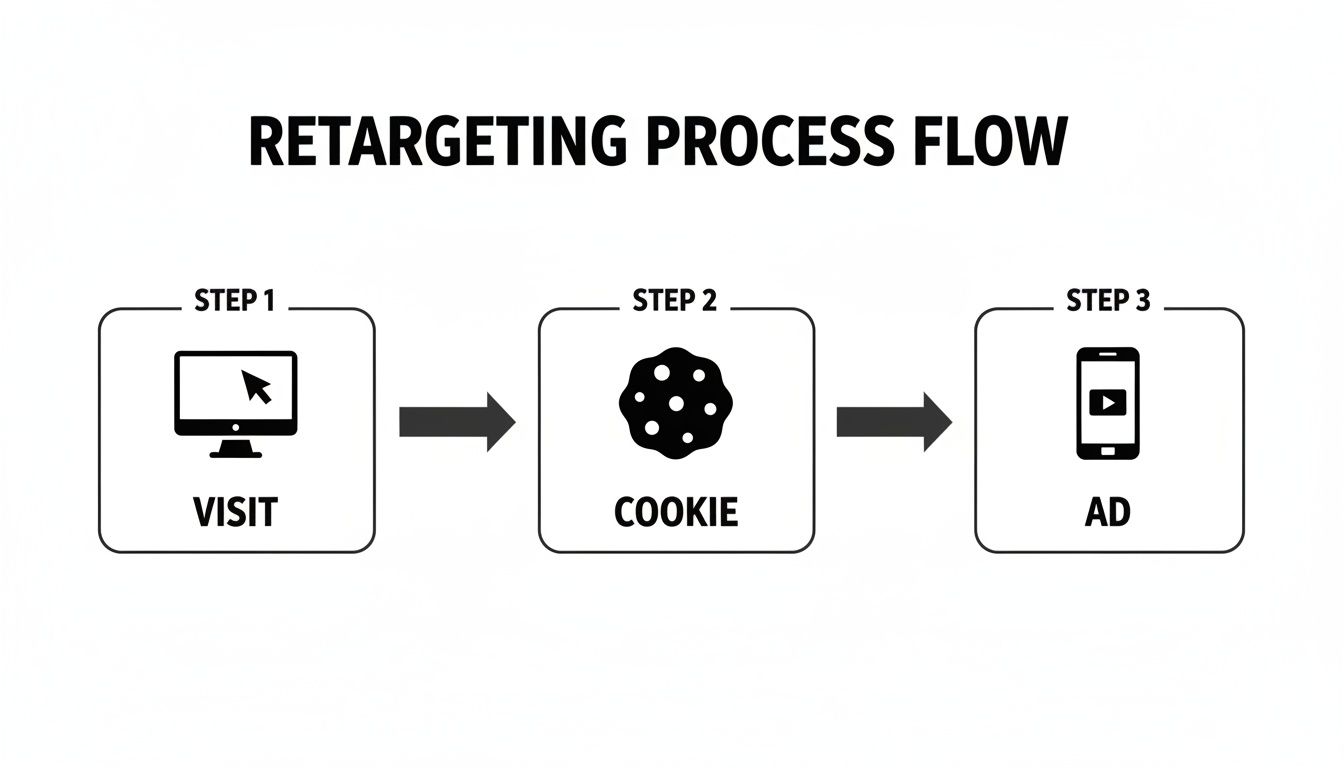
The user's visit triggers the cookie, which allows your ads to follow them. It's simple and direct.
Going Beyond Your Website Visitors
While site retargeting is powerful, other types can expand your reach. Each one serves a unique purpose.
Social Media Retargeting: This focuses on users who’ve engaged with your social media, even if they never visited your website. If someone in Watsonville likes your Facebook post, you can show them a video testimonial on Instagram the next day. This is a key part of effective Facebook ads for contractors.
Search Retargeting: This lets you show ads to people who have searched for keywords like "roofer in Hollister" but haven't visited your site yet. This helps you connect with high-intent prospects across San Benito County before they even find your competitors.
By combining these types of retargeting, you create a safety net that catches potential customers at different stages. You're not just reminding past visitors; you're also introducing your brand to new, highly qualified leads.
Why Retargeting Is a Game-Changer for Monterey Bay Businesses
So, what's the actual return? For local businesses in Monterey County, retargeting is a powerful tool for growth. It works by turning missed opportunities into real leads and booked jobs.
The core benefits hit on the pain points that keep business owners up at night. These include generating leads, staying visible, and seeing a clear return on ad spending.
Building Powerful Brand Recall
Imagine a homeowner in Seaside has a plumbing emergency. They visited your website two weeks ago, but will they remember your name now? Retargeting makes sure they do.
By keeping your brand visible, you become the first company they think of. This constant, gentle reminder builds trust and familiarity. That's how you win the call over competitors they’ve never heard of.
Achieving Cost-Effective Lead Generation
Attracting brand-new customers is expensive. You're advertising to a "cold" audience that may not need your services right now. Retargeting flips this.
It focuses your ad spend only on a "warm" audience—people who have already visited your site.
This targeted approach is far more efficient. You aren't wasting money on strangers; you're just continuing the conversation with people who are already interested. For a digital marketing agency in Salinas, this is one of the smartest ways to help clients grow.
Boosting Your Conversion Rates
Ultimately, the goal is to turn website traffic into paying customers. Retargeting is great at this.
By consistently re-engaging interested visitors, retargeting is a highly effective strategy to improve website conversion rates. It bridges the gap between a casual website visit and a signed contract, directly impacting your bottom line.
How to Set Up Your First Retargeting Campaign
Ready to turn missed visits into booked jobs? Launching your first retargeting campaign is more straightforward than you might think. We'll break it down into three simple steps for Google Ads and Meta (Facebook/Instagram), the two best platforms for reaching customers in Monterey County.

This is about being smart and strategic. Following these steps helps you create a campaign that delivers a real return for your business.
Step 1: Figure Out Who You're Talking To
First, decide who you want to reach. A common mistake is showing the same ad to everyone. A strong campaign starts with grouping people based on what they did on your site.
Think about the different reasons people come to your website. You can create separate audience lists for each one.
- Emergency Service Seekers: These are the folks who landed on your "24/7 Emergency Repair" page. They need a fast, direct message.
- Big Project Planners: Someone who spent time on your "Remodeling Gallery" page is still researching. They'll respond better to ads showing off your best work.
- The Almost-Customers: What about people who visited your "Contact Us" page but never filled out the form? An ad that says "Ready for a Free Estimate?" can be very effective.
Grouping your visitors allows you to create ads that speak directly to their needs.
Step 2: Create Ads That Actually Work
Once you know who you're targeting, craft ads that grab their attention. Generic ads don’t cut it in our local market. Your ads need to feel authentic to the Monterey Bay Area.
For example, an ad could feature a photo of your team on a recent job in Carmel-by-the-Sea. Pair it with a simple headline like, "Your Dream Kitchen, Built by Local Experts." The goal is to build trust and remind them of the quality work you do.
Step 3: Set a Smart Budget
Finally, decide how much to spend. The good news? You don’t need a huge budget. Retargeting is one of the most cost-effective advertising methods.
A great starting point for a local business is often $10 to $20 per day. This is enough to start gathering data and seeing results without a huge financial risk.
As your campaign runs, you can watch its performance. If you see it’s driving calls, you can confidently increase your budget. To measure results accurately, setting up proper Google Ads conversion tracking is essential.
Common Retargeting Mistakes Local Businesses Should Avoid
Knowing what retargeting is is only half the battle. Knowing what not to do is just as important. For businesses in Monterey County, a few common mistakes can waste money and annoy potential customers.
The most common mistake is causing ad fatigue. This happens when you show the same ad to the same person over and over. After a few views, your ad becomes invisible or annoying, which can damage your brand.
Another error is targeting an audience that is too broad. Sending one message to everyone who visited your website doesn't work. A customer in Santa Cruz who viewed your "emergency repair" page needs a different message than a homeowner in Salinas browsing "kitchen ideas."
How to Fix These Common Issues
Fortunately, these mistakes are easy to fix. A smart retargeting strategy comes down to three things: segmentation, relevant ads, and clear limits.
- Set Frequency Caps: Most ad platforms, like Google and Meta, let you set a "frequency cap." This limits how many times one person can see your ad. A good start is no more than 3-5 times per day.
- Segment Your Audience: Don’t lump everyone together. Create separate lists based on the pages they visited. This lets you serve relevant ads that speak directly to their needs.
- Use Local, Specific Ad Copy: Instead of a generic "Call Us Today," tailor your message. An ad that reads, "Your Trusted Santa Cruz Electrician for Fast Repairs," instantly connects with that user.
By avoiding these simple errors, you can ensure your retargeting ads are helpful and effective.
If your campaigns still aren't performing, it may be a sign of a deeper issue. You can learn more by reading our guide on why Google Ads fail for small contractors.
Got Questions About Retargeting? We've Got Answers.
Even after learning the basics, most business owners in the Monterey Bay area have a few questions. That's smart. Here are the straight answers to the questions we hear most often.
Think of this as your quick guide to how retargeting works in the real world.
How Much Should I Budget for Retargeting in Salinas?
You don't need a huge budget to make an impact. That’s one of the best things about retargeting—it’s cost-effective.
A great starting point is often just $10 to $20 per day. This is enough to start gathering data and see which ads connect with people. Once you see leads coming in, you can confidently increase your budget.
Is Retargeting Creepy to Potential Customers?
This is a great question, and the answer is no—as long as it’s done right. That "creepy" feeling happens when people see the same ad follow them everywhere. Professional campaigns use frequency capping.
This setting limits how many times one person sees your ad. Our goal is to be helpful. We’ll show them a recently finished project or a useful tip, making your ad feel like a friendly reminder.
How Long Until I See Real Results?
You’ll start seeing more website traffic in the first few weeks, but retargeting is a long-term strategy. The goal is to build your brand and create a steady stream of leads over time.
In a competitive market like Monterey County, that consistent presence is what makes you stand out. Over time, retargeting ensures that when a homeowner needs your services, your business is the first one they call.
About the Author
By Phil Fisk, CEO, Core6 Marketing
Phil is the founder of Core6 Marketing, a digital marketing agency focused on helping local businesses in the Monterey Bay Area grow. With deep roots in our coastal economy and ag tech community, he provides actionable, no-nonsense strategies that deliver measurable ROI for small and mid-sized businesses.
Core6 Marketing
1628 N. Main St #263, Salinas, CA 93906
(831) 789-9320
[email protected]
https://core6.marketing/
Ready to turn more of your website visitors into paying customers? The team at Core6 Marketing can build a smart, effective retargeting campaign that works for your business and budget.