
Why Your HVAC Business Needs SEO to Survive and Thrive
Remember flipping through the Yellow Pages to find a local HVAC contractor? Yeah, me neither. These days, when the furnace dies on a freezing night or the AC goes kaput during a heatwave, everyone grabs their phone. I've chatted with tons of HVAC contractors, and the difference between those who are killing it and those barely scraping by? Online visibility. Some are booked solid for weeks, others are fighting for scraps. It all comes down to being easily found online right when a customer needs you.
This digital shift has created a whole new ballgame. Big national chains, with their massive marketing budgets, often outrank local experts in search results. HVAC businesses also face a unique challenge compared to other trades like plumbing or electrical. A burst pipe or electrical outage? Total emergency. But HVAC problems, while crucial for comfort, can sometimes be put off. This makes the timing of customer searches even more vital. You need to be there when that "I'll deal with it later" turns into "I need someone NOW."

This screenshot shows some pretty compelling HVAC marketing stats. A staggering 97% of people find local businesses online, and a significant 75% don't bother looking past the first page of search results. This means you can't just be online; you need to be optimized to rank high. If you're not on page one, you're practically invisible.
The HVAC industry itself is booming too, which makes a solid SEO strategy even more critical. The global market is expected to grow by about 12.7% between 2024 and 2028. More growth means more competition for online visibility. You need to be proactive to grab your share. Check out these HVAC marketing statistics for more details. Traditional marketing just won't cut it in today's digital world. For an extra boost to your sales, think about implementing some Lead Routing Best Practices.
Interested in learning more about online marketing for contractors? Take a look at this article on SEO for Contractors. Understanding what your potential customers search for, and when they search, is the key to consistent leads and a thriving HVAC business. This isn't just about staying afloat; it's about positioning yourself to grab that growing market share and becoming the go-to HVAC expert in your area.
Uncovering The Keywords That Turn Into Emergency Calls
Let’s be honest, most HVAC contractors focus on broad keywords like "HVAC repair." That's fine, but the real magic happens when you zero in on those urgent, panicked searches. Think about it: when your AC dies on a scorching summer night, are you calmly browsing for "HVAC services"? Nope, you're frantically Googling "emergency AC repair near me." That's the kind of keyword that screams "ready-to-buy customer."
I've witnessed this firsthand. One HVAC business I worked with saw a 30% surge in leads simply by optimizing their site for phrases like "furnace repair emergency" and "AC not blowing cold air fix." They went from scrambling for work to completely booked – a total game-changer.
Identifying High-Converting Keywords
The secret sauce here is understanding search intent. Someone searching for "best HVAC brands" is probably just researching, not hiring. But someone searching "furnace making loud noises" or "AC leaking water inside"? They have a problem, and they're much more likely to become a paying customer.
Here are a few examples:
- Seasonal Emergencies: "AC repair in heatwave," "furnace not working in blizzard"
- Specific Problems: "refrigerant leak repair," "thermostat not responding"
- Equipment Models: "Carrier furnace repair," "Trane AC troubleshooting." These searches tell you the customer has already diagnosed the issue and is likely ready for a service call.
And don't forget about local modifiers! "AC repair Denver" is way more effective than just "AC repair." These local keywords are your ticket to showing up in local search results, where most HVAC customers begin their search.
To help visualize this, take a look at the table below:
High-Converting HVAC Keywords by Search Intent
| Keyword Type | Search Volume | Competition Level | Conversion Rate | Best Use Case |
|---|---|---|---|---|
| Seasonal Emergencies | High | Medium | High | Targeting customers during peak seasons |
| Specific Problems | Medium | Medium | Medium-High | Addressing common HVAC issues |
| Equipment Models | Low-Medium | Low-Medium | High | Attracting customers with specific needs |
| Local Keywords (e.g., "AC repair Denver") | Medium | Low | High | Targeting local customers |
This table highlights the relationship between search intent, keyword type, and conversion potential. As you can see, focusing on specific problems and local keywords often offers a sweet spot of decent search volume and higher conversion rates.
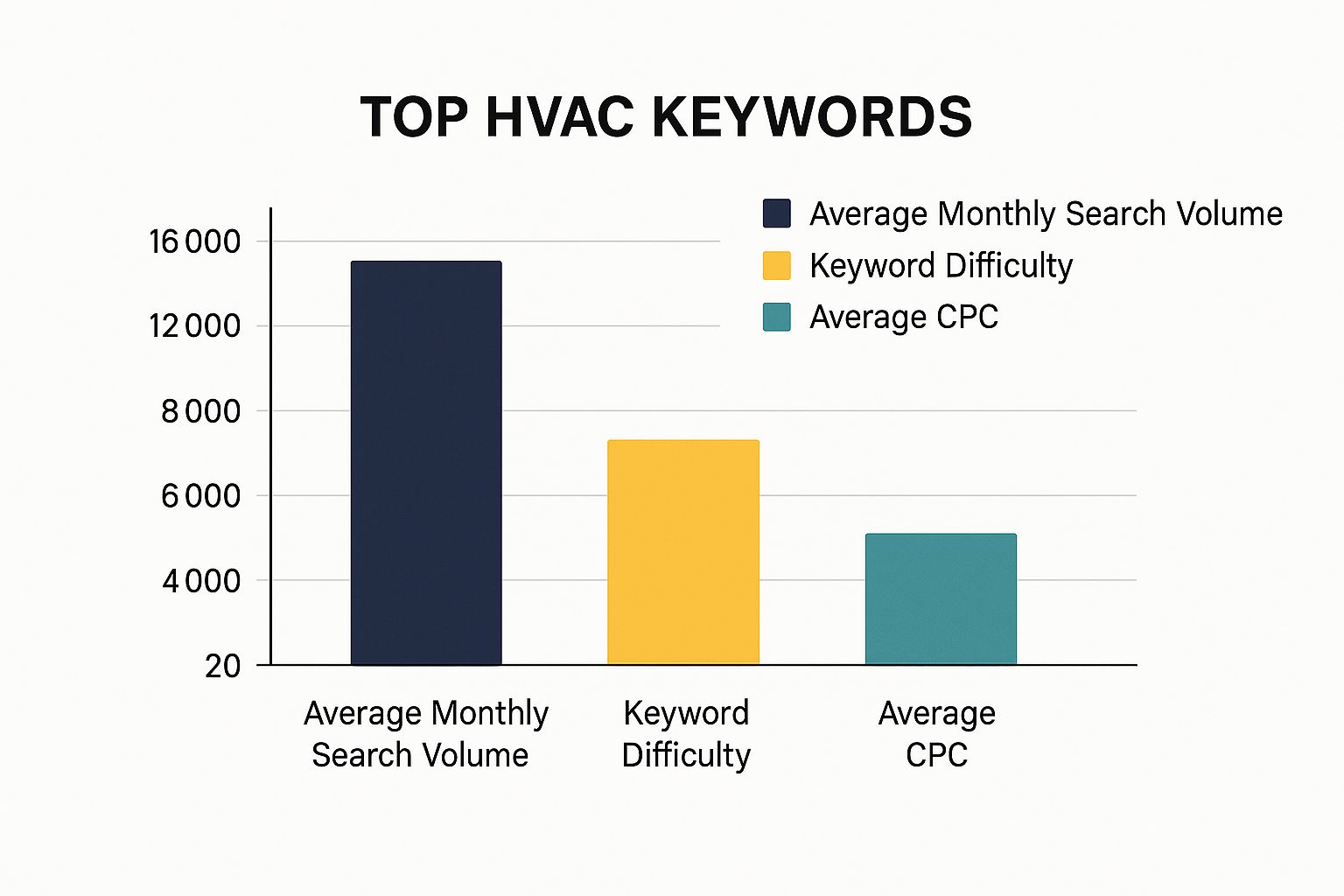
This infographic provides more detail, showing the average monthly search volume, keyword difficulty, and average cost-per-click (CPC) for several popular HVAC keywords. Notice how even some less competitive terms can still have decent search volume and a lower CPC. This is invaluable for budgeting and making smart bidding choices in your paid campaigns.
Spying on Your Competitors
Want another powerful trick? Competitor keyword analysis. Tools like Ahrefs or SEMrush let you see which keywords your competitors are ranking for. This can uncover hidden opportunities and help you grab some market share they might be missing.
This Ahrefs screenshot shows how to analyze keyword ideas. It’s not just about search volume – relevance and competition matter too. Find keywords your rivals are ranking for that you aren’t and create targeted content around them. This lets you effectively "steal" valuable search traffic.
Remember, the ultimate goal isn’t just clicks, it’s the right clicks – the ones that convert into those emergency service calls and boost your revenue. By targeting those specific, urgent search terms, you’ll connect with customers precisely when they need you most. That's the power of effective HVAC SEO.
Conquering Local Search When Your Competition Is Fierce
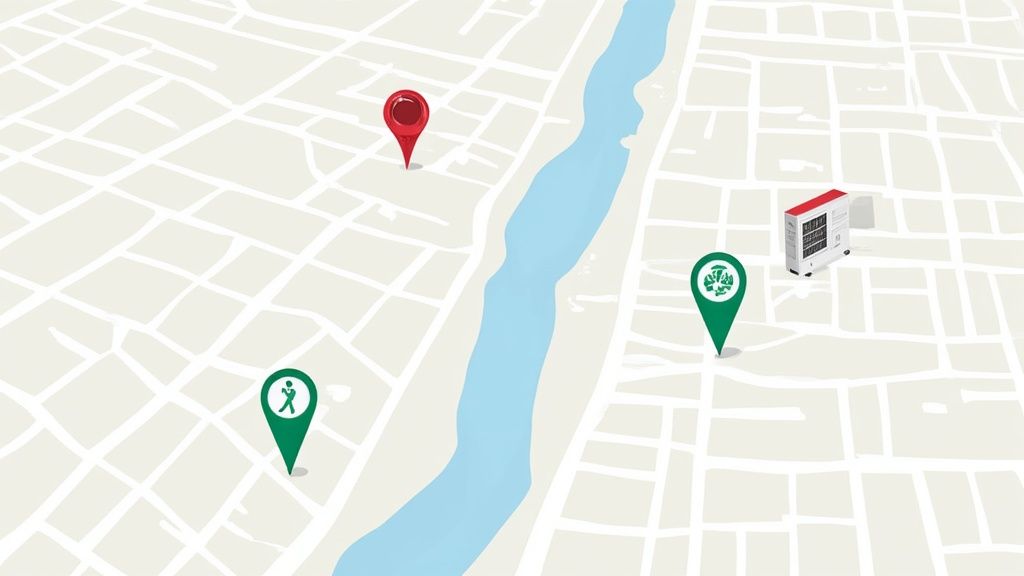
Local search is the lifeblood of any HVAC business. When someone's AC goes kaput on a scorching summer day, they're not flipping through national directories—they're searching "AC repair near me." That's where HVAC SEO becomes mission-critical. Just claiming your Google Business Profile isn't enough; you need to be the top choice when those urgent searches pop up.
This screenshot shows a Google Business Profile. See how the location, reviews, and contact info stand out? This is often a customer's first impression, so making it count is crucial.
I often see HVAC contractors overlooking hyper-local optimization. They might optimize for "AC repair" but forget city or neighborhood keywords. This can be the difference between page one and obscurity. For instance, if you service several areas, build separate pages for each. "AC Repair in Denver" and "Furnace Repair in Aurora" will target those precise searches and broaden your reach.
Optimizing Your Google Business Profile (GBP)
Your GBP is your online storefront—your virtual office on Google Maps. Here's how to take it up a notch:
-
Complete Every Field: Leave nothing blank! More info means Google understands your business better, increasing your visibility in relevant searches.
-
Use Relevant Keywords: Don't just list services. Use terms people search for, like "emergency AC repair," "furnace installation," or "air duct cleaning."
-
Upload Media Regularly: Photos and videos of your team, work, and office build trust and make your profile more engaging.
-
Manage Reviews: Reviews are powerful social proof. Respond to all reviews, good and bad, professionally. This shows you value feedback.
Dominating Local Citations and Directories
Beyond your GBP, consistent local citations are key. Think Yelp, Angie's List, HomeAdvisor, and your local Chamber of Commerce. Make sure your NAP (Name, Address, Phone Number) is identical everywhere. Inconsistent NAP data confuses Google and hurts your local SEO.
Also, consider niche HVAC directories. They're often overlooked goldmines for targeted traffic. Claiming these listings shows Google you're a serious contender in the local HVAC market.
Let's talk about the future. Hyper-local SEO is only getting more important. In the coming years, I expect HVAC businesses to really focus on this, tailoring their content and GBPs to specific neighborhoods. This helps dominate local results, as Google favors businesses catering to local markets. For example, content about local weather or community events can boost visibility. Learn more about HVAC trends for 2025. This forward-thinking approach will separate you from the competition.
The following table provides a useful overview of key local SEO ranking factors and their impact:
Local SEO Ranking Factors for HVAC Businesses
| Ranking Factor | Impact Level | Difficulty to Optimize | Time to See Results |
|---|---|---|---|
| Google Business Profile Optimization | High | Medium | 1-3 months |
| Local Citations (NAP Consistency) | High | Low | 2-4 months |
| On-Page Optimization (Website Content) | High | Medium | 3-6 months |
| Reviews and Reputation Management | Medium | Medium | 4-8 months |
| Hyperlocal Content Creation | Medium | Medium | 6-12 months |
| Backlinks from Relevant Websites | Medium | High | 6-12 months |
This table summarizes some of the most important elements to focus on when working on local SEO for your HVAC business. As you can see, some factors have a more immediate impact, while others take more time to develop but can have significant long-term benefits.
Conquering local search isn't about tricks; it's about building a solid online presence. It's about showing your expertise and dedication to your community. Combine a well-optimized GBP, consistent citations, and hyper-local content, and you'll not just survive but thrive, even in competitive markets. For a deeper dive, check out our guide on the biggest factors that you should never overlook in local SEO.
Building Content That Positions You As The Trusted Expert
The most successful HVAC contractors aren't just fixing emergencies; they're preventing them. How? By sharing valuable content that builds trust and positions them as the go-to expert in their area. Think about it: who are you more likely to call – a random name from a Google search, or someone whose advice you've already found helpful online?
Building that trust starts with creating content homeowners actually want to read, save, and share. Think seasonal maintenance guides to keep you top-of-mind year-round. "How to Prepare Your AC for Summer" is perfect for spring, while "Troubleshooting a Noisy Furnace" hits home in winter. Providing ongoing value like this keeps customers coming back to your site and thinking of you first.
Content Formats for Every Stage
Remember, someone researching new AC units is in a completely different headspace than someone whose furnace just died. Your content needs to meet them where they are.
-
Awareness: Blog posts on broader HVAC topics like energy efficiency or indoor air quality can draw in a larger audience.
-
Consideration: When customers are starting to explore their options, articles comparing different HVAC systems or explaining financing can be incredibly helpful.
-
Decision: As they get closer to making a choice, case studies, testimonials, and detailed service pages on your site can be the deciding factor.
The Power of Video
Video is a huge opportunity for local HVAC SEO. Even simple videos demonstrating how to change an air filter or troubleshoot a thermostat can significantly boost your visibility. Don't worry about fancy production – authenticity is key.
This screenshot is from the YouTube Creator Studio. Here's the best part: it shows you exactly how many views your videos are getting, where your traffic is coming from, and what's resonating with your audience. Use this data to shape future content and give your customers what they want.
Want to enhance your local SEO further? Check out this resource on digital marketing seo geo. It's packed with valuable strategies for expanding your reach.
Turning Field Knowledge into Content Gold
You've spent years accumulating valuable field knowledge. The everyday questions customers ask, the problems you solve, the tips and tricks you've learned along the way – all of this is pure content gold.
Turn that knowledge into blog posts, FAQs, short videos – anything that showcases your expertise and builds trust. I've seen firsthand how contractors who share genuine insights build loyal followings and attract customers who already value what they have to say.
One HVAC contractor I know started a weekly "Tip of the Week" video series on YouTube, addressing common HVAC issues. These short, practical videos were a hit. He saw a 20% increase in leads within six months, and customers often mentioned seeing his videos.
Another smart strategy? Creating content around specific HVAC systems or brands. If you specialize in Carrier units, for example, a post like "Maintaining Your Carrier AC for Optimal Performance" can attract highly targeted traffic.
By consistently creating helpful, engaging content, you're not just attracting website visitors; you're building relationships. When their AC gives out or they're ready for a new furnace, they'll remember you. This translates to a steady stream of qualified leads who already trust you, making the sales process that much smoother. They aren't just choosing a contractor; they're choosing you.
Technical SEO Essentials That Actually Impact Your Bottom Line
You're an HVAC contractor, not a web developer. I get it. But trust me, some technical aspects of your website can make or break your online visibility. Let's ditch the jargon and focus on the technical SEO tweaks that actually move the needle for your rankings and improve the experience for your customers. Because when a furnace goes out in the middle of a blizzard, nobody has time for a slow website.
Site Speed: A Must for Emergency Services
Site speed is paramount, especially in the HVAC world. I worked with a company whose mobile site took a whopping 10 seconds to load. They were losing customers faster than a leaky faucet drips water. We got that load time down to under 3 seconds, and their leads jumped by 25%. People with urgent HVAC issues need answers now. A fast-loading website is your first step to providing them.
This PageSpeed Insights screenshot shows the Core Web Vitals. These metrics – Largest Contentful Paint, First Input Delay, and Cumulative Layout Shift – directly affect how Google views your site's user experience. A low score can tank your rankings. Think optimized images, streamlined code, and browser caching to boost these scores.
Mobile Optimization: Reaching Customers in a Panic
Let's be real, most people search for HVAC help on their phones – often in a full-blown panic. I've seen HVAC companies lose business simply because their websites weren't mobile-friendly. Responsive design is no longer optional, it's essential. Make sure your buttons are easy to tap, phone numbers are clickable, and navigation is a breeze. A stressed-out customer on a tiny screen needs a seamless experience.
Schema Markup: Speaking Google's Language
Schema markup is code that helps search engines understand your content. For HVAC SEO, it's like giving Google a cheat sheet about your services and location. This can seriously boost your local search visibility, putting you directly in front of the people who need you most.
Auditing Your Site: Finding Hidden Issues
Technical SEO isn't a one-time fix. Regular website audits are critical. I've seen tiny technical glitches wreak havoc on rankings. Google Search Console is your friend here. Use it to find crawl errors, broken links, and other issues that can hurt your SEO. Fixing these seemingly small problems often leads to big ranking improvements. For example, if Google can't crawl your service pages, they'll be invisible in search results—regardless of how great the content is.
For a bigger picture view of how SEO can benefit your entire company, check out this article: How SEO Can Transform Your Company. These technical SEO basics aren’t about becoming a coding whiz. They're about making sure your website works for your HVAC business, not against it. These foundational elements support all your other SEO efforts. By focusing on these key areas, you're setting yourself up for more customers and serious business growth.
Preparing For The Future Of Search And Customer Behavior
Search engine optimization (SEO) is a constantly moving target. Remember when voice search felt brand new? Now, it's commonplace. People use it for everything from finding the nearest coffee shop to, believe it or not, emergency HVAC services. This shift has a huge impact on HVAC SEO. Optimizing for "near me" searches and conversational language is critical, especially in emergencies. When a furnace dies on a freezing night, people aren't carefully typing keywords; they're yelling at their smart speaker for help.
Voice Search Optimization: Answering the Call
Optimizing for voice search means understanding how people speak, not just how they type. Someone might type "AC repair Denver" but say "Find AC repair near me in Denver." These longer, conversational queries demand a different SEO approach. Focus on long-tail keywords, question-based content, and providing clear, concise answers to common HVAC issues. I once worked with an HVAC company that saw a 15% increase in calls just by optimizing their FAQ page for voice search. They simply anticipated what people were actually asking their devices.
The Rise of AI: What ChatGPT Means For Your Business
AI tools like ChatGPT are changing how search works. They won't completely replace search engines, but they are becoming a new way for customers to find information. This means you need to optimize your site for AI discovery. Think structured data, clear headings, and factual, easy-to-understand information.
This screenshot shows a ChatGPT conversation about HVAC problems. Notice how the AI provides generally accurate info, even suggesting checking filters and thermostats. But it also stresses that it can't give specific technical advice and recommends a qualified HVAC technician. This highlights the importance of showing your expertise and building trust online.
Search is always changing, impacting how we do HVAC SEO. While Google still dominates, holding 89% of all traffic, platforms like Bing, ChatGPT, and Gemini are growing. This means traditional search engine results might become less visible as AI tools and alternative platforms gain popularity. You can find more insights on HVAC SEO. This doesn’t mean ignoring Google; it means broadening your strategy and understanding where your customers search.
Diversifying Your Search Presence: Building a Resilient Foundation
Putting all your eggs in the Google basket is risky. What if a new platform explodes in popularity or Google drastically changes its algorithm? Diversifying your online presence across different search engines and directories makes your digital marketing more resilient. Consider optimizing for Bing, exploring niche HVAC directories, and claiming your business profiles on relevant platforms. This expands your reach and makes you less dependent on one single platform.
Adapting to these changes isn't about chasing every new trend, it's about understanding your customer’s online behavior. By keeping up with voice search, AI-powered search, and new platforms, you'll set your HVAC business up for long-term success.
Tracking Results And Scaling Your SEO Success
You've put in the work, optimized your website, and are creating compelling content. Now, let's talk about how to see what's working and what's not with your HVAC SEO. Forget vanity metrics like simple website visits. We're diving deep into the numbers that truly matter: qualified leads, booked appointments, and that sweet, sweet increase in revenue.
Setting Up Tracking Systems That Matter
Connecting your SEO efforts to your bottom line is the name of the game. I remember working with an HVAC contractor who was pulling their hair out over their SEO. Tons of traffic, but crickets on the phone lines. Turns out, they weren't tracking conversion metrics like contact form submissions and phone calls. Once we got that set up, it was clear their website wasn't converting visitors into leads. A few tweaks to their call-to-actions, and boom – a 40% increase in leads almost overnight.
Using The Right Tools and Dashboards
Data overload is a real thing, and it can be paralyzing. Thankfully, tools like Google Analytics and Google Search Console give you powerful insights without needing a data science degree.
This is a snapshot of a typical Google Analytics dashboard. See how it gives you a clear view of your website traffic? Where are people coming from? Which pages are they checking out? How long are they sticking around? This data helps you understand which keywords are bringing in the most valuable traffic, so you can double down on what's working and fix what's not.
Measuring ROI and Seasonal Adjustments
Knowing your return on investment (ROI) from SEO is crucial. It's not about how much you spend; it's about the revenue it generates. By tracking conversions back to their source (like a specific keyword or blog post), you get a clear picture of your ROI. And remember, seasonality plays a big role. Your key metrics will naturally shift during peak and off-peak seasons. Knowing these trends helps you adjust your strategy and budget accordingly.
Scaling Your SEO Efforts As You Grow
As your HVAC business grows, so should your SEO strategy. This could mean broadening your keyword targets, creating more content, or branching into new digital marketing avenues. I've seen HVAC contractors successfully scale their SEO by targeting niche services like "duct cleaning" or "geothermal installations" alongside their core offerings. This carved out new areas of online visibility, cementing their position in the market.
Expanding Into Other Channels
Once your SEO is running smoothly, think about adding complementary channels like pay-per-click (PPC) advertising or targeted social media campaigns. These can boost your existing SEO and reach a wider customer base. For example, running PPC ads for high-value keywords during peak season can significantly increase your visibility when demand (and competition) are at their highest.
Scaling your SEO is all about building on your initial success. It's about refining your strategy based on the data, adapting to market changes, and constantly looking for ways to reach more customers. By tracking the right metrics and making smart decisions about expansion, you can turn those early wins into long-term, sustainable growth.