Getting homeowners in Salinas or Santa Cruz to visit your website is only half the battle. The real challenge is turning that digital traffic into actual paying jobs. If your site gets clicks but your phone isn't ringing, you're likely facing a conversion problem costing you valuable leads across Monterey County. This is where effective conversion rate optimization strategies become essential.
This guide gives you a clear, actionable playbook. We'll unpack nine proven strategies tailored for business owners operating right here in the Monterey Bay Area, from our thriving coastal economy to our ag tech roots. You will learn how to transform your website from a simple online brochure into a powerful lead-generation machine that delivers a measurable Return on Investment (ROI), helping you secure more projects from Gilroy to Pacific Grove.
We'll cover everything from testing your service pages to optimizing your contact forms and ensuring your site loads instantly for a potential client in Watsonville. Each strategy is broken down into practical steps you can implement immediately. Let's get started on converting those website visitors into loyal customers.
1. A/B Testing: Data-Driven Decisions for Local Dominance
A/B testing is a method for understanding what your customers truly want. It’s like a friendly competition where you let your audience vote with their clicks. You create two versions of a webpage element—for instance, two different headlines—and show them to separate sets of visitors. By tracking which version gets more form submissions or calls, you can make improvements based on real data, not guesswork.
This approach is one of the most fundamental conversion rate optimization strategies. For a Gilroy-based HVAC contractor, this could mean testing a headline focused on "Same-Day AC Repair" against one emphasizing "Certified & Insured Technicians." The version that resonates most with local homeowners in Monterey County reveals their primary pain point, allowing you to tailor your messaging for maximum impact.
How to Implement A/B Testing
Getting started with A/B testing is more straightforward than it sounds.
- Test One Element at a Time: To get clear results, only change one variable per test. If you change both the headline and the button color, you won't know which element drove the change.
- Start with High-Impact Elements: Focus on parts of your site that have the biggest influence on decisions. This includes headlines, call-to-action (CTA) buttons, and lead capture forms.
- Ensure Statistical Significance: To trust your results, you need enough website traffic. Run tests long enough to account for daily fluctuations in user behavior.
- Document Everything: Keep a detailed log of every test you run. This creates a valuable knowledge base for future optimization.
The power of A/B testing isn't just theoretical; major brands have used it to achieve significant growth.
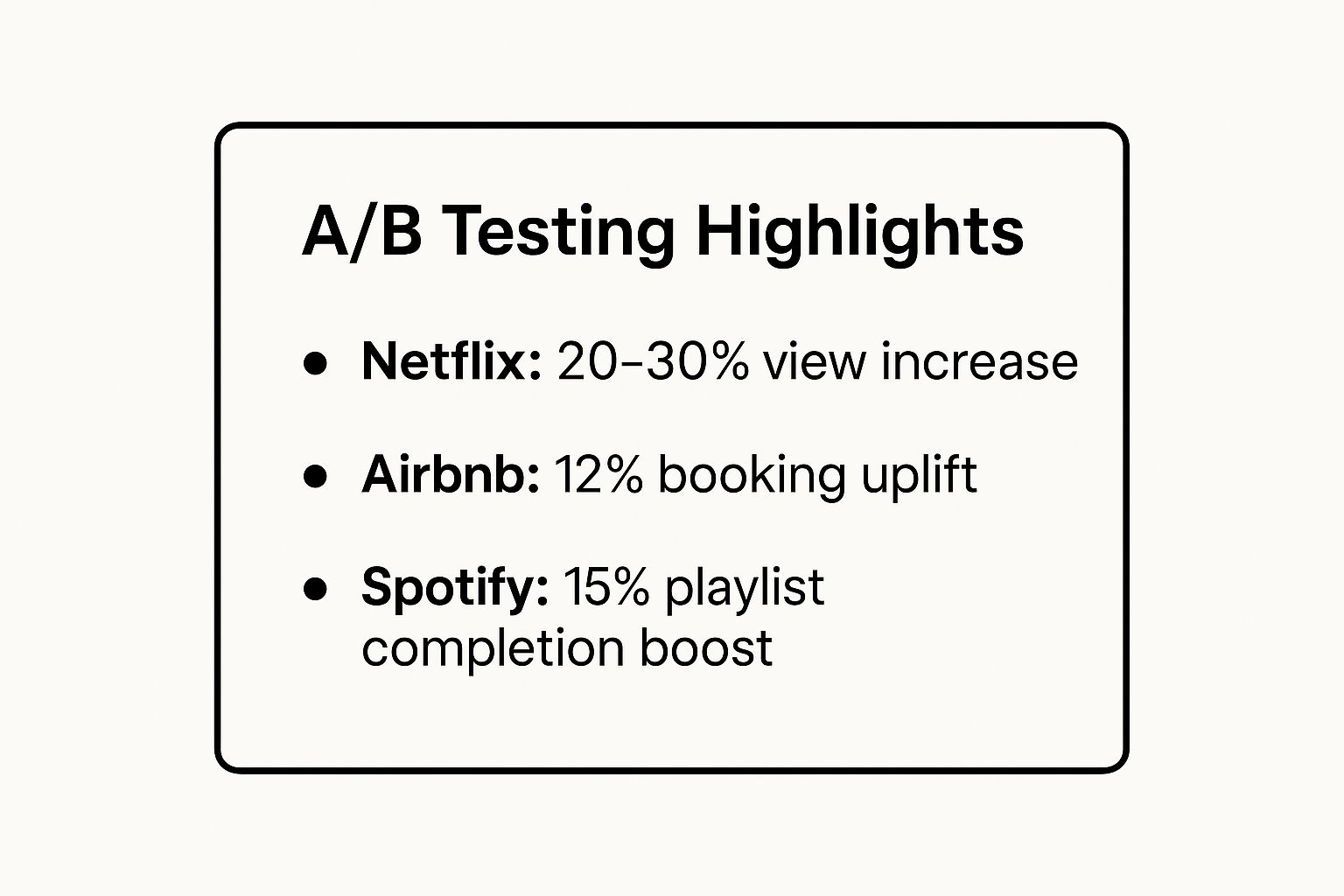
These examples show that even small, data-informed changes can lead to double-digit improvements. For a deeper dive, the following video offers a comprehensive overview.
2. Landing Page Optimization: Your Digital Storefront
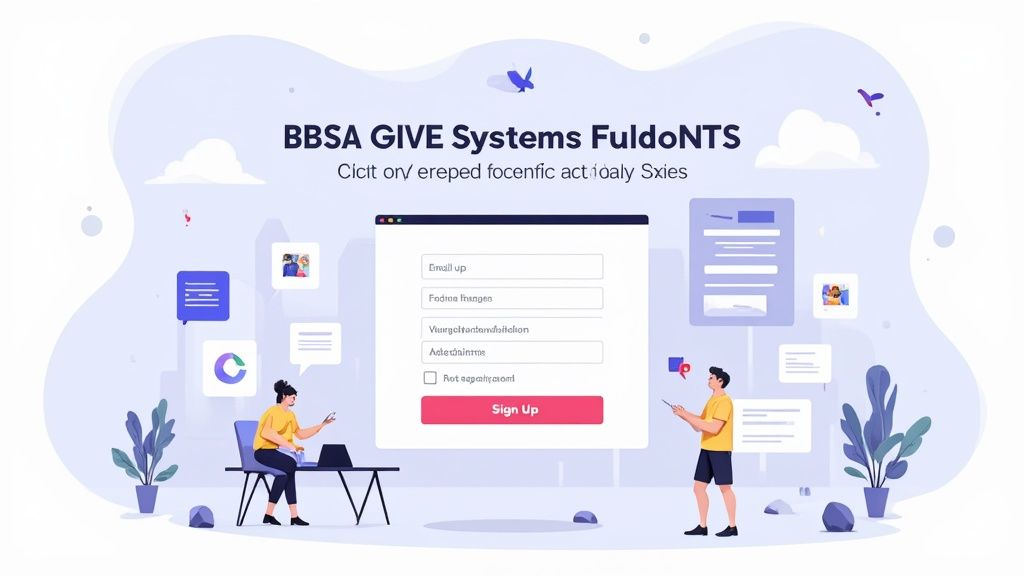
Landing page optimization is one of the most effective conversion rate optimization strategies because it creates a focused, distraction-free path for potential customers. Instead of sending ad traffic to your general homepage, you direct visitors to a dedicated page built for a single purpose: to convert. The page’s message and design align perfectly with the ad the visitor clicked.
Imagine a homeowner in Salinas searching for "emergency roof leak repair." A targeted landing page that speaks directly to that urgent need will vastly outperform a generic homepage. This focused approach builds immediate trust and guides the visitor from a click to a phone call with precision.
How to Implement Landing Page Optimization
Building a high-converting landing page is about clarity and focus. By stripping away non-essential elements, you make it easy for visitors in Monterey County to take action. For a comprehensive guide, review these Top 10 Landing Page Design Best Practices.
- Match the Message: Ensure your landing page headline and content perfectly reflect the promise made in your ad. If your ad says "24/7 Plumber in Hollister," your landing page must feature that same language.
- Focus on Benefits: Instead of listing features, frame it as a benefit: "Get Durable, Long-Lasting Plumbing That Protects Your Home." Homeowners care about the solution.
- Leverage Social Proof: Include testimonials or star ratings. Seeing that their neighbors in Santa Cruz County trust your services builds powerful credibility.
- Simplify the Form: Only ask for the information you absolutely need. For a quote request, a name, phone number, and email are often enough.
3. Call-to-Action (CTA) Optimization: Guiding Clicks
Your call-to-action (CTA) is the most critical signpost on your website, directing users from browsing to engagement. CTA optimization is the art of designing buttons and links that motivate visitors to take action. It’s not just about having a button; it’s about making that button irresistible to click.
This is one of the most impactful conversion rate optimization strategies because it directly targets the moment of decision. For a plumber in Salinas, a CTA like "Get Your Free Quote" might outperform a generic "Submit" button. This small change shifts the focus from what the user gives (their information) to what they get (a valuable estimate), dramatically increasing form completions in Monterey County.
How to Implement CTA Optimization
Effective CTA optimization involves strategic tests and design choices to remove friction.
- Use Action-Oriented Language: Make your CTA personal and compelling. Instead of "Request a Quote," try the more empowering "Get My Free Estimate."
- Create Visual Contrast: Your CTA button must stand out. Use a color that contrasts with your website's primary color scheme but still feels on-brand.
- Optimize for Placement: Position your CTAs where the eye naturally falls, like below a headline or at the end of a service description. Ensure the button is large enough to be easily tapped on mobile.
- Add Urgency and Value: Motivate immediate action with phrases like "Schedule Before the Summer Rush" or "Claim Your 10% Discount Now."
Optimizing your CTAs is a direct path to improving lead generation for your Monterey Bay business. For more on turning clicks into closed deals, you can explore the 7 steps to defining your target market.
4. Social Proof Integration: Building Local Trust
Social proof is a powerful psychological shortcut. When potential customers are unsure, they look to the actions of others to guide them. By integrating testimonials and reviews into your website, you provide the reassurance needed to turn a visitor from Santa Cruz into a loyal customer.
This strategy involves showcasing evidence that others have trusted your services and had a positive outcome. For a roofing contractor in Salinas, this could mean featuring a gallery of recently completed projects in Monterey County, complete with glowing reviews. It’s about proving your value through the words of satisfied local clients.

How to Implement Social Proof Integration
Effectively weaving social proof into your website requires a strategic approach.
- Be Specific and Authentic: Vague praise like "great service" is less impactful than a detailed testimonial. Use reviews that mention specific problems you solved.
- Place Proof at Key Decision Points: Display star ratings or key testimonials directly next to your call-to-action buttons and near contact forms.
- Leverage Video Testimonials: A video of a happy customer sharing their story is incredibly persuasive and creates a much stronger emotional connection.
- Showcase Industry Trust Signals: Display logos of well-known brands you've worked with, certifications you hold, and any local awards you've won.
By highlighting what your community thinks of you, you leverage local word-of-mouth on a digital scale. Learn more about how to amplify these signals with our guide on why service businesses should advertise on social media.
5. Form Optimization: From Interest to Action
Your website's forms are the final handshake between a potential customer and your business. Form optimization is the art of making this process as simple and frictionless as possible. It involves refining every element, from the number of fields to the text on the submit button, to maximize completion rates.
This is one of the most critical conversion rate optimization strategies because a clunky form can stop a motivated customer cold. Imagine a homeowner in Salinas with a burst pipe trying to contact you. If your form is too long, they will quickly move on to a competitor.
How to Implement Form Optimization
Improving your forms is a high-impact activity that delivers measurable results.
- Ask Only What You Need: Every extra field increases the chance a user will abandon the form. Stick to essentials like name, phone number, and a brief job description.
- Use Smart Defaults: Leverage browser technology to pre-fill common fields like name and email. This saves the user time and reduces typing errors.
- Place Optional Fields Last: If you must include optional fields, group them at the end. This ensures the user has already committed to filling out the crucial information.
- Consider Multi-Step Forms: For complex requests, breaking the form into 2-3 short steps can feel less intimidating. A progress bar helps manage user expectations.
6. Page Load Speed Optimization: The Need for Speed
In the digital world, every second counts. Page load speed optimization is the process of making your website’s pages load faster. In an age of instant gratification, a slow website is one of the quickest ways to lose a potential customer from anywhere in Monterey County.
This is a critical conversion rate optimization strategy because a slow site directly correlates to lost revenue. For a roofer in Salinas trying to capture emergency leads, a three-second delay can be the difference between getting the job and losing it to a competitor. The BBC discovered they lost 10% of users for every additional second a page took to load—speed is a fundamental part of the user experience.
How to Implement Page Load Speed Optimization
Boosting your site’s speed involves a few key technical adjustments.
- Optimize Your Images: Large image files are a common cause of slow load times. Use modern formats like WebP and implement "lazy loading," which only loads images as the user scrolls.
- Leverage Browser Caching: This technique stores parts of your website on a visitor’s device so it doesn’t have to reload everything on subsequent visits.
- Use a Content Delivery Network (CDN): A CDN stores copies of your site on servers around the world. When a visitor from Santa Cruz County accesses your site, the CDN delivers content from the nearest server, reducing load time.
- Monitor Performance Regularly: Use tools like Google PageSpeed Insights to constantly test your site’s speed and identify opportunities for improvement.
For businesses looking for a truly hands-off solution, explore these worry-free WordPress website hosting plans.
7. Mobile Optimization: Capturing On-the-Go Customers
With more customers in Salinas and Santa Cruz searching for services on their phones, mobile optimization is essential. This strategy ensures your website provides a seamless experience on smartphones and tablets. It involves responsive design that adapts to any screen size and touch-friendly navigation.
For a plumber in Gilroy, this means a potential client can easily find their number and tap to call during an emergency. This focus on mobile usability is a cornerstone of modern conversion rate optimization strategies. By prioritizing the mobile experience, you cater to the immediate needs of local homeowners across Monterey County.
How to Implement Mobile Optimization
Making your website mobile-friendly involves a user-centric approach.
- Design for Mobile-First: Design your website for the smallest screen first, then scale up for desktop. This forces you to prioritize essential content.
- Make Buttons Touch-Friendly: Ensure all buttons and links are large enough for easy tapping. A minimum size of 44×44 pixels is a recommended standard.
- Simplify Forms and Inputs: Mobile users have little patience for long forms. Shorten them to include only the most critical fields.
- Implement Click-to-Call Functionality: A click-to-call button allows a user to instantly dial your number, a powerful feature for capturing leads who need immediate help.
8. Personalization and Segmentation: Tailored Experiences
Personalization and segmentation involve delivering customized experiences based on who is visiting your website. Instead of showing the same generic page to everyone, this strategy uses data to present content that is uniquely relevant to them. It increases the likelihood they will connect with your message and convert.
This is one of the most powerful conversion rate optimization strategies because it makes customers feel understood. For a plumber in Salinas, this could mean showing a visitor from a neighborhood with older homes an offer for "Whole-Home Repiping Services." This tailored approach, a key service for any leading SEO agency in Salinas, builds trust and drives action.
How to Implement Personalization and Segmentation
You can start with simple segments and build up to more complex personalization over time.
- Start with Geographic Segmentation: Begin by tailoring content based on a visitor's city. A user from Gilroy could see testimonials from their neighbors.
- Leverage First-Party Data: Use information you already have. If a customer previously requested a quote for a specific service, show them related content on their next visit.
- Focus on High-Value Segments: Identify your most profitable customer groups. Prioritize creating personalized experiences for them to maximize your return on investment.
- Respect User Privacy: Always be transparent about the data you collect and provide clear opt-out options. Trust is critical for effective personalization.
9. Exit-Intent Popups: The Final Handshake
Just as a visitor is about to leave your website, exit-intent popups offer one last chance to connect. This technology tracks a user’s mouse movements and triggers a final, well-timed message. Instead of letting a potential customer disappear, you can present a valuable offer to persuade them to stay.
This strategy is a crucial part of a complete conversion rate optimization plan because it targets visitors who have shown interest but haven't taken action. For an electrician in Salinas, this could be a popup offering a "10% Discount on Your First Service Call." This simple offer can recover otherwise lost leads, directly impacting your bottom line in Monterey County.
How to Implement Exit-Intent Popups
Successfully using exit-intent popups is about providing value, not being intrusive.
- Offer Genuine Value: Your popup should be a compelling final handshake. Offer something useful, like a first-time customer discount or a helpful guide.
- Make Closing Easy: Never hide the "X" or make it difficult to close the popup. A frustrating experience will damage your brand's reputation.
- Use a Compelling Headline: Your headline must grab attention and immediately communicate the benefit. Instead of "Sign Up," try "Get Expert Electrical Safety Tips for Your Santa Cruz Home."
- Avoid Showing to Converted Users: Set up rules so that visitors who have already filled out a form or made a call do not see the popup.
Start Implementing These Strategies Today
We've explored nine powerful conversion rate optimization strategies, from A/B testing to the necessity of fast page speeds. Each strategy is a critical lever you can pull to transform your website into a high-performance lead generation machine. For a business in Santa Cruz or an entrepreneur in Salinas, these improvements are what fuel growth across the entire Monterey Bay region.
The key is to start small, measure everything, and build momentum.
Your Next Steps
- Conduct a Baseline Audit: Use a tool like Google Analytics to identify your current overall conversion rate and find your highest-traffic pages with the lowest conversions.
- Pick Your First Battle: Look at that opportunity page and choose the most obvious problem to tackle first. For many local businesses, optimizing for mobile or improving page load speed offers the biggest initial return.
- Formulate a Hypothesis and Test: Don't just make a change; test it. Form a clear hypothesis and use A/B testing to validate your assumption with real data.
- Analyze, Learn, and Repeat: Whether your test succeeds or fails, you've learned something valuable. Apply that learning, choose your next target, and repeat the process.
This proactive approach puts you in control. Instead of passively waiting for the phone to ring, you are actively shaping the customer journey, making it easy for homeowners from Pacific Grove to Hollister to choose your services. This data-driven advantage is what separates thriving businesses from those just getting by.
Ready to stop guessing and start converting?
Schedule Your Free Strategy Session Today!
By Phil Fisk, CEO, Core6 Marketing
Phil Fisk is the founder of Core6 Marketing, a digital marketing agency in Salinas specializing in helping local businesses in the Monterey Bay Area grow. With deep roots in the community, Phil is passionate about using data-driven strategies to deliver measurable ROI for his clients.
Core6 Marketing
1628 N. Main St #263, Salinas, CA 93906
Phone: 831-789-9320
Email: [email protected]
Website: https://core6.marketing/
Suggested Social Caption:
Turn website clicks into customers! Our guide covers 9 proven conversion rate optimization strategies for Monterey Bay businesses. Start growing today! #CRO #MontereyBay #LocalSEO #DigitalMarketing