
Why Digital Marketing Changes Everything For Contractors
Imagine you're the best plumber in your city, but nobody knows you exist. You're highly skilled, reliable, and offer fair prices, but your phone just doesn't ring. This is the unfortunate reality for many contractors who haven't embraced the power of digital marketing. It's no longer enough to rely on word-of-mouth or a dusty Yellow Pages ad. Today's homeowners head straight to Google, check reviews on Yelp, and scroll through social media to find the services they need.
This shift to digital has fundamentally changed how contractors connect with potential customers. Think of it like this: you wouldn't set up shop in a ghost town, would you? The internet is now the bustling city center, and if you're not there, you're missing out on a massive opportunity.
Consider two electricians with equal skill. One relies solely on referrals, which can be unpredictable. The other invests in digital marketing. They build a website, optimize their Google My Business profile, and share helpful tips on social media. Who do you think books more jobs? The electrician who's actively engaging with potential customers online has a clear advantage.
The construction industry is competitive, with over 3.9 million construction companies in the U.S. alone. Learn more about construction industry statistics. This means you're not just competing against the other plumber down the street; you're vying for attention in a crowded digital marketplace. Digital marketing gives you the tools to stand out from the crowd and attract the right customers.
The Cost of Ignoring the Digital Shift
Contractors who resist the digital shift often find themselves falling behind. They might struggle to find new customers, depend heavily on unreliable referrals, and miss out on opportunities to build their brand. It’s like trying to run a marathon in flip-flops – you might finish, but you'll be exhausted and far behind everyone else.
The Rewards of Embracing Digital
Contractors who embrace digital marketing, on the other hand, are like marathon runners in top-of-the-line sneakers. They reach a wider audience, generate more leads, establish a strong online reputation, and ultimately increase their profits. They're not just surviving; they're thriving.
In the following sections, we'll explore the core components of digital marketing for contractors. We'll cover everything from website design and local SEO to paid advertising and the power of social media. We'll also look at how data analytics and AI tools can take your marketing efforts to the next level. By the end of this guide, you’ll have the knowledge and strategies to not just survive, but truly excel in the modern world of contracting.
Building Your Digital Foundation: Website and Local SEO That Actually Works
Your website isn't a static brochure; it's your hardest-working salesperson, operating 24/7. Sadly, many contractor websites unintentionally repel potential clients with confusing layouts, missing information, and a lack of local search optimization. Let's explore the differences between websites that convert visitors into leads and those that fall short. We'll also look at real-world examples of websites consistently attracting high-quality leads.
Understanding Homeowner Psychology
Think about your own experiences searching for a service online. What influenced your choice of one business over another? Likely, a professional-looking website, readily available contact information, and positive reviews played a role. Homeowners follow the same logic when hiring contractors. They're looking for a website that’s easy to navigate, provides the information they need, and builds trust. A website that looks outdated sends the message that your business might be, too.
Local SEO: Showing Up When It Matters Most
Think of local SEO as a strategically placed billboard, appearing right when your ideal customer is searching for your services. It's all about optimizing your online presence so you rank high in search results when someone nearby searches for "plumber near me" or "roofing contractor in [your city]".
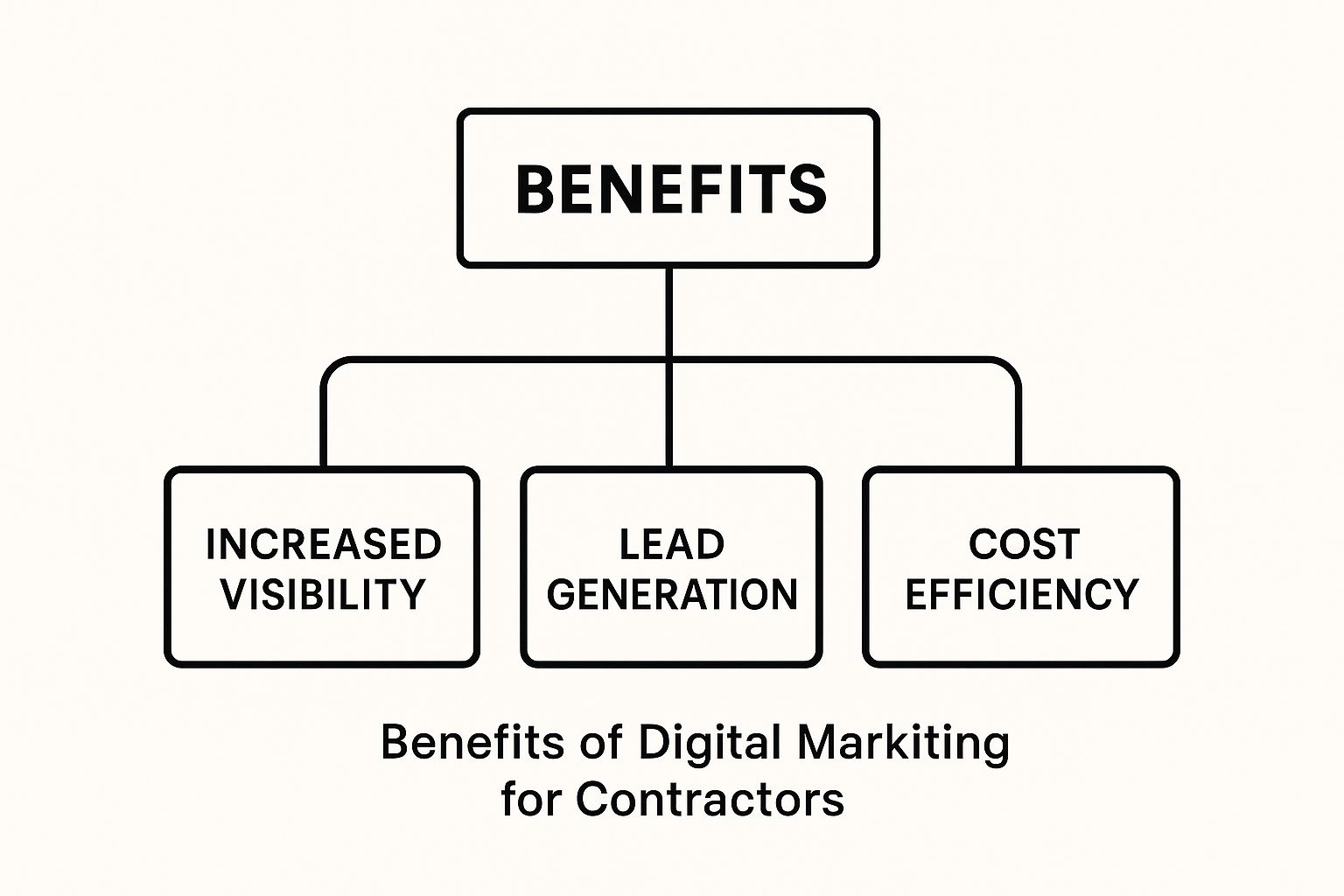
This infographic illustrates the core advantages of digital marketing for contractors. It highlights how digital marketing boosts visibility, generates valuable leads, and improves cost efficiency. Notice how these benefits create a cycle of growth. Increased visibility leads to more leads, which, when managed effectively, reduces your overall marketing costs.
To further understand how local SEO impacts your visibility, let’s take a look at some key ranking factors:
To help you understand the key elements of local SEO for contractors, we've put together a handy table:
| Ranking Factor | Impact Level | Implementation Difficulty | Time to Results |
|---|---|---|---|
| Google My Business Optimization | High | Low | Fast (weeks) |
| Online Reviews and Reputation Management | High | Medium | Medium (months) |
| Website Optimization (Local Keywords, Content) | High | Medium | Medium (months) |
| Backlinks from Relevant Websites | Medium | High | Slow (months) |
| Social Media Engagement | Medium | Low | Slow (months) |
| Citation Consistency (NAP Information) | Medium | Low | Fast (weeks) |
This table highlights the relative importance of each factor, how difficult it is to implement, and how long it typically takes to see results. As you can see, optimizing your Google My Business profile is a quick win with a high impact.
Mobile Optimization: Meeting Customers Where They Are
Most people search for services on their smartphones. If your website isn't mobile-friendly, you're losing potential clients. Imagine trying to read a menu with tiny, unreadable font. Frustrating, right? A non-responsive website creates the same frustrating experience. Visitors will quickly leave and choose a competitor with a mobile-optimized design.
Google My Business: Your Digital Storefront
Your Google My Business (GMB) profile is like a digital storefront. It's often the first thing potential clients see when searching online. A complete and optimized GMB profile with accurate information, photos of your work, and positive reviews can significantly increase your chances of getting chosen. For a more detailed look at GMB optimization, check out our guide on SEO for Contractors.
Building a Website that Converts
A high-converting website is more than just aesthetically pleasing. It’s strategically designed to guide visitors toward taking action, such as requesting a quote, booking a consultation, or calling you directly. Here are the essentials:
-
Clear Calls to Action: Tell visitors exactly what you want them to do. Use clear buttons like "Get a Free Quote" or "Book a Consultation."
-
Compelling Content: Offer valuable information about your services, showcasing your expertise and building trust.
-
High-Quality Images and Videos: Show, don't just tell. Visuals significantly influence how homeowners perceive your business.
-
Testimonials and Reviews: Social proof matters. Showcase positive feedback from your satisfied clients.
By focusing on these elements, you can transform your website from a static brochure into a powerful lead-generating machine. Stop chasing leads and start attracting them, leading to more business and greater success.
Pay-Per-Click Advertising: Your Express Lane to Quality Leads
Think of SEO as a marathon, a long-term strategy for building visibility. PPC advertising, on the other hand, is like a sprint, connecting you with ready-to-hire homeowners now. But many contractors approach PPC haphazardly, wasting money with little return. Let's explore how to turn PPC spending into a reliable lead-generating machine.
Crafting Ads That Resonate
Imagine a leaky faucet in your home. You wouldn't search for "plumbing solutions," would you? You'd search for "emergency plumber near me." Your PPC ads need to reflect this urgency.
They should speak directly to the homeowner's immediate problem, offering clear solutions and a compelling reason to choose your business. Perhaps a discount for first-time customers or a guaranteed response time could make all the difference.
Targeting: Avoiding the Tire-Kickers
Effective PPC goes beyond simple keywords. It uses advanced targeting to reach the right people. This means focusing on specific geographic areas, demographics, and even the time of day your ideal customer is searching.
Someone searching for "roof repair" after a storm is a much hotter lead than someone casually researching roofing options. Targeting helps you focus on the former.
Bidding Strategies: Competing Without Overspending
Many contractors avoid PPC, fearing bidding wars that will drain their budgets. But smart bidding strategies let you compete effectively without overspending.
Consider automated bidding strategies that optimize your bids based on conversion data. This takes the guesswork out of bidding and ensures your ad spend is working efficiently.
Case Studies: Learning From the Pros
Let's look at some real-world examples. A plumbing company in a major city saw a 300% increase in leads after focusing their PPC campaign on emergency services. They used keywords like "burst pipe repair" and "24/7 plumber," targeting homeowners within a specific radius.
Another contractor specializing in kitchen remodeling saw a 50% decrease in cost per lead by optimizing their landing page for conversions. Small changes can make a big impact.
Landing Page Essentials: Sealing the Deal
Your ad is just the first step. Think about clicking an ad for a new restaurant, only to find a confusing website. You'd probably leave. The same applies to your PPC landing pages.
They need to be clean, easy to navigate, and deliver on the promise of your ad. Include clear calls to action, testimonials, and high-quality images to encourage conversions.
The digital advertising market is projected to reach $786.2 billion by 2026. Discover more insights. This growth reflects the increasing reliance on digital platforms, especially for contractors. A blog, for example, can be a powerful tool for local SEO. Check out the Softriver Blog for more. You might also find this interesting: Facebook Ads Home Services to Marketplace: Competing with Angie's List and Amazon Home Services. By understanding these core PPC principles, you can transform it from a potential money pit into a highly effective lead generation tool for your business.
Social Media Marketing: Turning Your Work Into Trust-Building Content

Think of social media as more than just posting random job site photos. For contractors, it's a powerful tool to connect with potential clients and build trust long before they even pick up the phone. Instead of cold calls, savvy contractors are using platforms like Instagram and Facebook to showcase their expertise and personality. It's like a virtual handshake, building rapport and demonstrating value upfront.
This section explores how to turn your everyday work into engaging content that resonates with homeowners. We'll delve into the specifics of what works best, from compelling visuals to authentic engagement, helping you establish a strong online presence. Think of your social media profiles as a living portfolio, constantly showcasing your best work and building your brand story.
Content That Converts: What Works Best?
Just like every house is different, so is every contractor's specialty. A plumber might highlight a tricky repair, showcasing their problem-solving skills, while a landscaper could captivate with a time-lapse video of a garden transformation. The key is to tailor your content to your specific trade and audience.
-
Before-and-After Photos: These are the bread and butter of contractor social media. The "wow" factor of a dramatic transformation speaks volumes. Capture the essence of your work and let the results speak for themselves.
-
Client Testimonials: Sharing positive reviews from happy clients adds a powerful layer of social proof. It’s like word-of-mouth marketing amplified, building trust and credibility with potential clients.
-
Behind-the-Scenes: Give your audience a glimpse into your daily operations. Show your team in action, highlighting your commitment to quality and the human side of your business.
-
Tips and Advice: Sharing helpful tips related to your trade positions you as an expert. This builds authority and trust, making you the go-to source for information in your field.
-
Live Q&A Sessions: Interact with your audience in real time. This direct engagement builds relationships and addresses concerns, showcasing your responsiveness and expertise.
To help visualize which platforms are most effective for specific contractor types, take a look at the table below:
To understand the strengths of each platform, we’ve analyzed their effectiveness for different contractor specialties. The table below provides a quick overview of which platforms might be best for your business, along with the type of content and engagement you can expect.
| Platform | Best For | Content Type | Average Engagement Rate | Lead Quality |
|---|---|---|---|---|
| General contractors, remodelers | Before & After photos, project updates, client testimonials | 0.5% – 1% | Medium | |
| Landscapers, interior designers | High-quality visuals, behind-the-scenes, influencer marketing | 1% – 3% | High | |
| Houzz | Interior designers, architects | Project portfolios, design inspiration, client reviews | 0.5% – 1.5% | High |
| YouTube | Plumbers, electricians | How-to videos, project walkthroughs, expert interviews | 0.5% – 1% | Medium |
| Commercial contractors, architects | Industry news, company updates, thought leadership | 0.25% – 0.75% | High |
As you can see, different platforms offer different advantages. Choosing the right mix for your business is key to maximizing your reach and impact.
Consistency Without the Constant Hustle
Staying active on social media doesn't have to be a full-time job. Use scheduling tools like Buffer or Hootsuite to plan your posts in advance. Repurpose content from your website or blog. Even short, regular updates are more effective than sporadic bursts of activity. Consistency is key.
In the construction industry, digital marketing is essential for not only promoting your business but also for managing your reputation and engaging with customers. Creating engaging content on platforms like Instagram and Facebook is known to deliver a high ROI when done right. Discover more insights about digital marketing.
Authentic Engagement: Turning Followers Into Clients
Authenticity is paramount in the world of social media. Don't just broadcast your message; engage with your audience. Respond to comments, answer questions, and participate in industry conversations. Building genuine connections increases the likelihood that followers will become clients.
Consider this real-world example: a bathroom renovation specialist saw a 40% increase in website traffic after implementing a consistent Instagram posting schedule featuring before-and-after photos and client testimonials. They further boosted lead generation by 20% by actively engaging with comments and messages. This illustrates the power of a well-executed social media strategy. Once you've mastered the basics, you can explore advanced tactics like boosting your Instagram campaigns through platforms such as Boostfluence.
Building Your Community: It’s More Than Just Likes
Social media isn’t about vanity metrics. It's about building a community around your expertise. Think of it as your digital networking event, a place to connect with potential clients, nurture relationships, and showcase your skills. By consistently providing valuable content and engaging authentically, you cultivate a loyal following that can generate referrals and long-term growth for your business.
Making Sense of Your Marketing Data: What Really Matters
Marketing analytics can feel overwhelming. But focusing on the wrong metrics is actually worse than ignoring your data altogether. Think of it like using the wrong tools on a job site – you'll waste time and effort, and the results won't be what you expect. Many contractors get stuck in two common traps: obsessing over vanity metrics that don't translate to actual income or neglecting the valuable data their marketing is generating. This section helps you cut through the noise and focus on the measurements that really drive your bottom line – the ones that signal phone calls, booked jobs, and genuine revenue growth. We'll explore how to set up simple tracking systems that automatically monitor your wins and losses, pinpoint the marketing channels bringing you the best clients, and identify problems before they dent your budget.
Identifying Key Performance Indicators (KPIs)
For contractors, focusing on the right Key Performance Indicators (KPIs) is like reviewing blueprints before you break ground. You wouldn't start building without a solid plan, and the same applies to marketing. Instead of chasing likes and shares (those vanity metrics we talked about), concentrate on KPIs that directly correlate with business growth:
-
Website Conversion Rate: Imagine your website as your virtual storefront. How many visitors actually "buy" something – meaning, how many request a quote or give you a call? This tells you how well your site is turning casual browsers into potential customers. A higher conversion rate usually means a well-designed, user-friendly website.
-
Cost Per Lead: Think of this as the price of acquiring a new customer through each marketing avenue. Knowing how much each lead costs helps you understand which channels offer the best bang for your buck. Are you spending too much on flyers when online ads are yielding better results?
-
Lead Close Rate: This measures how many of your leads become paying customers. It's like evaluating the success of your sales pitches. Analyzing this reveals the strengths and weaknesses in your sales process.
-
Customer Lifetime Value: This is the total revenue you can expect from a typical customer throughout their relationship with your business. Knowing this helps you prioritize attracting clients who offer long-term value. It's like choosing to specialize in high-value renovations that bring repeat business versus quick, small jobs.
Setting Up Tracking Systems: Automation Is Your Friend
Imagine having to manually measure every single board on a job site. Tedious, right? Tracking your marketing data manually is just as inefficient. Tools like Google Analytics and call tracking software automate data collection, giving you insights into which marketing efforts are actually driving results.
This screenshot shows a standard Google Analytics dashboard. Notice the key metrics displayed, like where your website traffic is coming from and how visitors interact with your site. This data helps you identify areas for improvement and optimize your website for better performance. For example, a high bounce rate (people leaving quickly) from a specific source might signal a problem with the relevance of that ad campaign.
You might be interested in: 7 Ways Marketing Analytics and Reporting Can Impact Your Campaign Success
Identifying High-Value Clients: Not All Leads Are Created Equal
Not all leads are worth the same effort. Some clients bring small, one-time jobs, while others result in large, recurring projects. By tracking the source of your most profitable clients – maybe through specific keywords or social media campaigns – you can focus your marketing energy on attracting more of them.
For example, if you notice that clients from Instagram tend to spend more on projects, it makes sense to invest more in that platform. It's like selecting premium materials for your builds; you're investing in leads that offer the best return.
Spotting Problems Early: Course Correction for Better Results
Regularly checking your marketing data helps you catch potential problems before they become major headaches. A sudden drop in website traffic or a dip in lead close rates could indicate underlying issues that need your attention. This early warning system allows you to adjust your campaigns and save valuable marketing dollars.
Learning From the Success of Others
Take, for example, a roofing contractor who used to spend most of their marketing budget on print advertising. By tracking their website traffic and lead sources, they discovered that most of their new business came from online searches. They shifted their budget to local SEO and PPC ads, leading to a 60% increase in leads within three months.
This real-world story demonstrates the power of data-driven decisions. To explore ways to turn your social media presence into sales, consider reading about How To Sell On Instagram. By focusing on the right metrics, implementing tracking systems, and learning from both successes and failures, you can make sure your limited marketing budget has the biggest impact on your contracting business.
AI Tools That Actually Help Contractors Win More Work
Artificial intelligence is making waves in the contracting world, offering smart ways to attract and convert leads. Think of it as having a tireless digital assistant, always working behind the scenes. From AI chatbots that qualify prospects while you're on a job site, to tools that fine-tune advertising and craft compelling content, practical AI is becoming increasingly accessible. We'll explore how contractors are using AI to handle online reviews, boost search engine rankings, and even predict which leads are most likely to become paying customers.
Real-World AI Implementations for Contractors
Let's move beyond the theoretical and dive into real-world examples of contractors successfully using AI. We'll look at the specific tools they're using, their investment levels, and the tangible impact on leads and conversions.
Imagine a roofing contractor struggling to keep up with online reviews. An AI-powered tool can analyze hundreds of reviews, identifying recurring themes and sentiments. Maybe customers consistently praise the company's responsiveness and clear communication. Armed with this insight, the contractor can refine their marketing, highlighting these strengths on their website and in their ads.
Or consider an HVAC contractor trying to prioritize leads. AI can analyze factors like lead source, engagement level, and website behavior to pinpoint high-potential prospects. This allows the contractor to focus their sales efforts where they'll have the biggest impact, saving valuable time and resources.
AI Chatbots: Your 24/7 Virtual Assistant
Picture AI chatbots as your always-available virtual receptionist. They can answer common questions, schedule appointments, and even pre-qualify leads, all while you’re busy on a job. This frees you up to focus on what you do best: delivering top-notch service.
This screenshot shows the OpenAI website, a prominent provider of AI solutions. They offer a range of tools adaptable for various business needs, including chatbot development and content creation. The increasing availability of these tools underscores the growing potential of AI for contractors.
AI-Powered Content Creation: From Website Copy to Social Media Posts
Creating engaging content can be time-consuming. AI can help contractors create compelling website copy, blog posts, and social media updates. Imagine an AI tool generating persuasive service descriptions or crafting attention-grabbing social media posts showcasing recent projects. This not only saves you time but also ensures your content is optimized for search engines.
AI for Advertising Optimization: Targeting the Right Customers
AI can analyze massive amounts of data to optimize your advertising campaigns. Think of it as a data-driven detective, uncovering the best keywords, targeting the most relevant audiences, and even adjusting your bids in real-time to maximize your ROI. This ensures you're spending your advertising budget wisely, reaching the most promising prospects.
Getting Started with AI: Finding the Right Tools and Budget
Which AI applications offer the most value for contractors, and how can you implement them without disrupting your current workflow? It's not about adopting every new tool, but strategically choosing solutions that align with your needs and budget. You don’t need a fortune to get started. Many affordable AI tools are available, allowing you to experiment and scale your investment as you see positive results.
The Future of AI in Contracting: Staying Ahead of the Curve
AI is constantly evolving, and its applications in the contracting industry are only going to expand. By understanding current trends and embracing the right tools, you can position your business for continued growth and success in the competitive market. This isn't about replacing human expertise; it's about using AI to enhance your existing skills and processes, making your business more efficient and effective.
Your 90-Day Digital Marketing Implementation Plan
Imagine having a truck full of shiny new tools but never actually using them to build anything. That's what it's like to have a great digital marketing strategy and not put it into action. This plan bridges that gap, turning concepts into a practical, step-by-step guide you can use immediately. Whether you're a one-person contracting show just starting out online or an established business aiming for market domination, this plan adapts to your resources and goals. We'll cover how to phase your approach for early wins, how to balance DIY tasks with expert help, and how to set realistic timelines.
Phase 1: The First 30 Days – Building Your Foundation
The first month is all about building a solid online presence. Think of it like laying the foundation for a house – crucial for everything that comes after.
-
Week 1: Claim and Optimize Your Google My Business Profile: This is a quick win with a significant impact. It's like putting a big, bright sign on your digital storefront. Make sure your contact information, hours, and service area are accurate and complete in your Google My Business profile.
-
Week 2: Website Audit and Essential Improvements: Does your website truly represent your brand and expertise? Imagine a customer walking into your office – is it clean, organized, and inviting? Focus on making your website easy to use on phones, including clear calls to action, and using appealing images.
-
Week 3: Local SEO Basics: Start optimizing your website content with local keywords. Pretend you’re a customer: What would you type into Google to find your services?
-
Week 4: Social Media Setup and Initial Content: Pick the social media platforms that make the most sense for your business and set a regular posting schedule. Begin by sharing before-and-after photos, project updates, and client testimonials.
Phase 2: The Next 30 Days – Expanding Your Reach
The second month is about getting your name out there and attracting more potential clients. Think of this phase as framing the house and putting up the walls – creating the structure for your marketing success.
-
Week 5: Launch Your Initial PPC Campaign: Start with a small, manageable PPC (Pay-Per-Click) campaign and experiment with different keywords and targeting. Focus on a specific service area and watch your results like a hawk.
-
Week 6: Content Marketing Strategy: Think about what valuable information you can share with your audience. Create helpful blog posts, articles, or videos that address their needs and showcase your expertise.
-
Week 7: Social Media Engagement and Community Building: Don’t just talk at your followers, talk with them. Respond to comments, answer questions, and join relevant online conversations. It's like chatting with potential clients at a neighborhood barbecue.
-
Week 8: Email Marketing Setup: Start collecting email addresses to build your subscriber list. Offer valuable content in exchange for sign-ups, like a home maintenance guide or a discount on services.
Phase 3: The Final 30 Days – Refining and Optimizing
The last month is dedicated to fine-tuning your strategies and making your campaigns as effective as possible. Think of it as adding the finishing touches – the details that make a house a home.
-
Week 9: Analyze Your Marketing Data: What’s working, and what needs tweaking? Use the data you've collected to improve your PPC campaigns, adjust your SEO strategy, and make it easier for visitors to your website to become customers.
-
Week 10: Explore AI-Powered Marketing Tools: How can AI help you automate tasks, personalize your messages, and get better results? Start exploring options like chatbot software, content generation tools, or advertising optimization platforms.
-
Week 11: Refine Your Social Media Strategy: Based on the data you've gathered, adjust your posting schedule, the type of content you share, and how you interact with your followers to maximize your reach and impact.
-
Week 12: Ongoing Optimization and Growth: Digital marketing is an ongoing journey, not a destination. Regularly review your data, adapt to changes in the market, and seek professional guidance when needed.
This 90-day plan is your roadmap to digital marketing success. Remember, consistency is key. Small, consistent efforts will produce better results than sporadic bursts of activity. As you implement this plan, consider partnering with a specialized agency like Core6 Marketing to get the most out of your marketing budget and free up your time to focus on what you do best: serving your clients.