So, what's the difference between SEO and internet marketing? Let's cut through the jargon. For small business owners in the Monterey Bay Area, internet marketing is the entire toolbox you use to promote your business online. Search Engine Optimization (SEO)—getting found on Google without paying for ads—is just one of the most powerful tools inside that box.
Think of it like this: Internet marketing is the entire effort to make your business known, from Gilroy to Santa Cruz. SEO is the specific strategy that ensures a customer in Monterey finds your website first when they search for your services. It's the foundation for long-term growth.
SEO vs. Internet Marketing: A Quick Comparison
For business owners across Monterey County, it’s never about choosing one over the other. It's about understanding how they work together to get you more leads and a better return on investment (ROI).
Internet marketing is the whole farm-to-table operation for a Salinas Valley farm—from planting the seeds to distributing the produce. SEO, on the other hand, is just making sure your stall is in the best, high-traffic spot at the local farmers' market. It's the place where customers who are ready to buy find you first, naturally.
Understanding the Core Distinctions
The main difference comes down to scope. Internet marketing is the big umbrella that covers SEO, but it also includes other critical activities to grow your business. We're talking about things like:
- Paid Google Ads to get immediate visibility.
- Social media campaigns to build your brand in Santa Cruz.
- Email newsletters to keep in touch with past clients and drum up repeat business.
SEO is purely the practice of earning visibility without paying Google for every click. If you want to see how this stacks up against older methods, check out our guide on traditional marketing vs internet marketing.
This image breaks down how traffic sources, investment type, and the timeline for results differ.
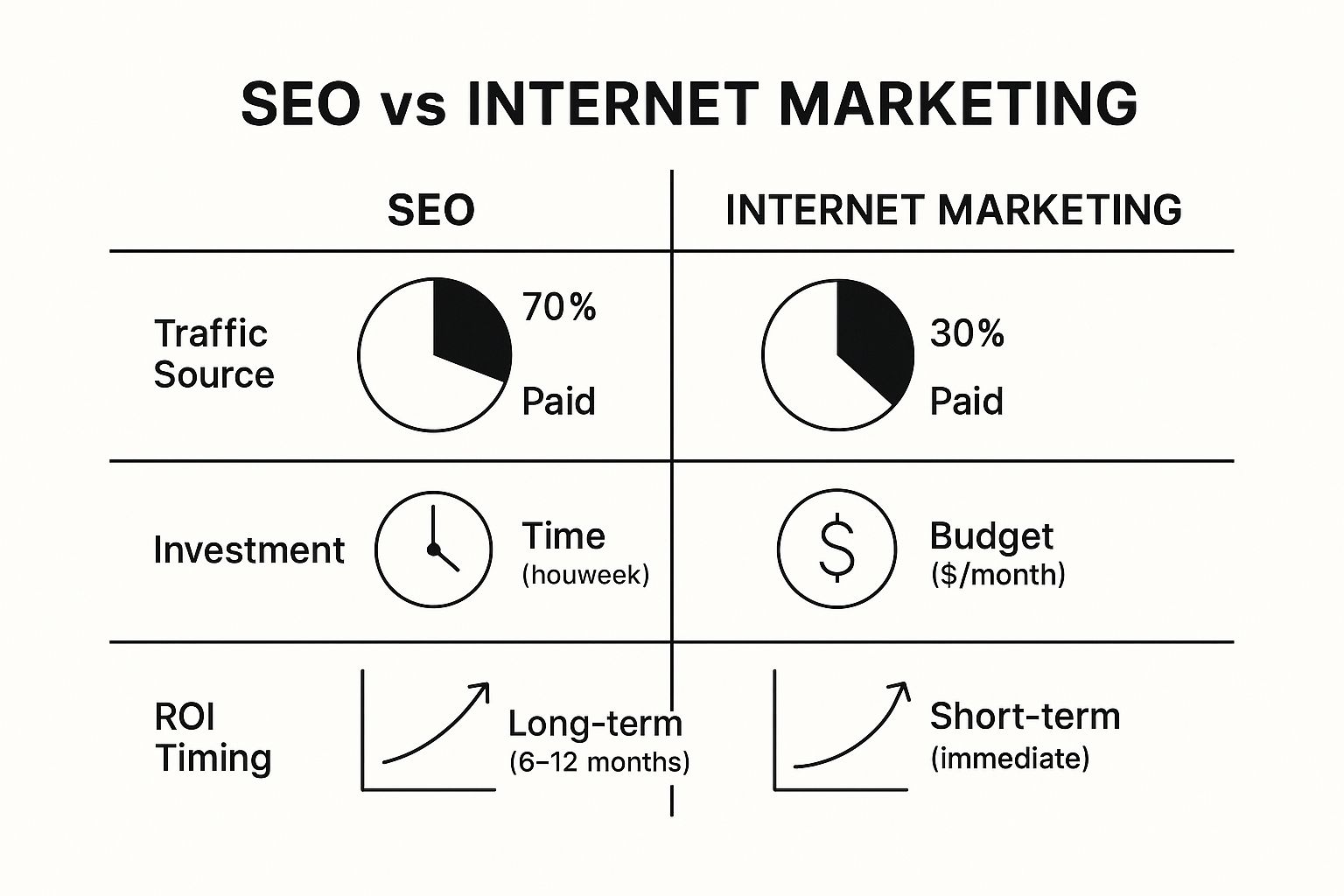
As you can see, SEO is a long-term play that builds organic traffic over time, while the broader internet marketing umbrella often includes paid tactics for faster, more immediate results.
SEO vs. Internet Marketing At a Glance
To make it even clearer, here’s a quick side-by-side look at the fundamental differences between SEO and a complete internet marketing strategy.
| Characteristic | SEO (Search Engine Optimization) | Internet Marketing (Overall Strategy) |
|---|---|---|
| Primary Goal | Increase organic visibility on search engines like Google. | Drive overall online growth and leads through multiple channels. |
| Scope | A specific discipline focused on unpaid search traffic. | A broad field including SEO, PPC, social media, email, etc. |
| Key Tactics | Keyword research, on-page optimization, link building, technical fixes. | Ad campaigns, content creation, social media management, email funnels. |
| Timeline | Long-term strategy; results build over 3-6+ months. | Can be short-term (PPC) and long-term (content marketing). |
| Cost Model | Investment in expertise and time; no direct payment for clicks. | Involves ad spend, software costs, and professional fees. |
| Best For | Building sustainable, long-term brand authority and trust. | Achieving immediate traffic, launching promotions, or reaching specific audiences. |
This table shows that while SEO is a core component, it’s just one piece of a much larger puzzle. A truly effective plan uses both to drive measurable results.
Scope and Cost Efficiency
At their core, the two disciplines serve different strategic purposes. SEO is all about the techniques that improve your organic (non-paid) search engine rankings. It’s often seen as the foundational, most cost-effective pillar in a larger digital strategy because once you rank, the traffic is essentially free.
In contrast, internet marketing is a broader strategy that also folds in things like pay-per-click (PPC) advertising, social media marketing, and email campaigns. For a more technical breakdown, there are some great resources out there demystifying Search Engine Optimization (SEO) for marketing agencies. The key takeaway is that a complete internet marketing plan leverages SEO for sustainable growth while using other channels to hit different goals.
What's Actually Involved? A Look at the Core Components
To really grasp the difference between SEO and internet marketing, let's pop the hood. Think of internet marketing as the entire car—a complete system working together to attract and convert customers online.
In that analogy, SEO is the engine. It’s not about paying for ads to get a temporary boost; it’s about earning your spot at the top of Google's search results for the long haul.

Internet Marketing: The Broad Playbook
A complete internet marketing plan for a business in Santa Cruz County is going to pull from a wide range of tactics. It's about being in all the right places your customers are looking.
This typically includes a mix of powerful strategies:
- Paid Advertising (PPC): This is your fast lane. Running Google Ads or social media ads on platforms like Facebook gets you immediate traffic, perfect for promoting a seasonal special or reaching a specific demographic.
- Content Marketing: This is about proving your expertise. You create valuable blog posts, videos, or guides that answer your customers' most pressing questions. Our own guide to online marketing for contractors is a perfect example of this in action.
- Social Media Marketing: This is where you build your community. You engage with customers on platforms they use every day, from Instagram to LinkedIn, showing off your work and building relationships.
- Email Marketing: Don't forget your existing customers and leads. This is how you nurture those relationships and stay top-of-mind with targeted newsletters and automated campaigns.
SEO: The Focused Foundation
While internet marketing casts a wide net, SEO is laser-focused on one thing: dominating organic search results. This discipline is built on three core pillars that work together to climb the rankings.
On-Page SEO: This is everything you do on your website. It's about optimizing the content and structure of each page—using the right keywords, writing meta descriptions that get clicked, and making sure your content gives searchers exactly what they came for.
Off-Page SEO: This is all about building your website's authority and trust from the outside. The main goal here is earning high-quality backlinks from other reputable sites, which act as a powerful vote of confidence in Google's eyes.
Technical SEO: This is the nuts and bolts. It ensures your site is fast, secure, and easy for search engine crawlers to read and understand. This covers everything from site speed and mobile-friendliness to implementing schema markup.
Think of it this way: a Carmel-by-the-Sea art gallery might use a broad internet marketing plan that includes Instagram ads and an email newsletter. But its SEO strategy is dialed in on ranking for specific terms like "local landscape artists Carmel." This breakdown shows just how each discipline has its own critical role to play.
Comparing Strategic Goals and Timelines
One of the clearest ways to grasp what's the difference between SEO and internet marketing is by looking at their goals and the timeframes they operate in. Internet marketing is often about the now. It’s built to chase immediate, short-term objectives and is perfect for kicking up a quick burst of activity and sales.
Think of a local retailer in Watsonville running a big weekend sale. They might use paid social media ads—a classic internet marketing tactic—to flood their website with traffic for a few days. The goal is instant results within a tight, specific window.
The Long Game of SEO
SEO, on the other hand, is a strategic investment in your business’s future. It's a marathon, not a sprint. The entire focus is on building sustainable, long-term organic visibility and cementing your brand as an authority in the local market.
SEO is all about creating a lasting digital asset. When your website ranks on the first page of Google, it becomes a reliable, 24/7 lead-generation machine that doesn't need constant ad money to keep running.
For example, getting a Hollister construction company to the top of Google for a term like "kitchen remodeling in San Benito County" isn't going to happen overnight. That kind of result takes months of consistent, dedicated work—think content creation, link building, and technical site improvements.
But once you earn that top spot, it generates a steady stream of high-quality leads from customers who are actively looking for exactly what you offer. That's the real power of SEO: it builds momentum that pays you back for years to come.
Analyzing Cost and ROI for Monterey Businesses
Every business owner in the Monterey Bay Area keeps a close eye on the bottom line. When deciding where to put your marketing dollars, you have to understand the financial differences between SEO and broader internet marketing. It’s a huge part of answering the question: what’s the difference between SEO and internet marketing?
Paid channels, like Pay-Per-Click (PPC) ads, demand an ongoing budget. The moment you stop paying for those ads, the traffic stops cold. Think of it like renting a billboard—your visibility disappears the second your contract ends.
The Investment in Sustainable Growth
SEO, on the other hand, is an investment in a permanent asset for your business. It requires a real commitment to expertise and execution. But the returns compound over time. You're essentially buying the property instead of just renting it.
For a local service provider, like a plumber in Pacific Grove, a smart investment in SEO builds a consistent stream of organic customer calls. Over the long haul, this approach delivers a much higher Return on Investment (ROI) than paying for every single ad click. This is what makes a well-managed SEO agency in Salinas such a powerful engine for sustainable growth.
A strong SEO presence becomes a lead-generation machine that works for you 24/7, attracting qualified customers across Monterey County without a per-click cost.
Comparing the Numbers
The data really highlights the difference in efficiency. While paid ads definitely have their place for quick wins, the organic traffic driven by SEO almost always proves more valuable in the long run.
Studies show that organic search traffic can outperform organic social traffic by a factor of 10, which helps businesses slash their customer acquisition costs over time. It’s no surprise that around 90% of marketers see SEO as a long-term success story. You can dig deeper into the numbers with these detailed SEO vs. PPC statistics.
For local businesses trying to get the most out of their budget, blending these approaches is often the smartest move. We cover more real-world examples in our guide to marketing ideas for contractors. The goal is to use paid marketing for immediate needs while building your SEO foundation for lasting, profitable growth.
When to Prioritize Each Strategy
Deciding where your marketing budget goes really depends on where your business is at right now. The right move for a brand-new restaurant in Gilroy trying to create a quick buzz is completely different from what an established digital marketing for Santa Cruz retailers strategy needs to attract steady, high-value clients. Your goals will dictate whether you lean into a broad internet marketing push or a more targeted SEO effort.
If you just launched, you need to get your name out there—fast. In this scenario, a wider internet marketing strategy is the way to go.
- Goal: Generate immediate traffic and get people talking about you.
- Tactics: Use paid social media ads to hit local audiences, team up with local influencers, and run introductory deals through an email campaign.
- Example: A new coffee shop in Hollister could run targeted Facebook ads to everyone within a five-mile radius, getting feet in the door from day one.
When to Double Down on SEO
For an established business that’s focused on long-term, sustainable growth, putting your chips on SEO is the smarter play. This strategy is all about building a powerful, lasting asset that brings in leads without you having to constantly pay for ads.
Key Insight: SEO is the clear winner when your main goal is building brand authority, trust, and a consistent flow of high-intent leads over the long haul.
This approach is especially powerful in fields where trust is everything. Recent studies show that in sectors like legal and financial services, SEO actually converts customers at a much higher rate than paid ads. For instance, legal services see 3.4 times higher conversion rates from SEO compared to PPC, simply because showing up organically builds instant credibility. You can read the full research on SEO vs. PPC conversion rates.
For service-based businesses like contractors, a focused SEO plan can be a total game-changer. Our digital marketing guide for contractors breaks down how this targeted approach builds a reliable pipeline of local jobs across San Benito County and beyond.
How SEO and Internet Marketing Work Together
Thinking of SEO vs. internet marketing is the wrong way to look at it. The real question is how they join forces to create a growth machine for your local business. These aren't competing strategies; they're powerful partners.
For example, a home remodeler in Salinas could publish an in-depth blog post about choosing the right countertop materials. That’s content marketing. Next, they use SEO to make sure that article ranks high when local homeowners search for those solutions. Then, they promote it through a paid Facebook campaign (social media marketing) and send it to their client newsletter (email marketing).
Creating a Growth Flywheel
This integrated approach creates a self-reinforcing cycle. The paid social campaign drives immediate traffic to the blog post, signaling to Google that the content is valuable. As the post starts ranking organically through SEO, it attracts a steady stream of high-intent visitors who might then sign up for that email list.
Every piece of the internet marketing puzzle works to support the others.
A well-executed SEO strategy provides the foundation for long-term organic traffic, while other internet marketing channels provide the fuel to accelerate growth, test new messaging, and reach customers at different stages of their journey.
This synergy dramatically boosts visibility and lead generation for any business in Monterey County. Understanding how each channel contributes to the final sale is key. To effectively measure this, a deeper dive into multi-channel attribution is crucial for seeing the full picture.
Ultimately, this integrated approach helps build a powerful online presence that also strengthens your brand’s reputation. We explore this connection further by examining the relationship between SEO and online reputation.
Answering Your Top Questions
Monterey Bay business owners often ask us about the practical differences between SEO and a broader internet marketing plan. Here are a few of the most common questions we hear.
Can I Just Do SEO and Ignore Everything Else?
You could, but you’d be leaving opportunities on the table. Think of it this way: SEO is the strong foundation that brings in consistent, organic traffic over the long haul. But other tactics, like social media or email marketing, are what drive immediate conversations and help you nurture leads across Santa Cruz County.
A combined approach makes your business far more resilient. When you bring them together, you're not just waiting for customers to find you—you're actively building relationships with them.
Which One Costs More?
That really depends on your timeline and what you’re trying to achieve. Paid internet marketing, like Google Ads, usually demands a bigger, ongoing monthly budget to keep the engine running. The moment you stop paying, the leads stop coming.
SEO, on the other hand, is an investment that builds on itself. It requires a commitment upfront and ongoing maintenance, but a successful SEO agency in Salinas will deliver a much higher ROI in the long run by making you less dependent on those expensive paid ads.
How Long Does It Take to See SEO Results?
SEO is a marathon, not a sprint. While you might notice some positive movement in as little as three months, it typically takes 6-12 months to see significant, game-changing results, especially in competitive local markets like ours.
Patience and consistency are non-negotiable. It's all about building momentum that lasts.
Ready to build a powerful, integrated digital marketing strategy for your Monterey Bay business? Contact Core6 Marketing today for a free, no-obligation consultation and let's discuss how we can help you grow.
By Phil Fisk, CEO, Core6 Marketing
Phil Fisk is the CEO of Core6 Marketing, a digital marketing agency dedicated to helping businesses in the Monterey Bay Area achieve measurable growth. With years of local market experience, Phil specializes in creating integrated strategies that combine the power of SEO with effective internet marketing to drive leads and ROI.
Core6 Marketing
1628 N. Main St #263, Salinas, CA 93906
Phone: 831-789-9320
Email: [email protected]
Website: https://core6.marketing/