
Understanding What Actually Drives Contractor Leads
Before we get into specific tactics, let's cut through the marketing noise and figure out what truly motivates a homeowner to pick up the phone. Effective lead generation for contractors isn’t about casting the widest net possible. It's about building a predictable system that brings in the right kind of customer—the one who values your craftsmanship and is ready to pay for quality work.
Too many contractors get stuck in a feast-or-famine cycle, chasing every single inquiry without a clear strategy. This leads to wasted time on "tire-kickers," inconsistent cash flow, and a lot of frustration. The real shift happens when you stop chasing and start attracting.
From Vague Interest to Ready-to-Buy
Think of it like fishing. You could randomly cast your line anywhere and hope for a bite. Or, you could study the fish, learn their habits, and use the right bait in the right spot. The second approach gets consistent results, and the same idea applies to finding high-quality leads for your home service business.
The goal is to connect with homeowners who have moved past the "I wonder how much that costs" phase. You want the ones who are actively looking for a professional to solve their problem. This requires a different approach than just running a generic ad. It’s about building trust and showing your expertise long before they even think about calling.
This is why successful contractors focus their energy where homeowners are already searching for solutions, like local Google results. Mastering this is foundational, which is why a strong grasp of SEO for contractors is so important for steady, long-term growth. By showing up where customers are looking, you make your business the obvious, credible choice.
A solid groundwork starts with understanding the different methods available. You can learn more about effective lead generation strategies and tips on salesloop.io to see what fits your business. The numbers show this isn't a guessing game. By 2025, 50% of marketers will rank lead generation as a top priority. While the average organization generates 1,877 leads per month, the challenge is the cost, which sits around $198 per lead. This proves why you need efficient, targeted strategies to get a good return. For more details, check out this report on lead generation statistics and trends from Exploding Topics.
Setting Realistic Expectations for Your Market
This chart shows that the cost to get a new customer changes a lot depending on the industry. A one-size-fits-all budget just won’t work. For contractors, your specific trade (roofing is different from electrical), local competition, and the economy in your service area all affect what you'll pay for a good lead.
Understanding this from the start is your first step. By setting realistic goals based on your unique situation, you can build a lead generation engine that fuels predictable, profitable growth for your business.
Building Your Digital Foundation That Actually Converts
Your website is much more than a digital business card; it’s your hardest-working sales tool. Think of it as your best salesperson—one who never sleeps, never takes a day off, and can talk to hundreds of potential customers at once. But just like any salesperson, if it isn’t equipped with the right information and a clear process, it won’t close any deals. Effective lead generation for contractors starts with a website designed not just to be seen, but to turn visitors into paying customers.
This process starts with understanding how a homeowner thinks and what they need to see to feel confident in hiring you. This infographic shows how a contractor can strategically study homeowner needs to build a website that answers their key questions.
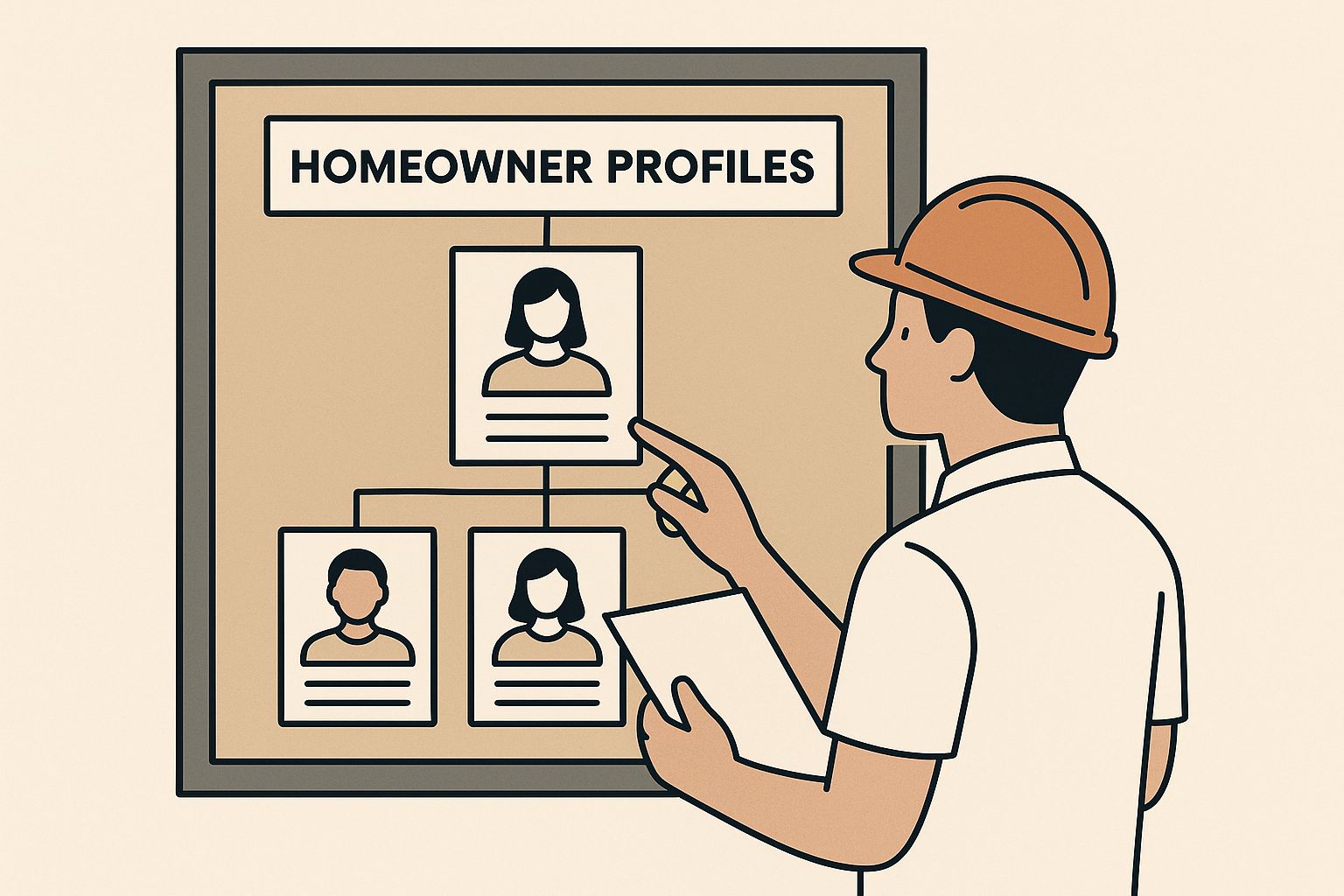
The key insight is that successful websites are built around the customer's journey, anticipating their worries and guiding them toward a solution.
Structuring Your Website for Maximum Impact
A high-converting website guides visitors on an intentional path, from the moment they land on your page to the moment they contact you. This structure isn’t accidental. It involves placing essential elements where users naturally look, answering their most urgent questions upfront, and building trust with every click.
A well-organized website isn't just a convenience for users; it's a core part of search engine optimization that helps qualified leads find you in the first place. For contractors, certain website elements are make-or-break when it comes to turning a visitor into a lead.
To help you visualize this, we've broken down the key website features that drive conversions versus the common mistakes that cause potential customers to leave.
Essential Website Elements That Drive Contractor Leads
Comparison of high-converting contractor website features versus common mistakes
| Website Element | Best Practice | Common Mistake | Impact on Conversion |
|---|---|---|---|
| Homepage | Immediately answers: What do you do? Where? How do I contact you? "Get Estimate" button is visible without scrolling. | Vague headlines, no service area listed, phone number is hard to find. | Visitors leave in seconds if they can't confirm you're the right fit for their needs and location. |
| Service Pages | Dedicated pages for each main service (e.g., "Roof Replacement," "Emergency Plumbing") with detailed descriptions. | A single page with a bulleted list of all services offered. | Dedicated pages rank better in search and show expertise, building trust with potential clients. |
| Social Proof | Prominently displays customer testimonials, before-and-after photos, and certification badges (e.g., BBB, local trade groups). | No reviews or project photos are visible, making the business seem inexperienced or untrustworthy. | 91% of people trust online reviews as much as personal recommendations, making this a critical trust signal. |
| Calls-to-Action (CTAs) | Uses clear, action-oriented language like "Schedule Your Free Consultation" or "Call Us Now for 24/7 Service." | Generic CTAs like "Contact Us" or "Learn More" that lack urgency or clarity. | Strong CTAs tell users exactly what to do next, removing friction and increasing the likelihood of contact. |
This table shows that small, strategic choices in your website's design and content can make a huge difference in whether a visitor becomes a valuable lead or just another bounce.
Building Credibility Beyond Your Website
Your digital foundation extends to other platforms where customers might look you up. Building trust and credibility on professional platforms is essential. For instance, strong recommendations from partners and past clients on your LinkedIn profile serve as powerful social proof, reinforcing the trust you've built on your own site.
By ensuring your entire online presence is professional and trustworthy, you create a powerful and cohesive system for attracting and converting high-quality leads.
2. Mastering Pay-Per-Click for Immediate Lead Flow
While search engine optimization builds your online presence over the long haul, sometimes you just need the phone to ring today. This is where Pay-Per-Click (PPC) advertising becomes your most valuable tool for getting immediate leads.
Think of it this way: SEO is like earning a permanent, high-traffic storefront location over time through great service and word-of-mouth. PPC, on the other hand, is like paying to put a giant, flashing billboard on the busiest highway in town, instantly directing traffic your way. It’s the fastest path to results for contractors who need a steady stream of new jobs right now.
But this speed comes with a major risk. Without a smart strategy, PPC can feel like pouring gasoline into a bucket with a hole in it. Many contractors waste thousands on clicks from homeowners who are just browsing or aren't serious buyers. The secret to profitable PPC isn't just getting clicks—it's getting the right clicks. Success hinges on targeting homeowners who have moved past the "just looking" phase and are actively searching for a contractor to hire. This is where mastering keyword intent is essential.
Targeting Keywords That Signal Action
The foundation of any successful PPC campaign is choosing keywords that show a homeowner is ready to make a decision. There’s a huge difference between someone searching for "kitchen remodel ideas" and someone searching for "kitchen remodeling contractor near me." The first person is researching; the second is ready to hire.
Focusing your budget on these high-intent keywords is the first step toward a positive return on your advertising spend. Here are some examples of keywords that typically mean a buyer is close to making a decision:
- Emergency plumbing repair + [Your City]
- Roof replacement estimate + [Your County]
- Best HVAC installation company
- Licensed electrician for panel upgrade
By bidding on these specific phrases, you ensure your ads are shown to people actively looking for the services you provide. This dramatically increases the quality of your leads and stops you from wasting money on tire-kickers.
Here is an example of the Google Ads interface where you would manage these campaigns, targeting specific locations and keywords.
This dashboard is your control center. It lets you see exactly which keywords are driving calls and which ones are just draining your budget.
Before diving into campaign setup, it's helpful to see what kind of performance you can expect. The table below shows some typical PPC benchmarks for different types of contractors.
PPC Performance Benchmarks for Different Contractor Types
Average cost-per-click, conversion rates, and ROI data across contractor specialties
| Contractor Type | Average CPC | Conversion Rate | Average ROI | Best Platform |
|---|---|---|---|---|
| Plumbing | $15 – $35 | 10% – 20% | 3:1 – 5:1 | Google Ads |
| HVAC | $20 – $50 | 8% – 15% | 4:1 – 6:1 | Google Ads |
| Roofing | $30 – $70 | 5% – 12% | 5:1 – 8:1 | Google Ads, Angi |
| Electrician | $18 – $40 | 9% – 18% | 3:1 – 6:1 | Google Ads |
| Remodeling | $40 – $100+ | 3% – 8% | 6:1 – 10:1+ | Google Ads, Houzz |
| Landscaping | $5 – $25 | 12% – 25% | 2:1 – 4:1 | Google Ads, Facebook |
These numbers show that while some clicks can be pricey, the return on investment can be substantial when campaigns are managed correctly. A remodeler might pay more per click, but the high value of each job leads to a fantastic ROI.
Structuring Campaigns for Profitability
Effective lead generation for contractors through PPC requires more than just good keywords; it demands a well-organized campaign structure. Instead of lumping all your services into one generic ad group, create separate campaigns for each major service you offer (e.g., one for "Water Heater Repair" and another for "Drain Cleaning").
This allows you to write highly specific ad copy and send users to a dedicated landing page that speaks directly to their problem. For instance, an ad for "Emergency AC Repair" should link to a page that highlights your 24/7 service and quick response times, not your general HVAC homepage.
This level of relevance is rewarded by Google with higher ad quality scores, which can lower your cost-per-click. To get a deeper understanding of these concepts, you can read our detailed guide on pay-per-click advertising for home services. By combining specific keywords with relevant ads and landing pages, you create a smooth path that turns clicks into high-quality, profitable jobs.
Separating Gold From Fool's Gold: Lead Qualification Mastery

Getting a lot of inquiries can feel like a big win, but real success in lead generation for contractors isn’t about quantity—it’s about quality. Chasing every single lead that comes your way is a quick path to frustration and wasted effort. It’s like being a gold miner who spends all day sifting gravel without knowing how to spot an actual nugget. To protect your time and grow your profits, you need to master lead qualification, which is the skill of quickly telling high-potential clients apart from time-wasters.
This one skill can improve your entire sales process. Instead of letting every potential customer steer the conversation, you take control with a clear system built to uncover their motivation, budget, and timeline. It all starts with the very first phone call or email.
The First Conversation: Asking the Right Questions
Your first contact with a new lead is a two-way street. While they are checking you out, you should be doing the same to them. The goal is to get past the surface-level details of the project and find out what’s really driving their inquiry. To do this, you need a system. A reliable method is the BANT framework (Budget, Authority, Need, Timeline), which can be adapted perfectly for contractors.
- Budget: Don't hesitate to talk about money early on. A polite way to bring it up is by asking, "To make sure we're on the same page, have you set a budget range for this project?" This simple question helps filter out anyone looking for a rock-bottom price right away.
- Authority: You need to confirm you're talking to the person who makes the final decision. Ask, "Are there any other key decision-makers who should be part of this conversation?" This is especially important when you’re working with couples who might have different ideas for the project.
- Need: Dig deeper than "I need a new deck." Ask why they need it. Questions like, "What problem will this new deck solve for you?" or "What are you hoping to accomplish with this renovation?" reveal their emotional investment, which is a strong indicator they're ready to buy.
- Timeline: A prospect with a clear deadline, like "We're hosting a family event in three months," is much more serious than someone with a vague "sometime next year" plan.
Putting a qualification process like this in place is vital. The good news is that modern marketing is getting better at attracting the right people from the start. Recent data shows that of the roughly 1,877 leads that organizations generate each month, 81% are considered marketing-qualified. This points to a trend of getting leads who are already a great fit before you even pick up the phone. You can find more information about these lead generation findings on SalesHandy.
Ultimately, mastering lead qualification puts you in control. It allows you to focus your energy on clients who respect your skills and are prepared to invest in quality work, turning your lead generation into a dependable source of profitable jobs. For more specific ideas, check out our guide on how to generate leads for home builders and general contractors.
Building A Referral Engine That Runs Itself
While digital marketing tools are essential, one of the most powerful sources of **lead generation for contractors** is an asset you already own: your happy customers. A strong referral program isn’t a matter of luck; it’s a deliberate system you construct. Think of it as creating a dedicated, highly effective sales team that works for you based on pure trust and goodwill.
Unlike cold leads from ads, referrals come to you already convinced of your quality and professionalism. This pre-built trust makes them far more likely to become profitable jobs. The goal is to shift from passively hoping for word-of-mouth to actively encouraging it. You can't just expect satisfied clients to remember you months down the line; you need a process that makes referring you easy, natural, and worthwhile.
Making the "Ask" Effortless
For many contractors, the most challenging part is the awkwardness of asking for a referral. The secret lies in timing and framing. The best moment isn't when you send the final bill, but right after the project "reveal"—when the client is thrilled with the result. At this peak of satisfaction, their enthusiasm is genuine and infectious.
Instead of a generic "send people our way," make your request specific and gentle. Try saying something like, "We're so glad you love the new kitchen! We grow our business by working with great people like you. If you know anyone else thinking about a similar project, we would be grateful for an introduction." This approach feels less like a sales pitch and more like a compliment.
Structuring a Program That Motivates
To turn one successful job into a steady stream of leads, you need a structured system. This means making it simple for people to refer you and giving them a compelling reason to do so. Here are a few practical ideas:
- Offer a Tangible Thank You: A simple, tiered incentive can do wonders. For example, a $50 gift card for a qualified lead (someone you meet with for an estimate) and a more significant reward, like $250 or a percentage of the project total, for a signed contract.
- Create "Referral Cards": Provide clients with a small stack of professional business cards that include a special offer for the person they refer. This gives them a physical tool to easily pass along your information.
- Expand Your Network: Don't just ask past customers for referrals. Build relationships with other professionals who work with homeowners, such as real estate agents, interior designers, and material suppliers. They are often the first to know when someone needs work done.
Managing referrals can get messy, which is where modern tools can help. Software can automate tracking and rewards, making sure no referral falls through the cracks.
For instance, platforms like ReferralCandy are designed to manage and automate these programs.
This screenshot shows how a centralized dashboard simplifies the process of tracking invites, clicks, and successful referrals, turning a manual chore into an automated system. By putting a system like this in place, you create a self-sustaining engine that consistently delivers high-quality, high-trust leads without constant effort on your part.
Social Media and Content That Actually Drives Business
Many contractors treat social media like a digital photo album—a place to post pictures of finished jobs and hope for a few likes. But that's like using a powerful excavator to dig a small hole for a plant. When used with a clear purpose, social media and content marketing transform into an engine for lead generation for contractors. It’s about moving beyond pretty pictures to build trust and demonstrate your expertise long before a homeowner is ready for a quote.
This change in thinking is essential. For most contractors, especially small to mid-sized businesses, marketing has to be smart and effective without breaking the bank. You need ways to secure a steady flow of projects without the massive budgets of larger companies. Social media is a prime, cost-effective tool for grabbing attention and starting conversations in a crowded market. For a deeper look at strategies for construction businesses, you can explore 30 effective ways to generate quality leads on handoff.ai.
Choosing Platforms That Align With Your Goals
Not all social media platforms are built the same, especially for contractors. The trick is to focus your energy where your potential customers are already spending their time and are open to seeing home improvement content. Instead of spreading yourself thin, get good at one or two platforms that match your services.
- Facebook: With its powerful local targeting features, Facebook is perfect for reaching homeowners in specific neighborhoods or zip codes. It’s great for showing your community involvement and building a reputation as the go-to local expert. You can run targeted ad campaigns for a relatively small budget.
- Instagram: This is a visual-first platform, making it ideal for trades where the final product is impressive, like kitchen remodels, custom landscaping, or detailed carpentry. Use "Before and After" Reels and Stories to create eye-catching content that shows off your skill.
- YouTube: This is where you can become the trusted expert. Create short, helpful videos that answer common questions homeowners have, like "How to spot a roof leak" or "What to ask before hiring an electrician." This kind of content builds incredible authority and trust.
For a great starting point, our guide on social media marketing for general contractors offers a solid foundation.
Content That Connects and Converts
Your content needs to do more than just show off your work; it should solve problems for your audience and build a connection. The goal is to position yourself as a helpful guide, not just another salesperson. This approach turns your best projects into marketing assets that continue to work for you long after the job is done.
The image below shows a standard Facebook Business interface, where you can manage ads aimed at specific local audiences.

This tool lets you send your message directly to homeowners in your service area who have shown interest in renovations or home services. By pairing great visuals with this kind of precise targeting, you make sure your marketing dollars are spent reaching people who are actually likely to become customers. It changes your social media from a passive gallery into an active lead-generating machine.
AI Tools And Automation That Actually Make Sense
Artificial intelligence might sound like something for tech giants, not for a contractor with a truck and a toolbox. But you don't need a computer science degree to make AI work for you. Think of AI and automation as a new, incredibly efficient crew member—one that handles repetitive marketing tasks so you can focus on running your business and managing job sites. This is a huge advantage for effective lead generation for contractors.
The trick is to use tools that solve real problems. Instead of chasing complicated software, smart contractors are using practical AI to improve communication, qualify leads automatically, and make their advertising dollars work harder. It’s about creating systems that deliver consistent results without feeling robotic or impersonal.
Putting AI to Work: Practical Applications
The best way to begin is by automating the small, time-consuming tasks that slow you down. This step-by-step approach lets you see the benefits without overhauling your entire operation. A great place to start is with your lead follow-up and qualification process.
Here are a few AI-powered tools that provide genuine value:
- AI-Powered Chatbots: Imagine a tool on your website that can answer common questions from visitors 24/7. These chatbots can ask basic qualifying questions (like the service needed and location) and collect contact information, turning a casual visitor into a warm lead while you’re on a job or asleep.
- Smart CRM Systems: A Customer Relationship Management (CRM) system with AI features can automatically send follow-up emails to prospects you haven't heard from. It can remind you to call a promising lead and can even help predict which leads are most likely to become a job based on past data.
- Ad Optimization Tools: AI can analyze your PPC campaigns on platforms like Google Ads, automatically adjusting bids to focus on keywords that generate the most calls. This ensures your budget is spent on clicks that actually lead to business.
For a deeper look into how automation can improve lead processes and boost revenue, consider exploring effective franchise marketing automation strategies. The principles of efficient lead handling apply to any service business.
Connecting these tools is easier than it sounds with platforms that act as a central hub for automation.
This image shows just how many AI applications can be linked together to automate different parts of your business, from marketing to customer support. For you, this means you can create custom workflows. For example, when a new lead comes from your website, it can be automatically added to your CRM, and you can get a text alert.
By adopting these tools, you aren't replacing the personal touch that customers value. Instead, you're building a more efficient business that frees up more of your time for those important client relationships. If you're curious about other ways to integrate this technology, you can learn more about how AI can enhance your digital marketing efforts in our related article.
Measuring What Matters And Optimizing For Growth
Pouring resources into lead generation without tracking the results is like driving without a map; you’re moving, but you have no idea if you’re getting closer to your destination. Effective lead generation for contractors isn't just about being busy; it's about being profitable. You can't improve what you don't measure, but many contractors either track the wrong things or get lost in data that doesn't lead to better decisions.
Think of your marketing metrics as the dashboard in your work truck. You don’t need to know every single mechanical detail to drive, but you absolutely need to see your speed, fuel level, and engine temperature. In the same way, you must monitor the vital signs of your marketing to know when to accelerate, when to refuel your budget, and when to fix a problem before it gets worse.
Identifying Your Core Metrics
To optimize for real growth, you have to move beyond just counting phone calls. The true insights come from connecting your marketing efforts directly to your revenue. A simple, well-organized dashboard can give you a quick overview of what’s working, helping you make smart, data-backed decisions instead of relying on gut feelings.
Here are the essential metrics every home-service contractor should be tracking:
- Cost Per Lead (CPL): This is the total amount you spend on a specific marketing channel (like Google Ads or Facebook) divided by the number of leads it generated. It tells you exactly how much it costs to make the phone ring from that source.
- Lead-to-Appointment Rate: What percentage of your leads turn into an actual appointment or estimate? This metric measures the quality of your leads. A low rate might mean you're attracting tire-kickers instead of serious buyers.
- Appointment-to-Close Rate: Of the estimates you provide, how many become signed jobs? This measures the effectiveness of your sales process and your team's ability to close deals. A great close rate can easily make up for a higher CPL.
- Customer Acquisition Cost (CAC): This is the total marketing and sales cost to land one new customer. It’s the ultimate measure of your efficiency. For example, if your CPL is $100 and you book appointments with 50% of those leads, and then close 50% of those appointments, your close rate is 25% and your CAC is $400.
- Customer Lifetime Value (CLV): This is the total profit you can expect from a single customer over the entire course of your relationship. A high CLV from repeat business, maintenance plans, or referrals can justify a higher initial CAC.
This screenshot from Google Analytics shows how you can track where your website visitors come from. By looking at this data, you can see which channels are bringing in the most traffic, which is the first step in calculating the ROI for each one.
Tracking these key numbers empowers you to make smarter decisions with your budget. You’ll know precisely which channels deliver the most profitable jobs and can confidently double down on what works while cutting what doesn't.
Before we move on, let's put these metrics into a clear table so you can see how to track and use them effectively in your own business.
| Metric | Definition | Target Range | Tracking Method | Optimization Strategy |
|---|---|---|---|---|
| Cost Per Lead (CPL) | Total marketing spend on a channel / number of leads generated. | $50 – $250 (Varies by trade and location) | CRM or spreadsheet; divide channel ad spend by leads. | Pause underperforming ads; reallocate budget to high-performing keywords or platforms. |
| Lead-to-Appointment Rate | (Number of appointments booked / total leads) * 100. | 50% – 80% | CRM tracking; tag leads that become appointments. | Improve your intake process; follow up with leads faster; pre-qualify leads better. |
| Appointment-to-Close Rate | (Number of jobs won / total appointments) * 100. | 25% – 50% | CRM or sales software; track estimate status. | Refine your sales presentation; offer financing; create professional proposals. |
| Customer Acquisition Cost (CAC) | Total marketing and sales cost / number of new customers acquired. | Aim for CAC to be < 1/3 of CLV. | (Total Sales & Marketing Costs) / New Customers. | Improve CPL and close rates; focus on more efficient marketing channels like referrals or SEO. |
| Customer Lifetime Value (CLV) | Average profit per customer over their entire relationship with you. | 3x your CAC or higher. | (Avg. Job Value) x (Avg. # of Jobs per Year) x (Avg. Customer Lifespan). | Offer maintenance plans; use email marketing for repeat business; ask for referrals. |
This continuous cycle of measuring, analyzing, and optimizing is the engine that drives sustainable growth for your contracting business.
Ready to stop guessing and start growing with a data-driven marketing strategy? Core6 Marketing builds custom digital solutions that deliver measurable results. Schedule your strategy session today and let’s build a predictable lead generation engine for your business.