For any local business in the Monterey Bay Area, from the ag-tech fields of Salinas to the coastal shops in Santa Cruz, turning a one-time buyer into a lifelong fan is the ultimate goal. The secret to how to build customer loyalty isn't about endless sales. It’s about creating an experience so good that customers wouldn't dream of calling anyone else.
Why Loyalty Is Your Greatest Local Asset
In our close-knit communities, a loyal customer base becomes your best marketing. It creates positive word-of-mouth that ads just can't buy. This guide offers real, actionable ways to build lasting relationships that grow your business.
We’ll dig into how focusing on retention cuts your customer acquisition costs (how much you spend to get a new customer). It also boosts lifetime value and builds a defense against bigger, faceless competitors. It's about nurturing the great relationships you already have.
The Power of a Great Experience
Today, loyalty is earned with more than just a job well done. The overall customer experience—from the first call to the final payment—is just as important as the service itself.
In fact, data shows about 80% of customers believe the experience a company provides is as important as its products. This is a huge deal. If you only focus on the final product, you're missing a massive opportunity.
Every interaction matters. The first phone call, the text saying your tech is on the way, the follow-up email—it all needs to be easy, respectful, and reliable. This is especially true here in Monterey County, where a good reputation spreads fast (and a bad one spreads even faster).
A loyal customer is so much more than a repeat sale. They are a walking billboard for your business—a brand fan who trusts you enough to recommend you to their friends and neighbors in Gilroy, Hollister, and beyond.
Measuring What Matters Most
When you make loyalty a priority, you get a clearer picture of your marketing return on investment (ROI). Instead of just counting new leads, you can track the numbers that show your business is healthy and stable.
Building a loyal customer base has powerful benefits:
- Reduced Marketing Spend: It costs far less to keep a happy customer than to find a new one. It's that simple.
- Increased Revenue: Repeat customers spend more over time as they trust you more. They're also more likely to try your other services.
- Valuable Feedback: Loyal clients are your best source of honest feedback. They give you the insights you need to get better.
- Competitive Advantage: A strong, loyal following makes your business tougher against market changes and new competitors.
By understanding how to calculate marketing ROI for your service business, you can connect your loyalty efforts directly to your bottom line.
The ROI of Customer Loyalty for a Local Business
This table shows the benefits of focusing on customer loyalty for a local business in the Monterey Bay Area.
| Benefit | Impact on Your Business | Local Example |
|---|---|---|
| Higher Customer Lifetime Value (CLV) | Customers who stick with you for years bring in much more money than one-time clients. This creates a stable financial base. | A Salinas plumber keeps a customer for 10 years. They might handle small repairs, a water heater replacement, and a full repipe—turning a $200 job into $15,000+ over time. |
| Lower Acquisition Costs | Keeping a current customer can be up to 5 times cheaper than getting a new one. Your marketing budget stretches further. | A Santa Cruz electrician spends less on ads because their loyal clients refer new business, which costs nothing to get. |
| Increased Word-of-Mouth Referrals | Happy, loyal customers become your biggest fans. They refer friends, family, and neighbors—the most trusted kind of marketing. | A homeowner in Monterey recommends their roofer to two neighbors after a storm. That’s two big jobs from one loyal customer. |
| Improved Profit Margins | Repeat customers are less sensitive about price. They value your trust and reliability more than saving a few bucks with someone new. | An HVAC company in Hollister can keep healthier margins because loyal clients won't leave for a competitor's 10% off coupon. They trust the service. |
Investing in loyalty isn't just a nice idea. It's a proven financial plan for long-term growth in our competitive local market.
Map Your Customer Journey Across Monterey County
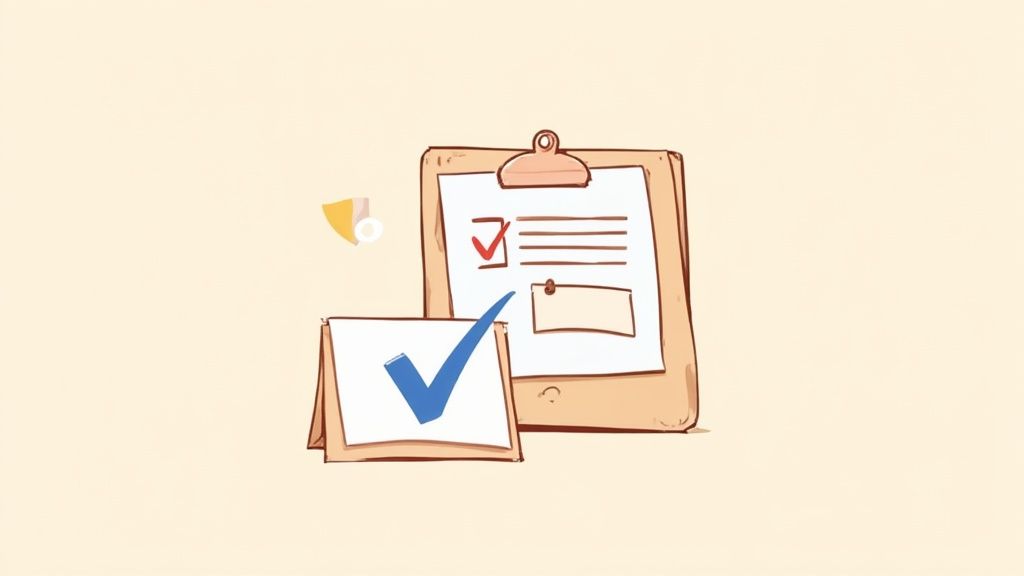
To truly understand your customer's experience, you have to see your business through their eyes. Their journey starts when they search online for a "plumber in Gilroy" and continues long after a job is done in Pacific Grove. A key secret to how to build customer loyalty is mapping this entire path.
This is about being honest about every single interaction a person has with your company. Think of it like a roadmap of their experience. Along the way, there are spots where you can either impress them or let them down.
Identifying Your Key Touchpoints
Every local business has unique touchpoints, but they usually fit into a few main stages. When you map them out, you start seeing opportunities to provide a great experience.
Let’s look at a typical journey for a homeowner needing an HVAC repair in Salinas:
- Awareness & Discovery: It starts when their AC dies on a hot day. They might ask a neighbor for a name or search online for "HVAC repair in Salinas." Your website and Google Business Profile are your first chance to build trust.
- Consideration & Booking: Next, they compare a few options. They call your office or fill out a form on your site. How easy is it to get a quote? Is your staff friendly? This stage should feel smooth and safe.
- The Service Experience: This is the main event. It includes the technician's arrival, their professionalism, and the quality of the repair. Small things, like wearing shoe covers or explaining the issue clearly, make a huge difference.
- Billing & Follow-Up: The experience isn't over when the work is done. Was the invoice easy to understand and pay? Did you send a follow-up email to make sure everything was still working? This final step shows you care.
Finding Your Moments of Truth
Throughout this journey are "moments of truth." These are interactions that can either make a customer relationship stronger or break it. For a contractor in Marina, a moment of truth might be how you handle an unexpected delay. For a roofer in Carmel, it could be the final cleanup.
By finding and improving these moments, you turn possible problems into a smooth, positive experience. This is where casual customers become loyal fans who will recommend your business all over the county.
To better understand your customer's path, it helps to look at different methods. Checking out these customer journey mapping examples can give you great ideas. By walking in your customer's shoes, you’ll find small changes that lead to big wins in loyalty.
Craft an Unforgettable Customer Experience
Mapping the journey shows you the what and when of your customer interactions. Now, it's time to focus on the how. You need to craft an experience at every touchpoint that is so positive it builds loyalty all on its own.
In a competitive market, a great experience is what separates a one-time job from a lifelong client. This isn't about expensive gestures. It's about being consistent and showing you care. For a small business in Santa Cruz County, just remembering a customer's name can make a huge impact. It shows them they are more than just an invoice.
But just being "satisfactory" might not be enough anymore.
A recent global study found something telling. While people are still generally happy with products, deeper loyalty signs like trust are actually going down.
This means just meeting expectations doesn't guarantee future business. You have to build a real connection. You can read up on these declining loyalty trends to see why going the extra mile is so important.
Proactive Communication Builds Trust
A huge source of stress for any customer is not knowing what's going on. You can fix that by communicating proactively. Keep them in the loop before they have to ask.
This simple act of over-communicating builds incredible trust. For a local contractor, proactive communication might look like this:
- Automated Appointment Reminders: A text or email sent 24 hours before a service call.
- "On The Way" Notifications: A message when your tech is heading over, maybe with their name and photo.
- Daily Project Updates: For multi-day jobs, a quick end-of-day summary of what got done and what’s next.
These small steps show you respect your customer's time. It turns a stressful home repair into a smooth, professional experience. This is a core part of our guide on effective marketing for contractors.
Empower Your Team to Be Problem Solvers
Your frontline team—from the person answering phones in your Salinas office to the techs on the job—is your company to the customer. Giving them the power to handle challenges is a must.
A customer complaint isn't a problem; it's an opportunity. It’s your chance to turn a bad experience into a loyalty-building moment by showing you care about making things right.
Train your crew to listen, apologize sincerely, and offer a clear solution. Nothing shakes a customer's confidence faster than an employee saying, "I need to ask my manager." Give your team the training and power to solve common issues on the spot.
Design a Loyalty Program That People Actually Use
Let's be honest, how many loyalty cards have you forgotten about in a drawer? Many programs feel like a clumsy afterthought. But for a local business in Monterey Bay, a good loyalty program can be a powerful tool for growth.
The great news? You don’t need a fancy app or a huge budget. The goal is to create a simple system that rewards repeat business in a way that feels valuable and easy for your customers.
Finding the Right Fit for Your Business
The best loyalty program for a cafe in Watsonville will look different from one for an HVAC company in Hollister. You need to match the rewards to how often your customers buy from you.
Here are a few models that work well for local businesses:
- The Simple Punch Card: This classic is great for businesses with frequent, lower-cost sales, like coffee shops or car washes. It’s simple and gives instant gratification.
- The Points System: This is a great fit for most home service businesses in Monterey County, where jobs are less frequent but cost more. Customers earn points for every dollar spent, which they can use for discounts later.
- Tiered Rewards: This model makes your best customers feel special. As they spend more, they "level up" to unlock better perks, like priority scheduling or exclusive offers.
Making Rewards Meaningful and Local
The secret to a program people care about is offering rewards they actually want. A generic discount is fine, but you can build a stronger bond by thinking locally.
Instead of another 10% off coupon, why not team up with another local business? A Salinas-based landscaper could partner with a local nursery to offer free native plants to top clients. This feels unique and supports another local entrepreneur.
A good program also gives you valuable information. By tracking which rewards get used most, you learn what your customers really value. This lets you personalize future offers and make them feel seen.
This infographic shows just how much small acts of personalization and speed can matter.
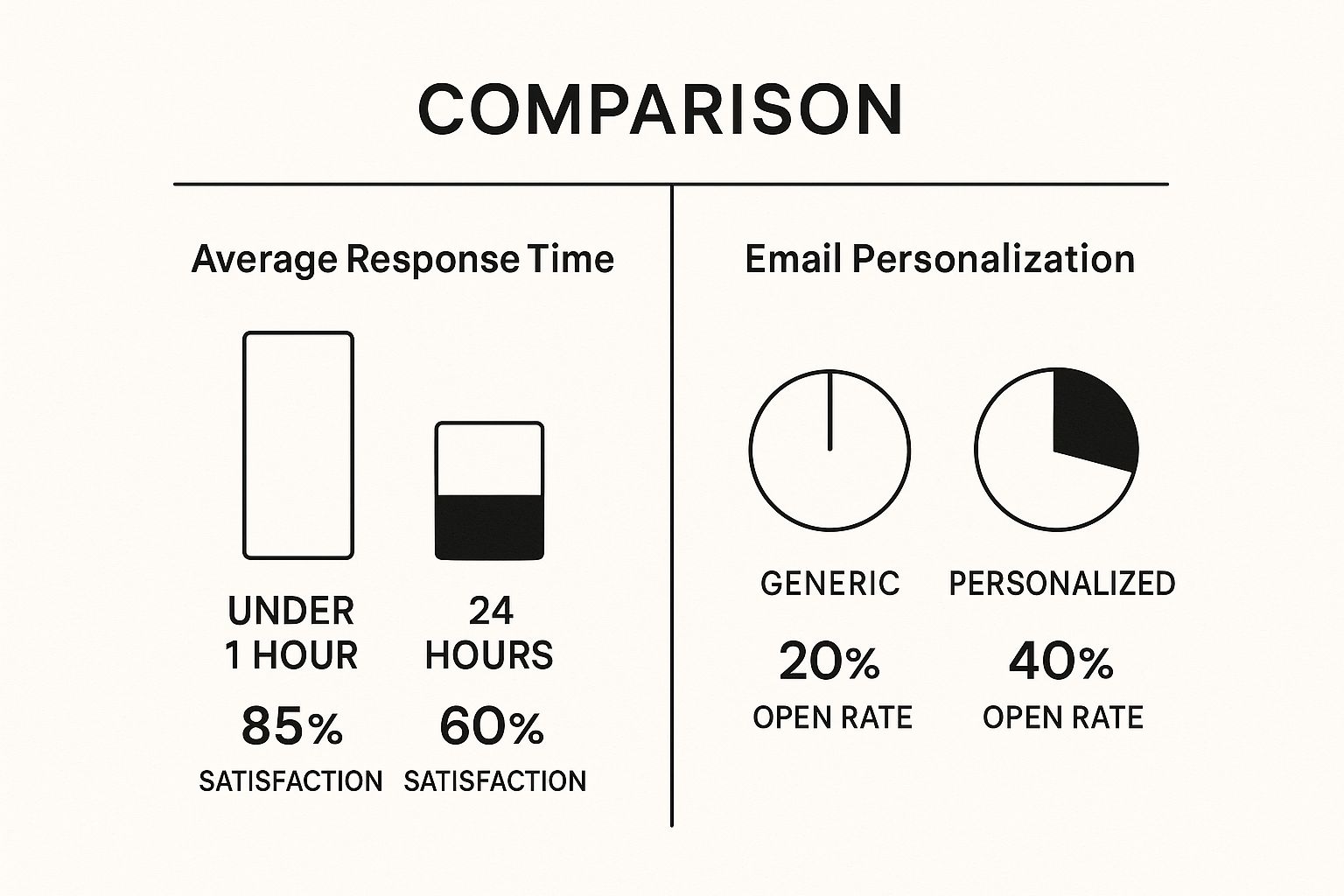
As you can see, being responsive and personal are what drive a positive customer experience and keep people coming back.
The goal isn't just to get another sale. A good loyalty program is a key part of your client retention strategy. For any service business, learning how to get more clients for your home services business starts by delighting the ones you already have.
Choosing Your Monterey Bay Loyalty Program
Not sure which model makes sense? This table breaks down common options to help you decide what fits your company and customers on the Central Coast.
| Program Type | Best For… | Local Business Example | Pros & Cons |
|---|---|---|---|
| Points System | Businesses with varied, higher-value sales like contractors or auto shops. | An HVAC company in Monterey offers 1 point for every $10 spent. 50 points = $50 off the next service. | Pro: Flexible and encourages bigger purchases. Con: Can feel slow to earn rewards. |
| Punch Card | Frequent, low-cost services like house cleaning or lawn mowing. | A local window cleaner offers the 10th cleaning free after 9 paid visits. | Pro: Simple and easy to understand. Con: Can get lost; feels less premium. |
| Tiered Program | Businesses wanting to reward their most valuable clients and create a VIP feel. | A Salinas landscaper offers Bronze (priority booking), Silver (5% off), and Gold (10% off + free mulch) tiers. | Pro: Creates exclusivity and drives higher spending. Con: More complex to manage. |
| Community Partnership | Any local business looking to strengthen community ties and offer unique value. | A Hollister plumber partners with a local hardware store to offer a 15% discount coupon to loyalty members. | Pro: Builds goodwill and cross-promotes local businesses. Con: Relies on another business. |
The best program is one that feels generous to your customers without hurting your bottom line. Start simple and listen to feedback.
Turn Customer Feedback into a Loyalty Engine
Building real customer loyalty is an ongoing process of listening, learning, and improving. If you really want to know how to build customer loyalty, you have to understand what your clients are thinking. That means making it easy for them to give you feedback.
You don't need a complicated system. I've seen local businesses get great results with a simple email survey or a QR code on an invoice that links to a review form. The point is to make leaving feedback easy.
But collecting feedback is just the start. The real magic happens when you show them you were listening.
Responding to Every Review Builds Trust
Responding to every single review—the good and the bad—sends a powerful message. It tells current and future customers that you are paying attention and that you care. It’s a huge sign of confidence that resonates with people across Monterey County.
For positive reviews, a quick, personal thank you works wonders. For negative ones, your approach is even more important.
The worst thing you can do with a bad review is ignore it. The second worst is to get defensive. A calm, public response that takes ownership is one of the fastest ways to build trust.
When a tough comment comes in, use this process:
- Acknowledge and Apologize: First, thank them for their feedback. Then, offer a real apology that their experience wasn't great.
- Keep it Brief: Don't get into a long, public argument. Stick to your commitment to quality.
- Take it Offline: Give them a direct phone number or email and ask them to contact you so you can make things right.
This strategy shows you’re transparent and committed to fixing problems. You can learn more in our guide to online reputation management tips.
The High Cost of Ignoring Retention
Focusing on feedback is a critical business decision. The hard truth is that finding new customers is getting more expensive. In fact, customer acquisition costs have gone up by nearly 60% over the last five years.
Think about that. Businesses are now losing an average of $29 for every new customer they bring in.
That single number should tell you everything. Turning your feedback into a loyalty engine isn't optional anymore; it’s essential for a healthy business. As customers become more willing to switch brands, keeping the clients you have is the best path to stable growth. You can discover more insights about these loyalty trends to see just how crucial this is.
Common Questions on Building Customer Loyalty
We've covered the main strategies for building customer loyalty. But I know putting these ideas into action brings up practical questions. Let's tackle some common ones we hear from business owners around Monterey Bay.
How Can I Build Loyalty on a Small Budget?
Building lasting relationships doesn’t have to cost a lot. For most small businesses in Salinas or Santa Cruz, the most powerful loyalty builders are often free.
It all comes down to personal touches that bigger companies can't copy.
- Personal Recognition: Try to learn your regulars' names and a small detail about their last project. This simple act shows you see them as a person, not a number.
- Proactive Communication: A quick, personal thank-you text or email after a job can make a huge impression. It only costs a few minutes of your time.
- Act on Feedback: This is huge. Ask for feedback, and when you make a change based on a suggestion, let the customer know. This shows you value their input.
These low-cost actions create a powerful connection, and that's where true loyalty comes from.
Digital Program vs. Physical Punch Card?
The right answer depends on your business and your customers' habits.
A physical punch card is simple and effective for a business with frequent, smaller sales, like a local coffee shop in Pacific Grove. It's easy to understand and feels rewarding.
For a service business in San Benito County with less frequent, high-value jobs, a digital program is usually better. It lets you track customer history, personalize offers, and communicate directly with your best clients.
The key is to choose the system that feels easiest and most rewarding for your customers. If they live on their phones, go digital. If they like old-school simplicity, a well-designed card can still work.
What's the Single Most Important Factor for Loyalty?
If I had to boil it all down to one thing, it’s trust.
Trust is the foundation of every loyal customer relationship. You build it by being reliable, communicating honestly (especially when things go wrong), and keeping your promises.
Every single interaction—from how you answer the phone to how you handle a complaint—either builds or breaks that trust. Even handling a negative review well is a massive trust-building opportunity. We cover this in our guide on how to properly respond to negative online feedback.
Consistently making choices that build trust isn't just a strategy; it's the strategy.
Ready to turn your happy customers into a powerful marketing engine? The team at Core6 Marketing can help you implement strategies that build trust, encourage repeat business, and grow your reputation across the Monterey Bay Area.
Schedule Your Free Consultation Today
By Phil Fisk, CEO, Core6 Marketing
Phil Fisk leads Core6 Marketing, a digital marketing agency in Salinas, CA dedicated to helping home service contractors in the Monterey Bay Area generate more leads and achieve measurable ROI. With a focus on data-driven strategies like digital marketing for Santa Cruz retailers and SEO agency services in Salinas, Phil's team empowers local businesses to thrive.
Core6 Marketing
1628 N. Main St #263, Salinas, CA 93906
831-789-9320
[email protected]
https://core6.marketing/