Direct Answer: Most Central Coast contractors should run a service area business: hide the address, list the towns crews actually serve, and pick categories that match how homeowners search.
Almost every contractor I talk to asks the same thing within the first ten minutes: should I hide my address if I work out of my house or a shop yard? It comes up before rankings, before ads, before anything else.
Fair question. And the answer changes how your profile shows up in Maps, in AI answers, and in the searches homeowners in Salinas and Marina are actually typing.
Most contractors on the Central Coast are service area businesses. Most of them set that up once, badly, back around 2019 and never touched it again. This piece sticks to the setup decisions: address visibility, service areas, categories, services, hours and verification.
Should You Hide Your Address? The Service Area Business Question
A service area business is a profile with no public street address. You tell Google where you work instead of where you sit. Google still keeps your real address on file for verification, it just doesn’t show it to the public.
Here is the rule I use with clients: if customers do not come to you, hide the address. A plumber running out of a garage in Prunedale, an electrician with a truck and a trailer, a tree crew staging equipment on a leased lot in Castroville. None of those are places a homeowner should be driving to.
Keep the address visible only when there is a real spot a customer walks into:
- A flooring showroom with samples on the wall
- A stone or material yard where people pick product
- An office with a counter and posted hours someone actually staffs
What happens in the map pack either way? You can still rank in Maps as a service area business. But Google keeps using proximity between the searcher and your address on file, hidden or not. So a shop yard off North Main in Salinas will not carry you into Carmel Valley on distance alone. That gap gets closed with content, reviews and citations, not by faking a virtual office. Google’s own guidelines for representing your business are blunt about listing addresses you don’t staff, and profiles get suspended over it.
Name Your Service Areas the Way Homeowners Say Them
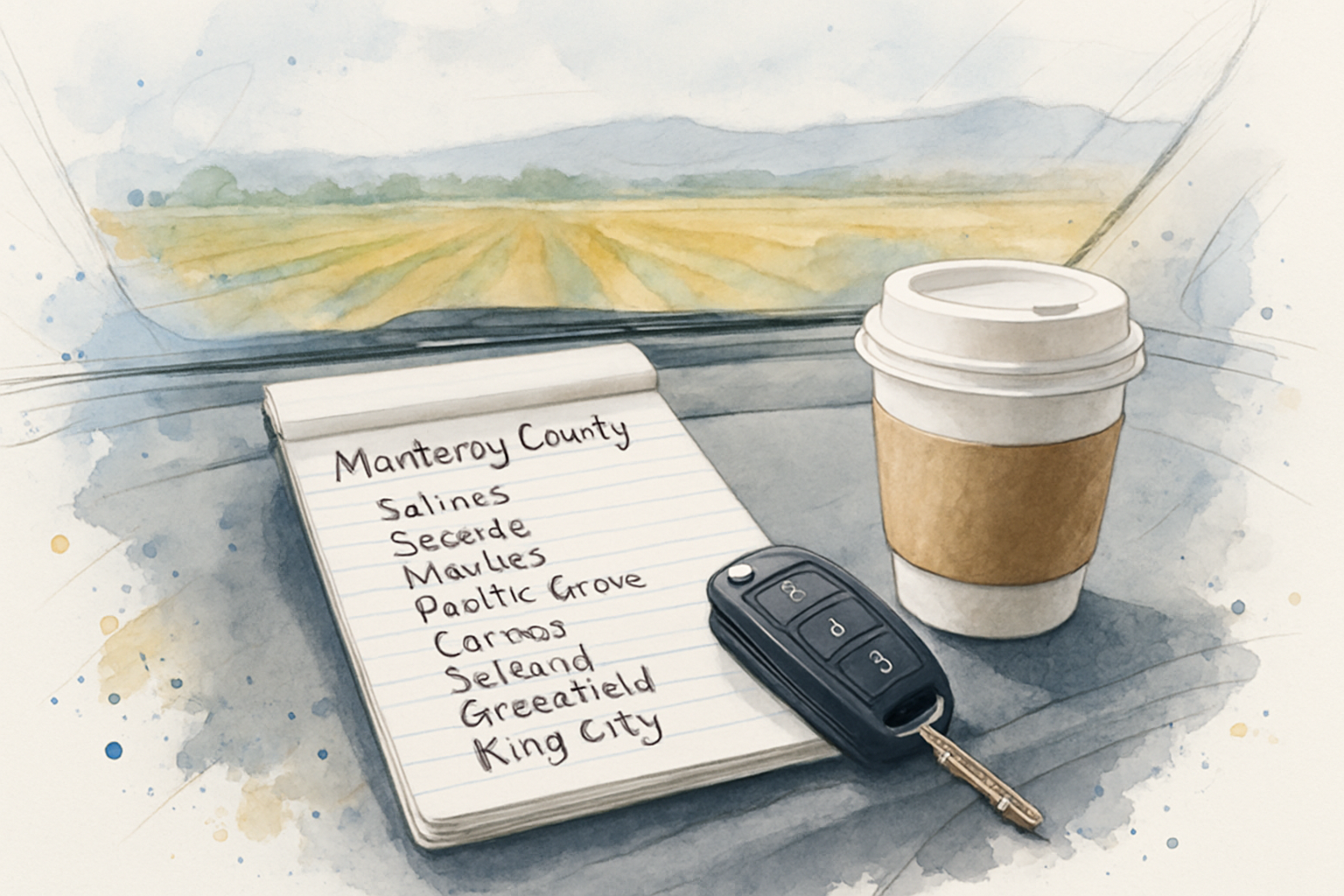
This is the field contractors waste most. I see profiles that list Monterey County and stop there.
Nobody searches that way. They search “water heater repair Marina” or “gopher control Prunedale.” The town name is the vocabulary in the query, so the town name belongs in the field.
A stronger list for a Salinas-based crew looks like this:
- Salinas
- Marina
- Seaside
- Prunedale
- Castroville
- Watsonville
- Hollister
- Monterey and Pacific Grove if your trucks really go there
Now the discipline part. Cap the list at the places crews actually drive. Padding it with San Jose or Paso Robles muddies the signal, burns the field, and sets you up for calls you have to turn down.
I have watched contractors add half of California and then wonder why they rank nowhere. Twelve honest towns beat thirty aspirational ones. Google allows up to 20 areas, and most trade businesses I work with are healthiest around 8 to 12.
Three Setups and Who Each One Fits
Here is the short version of which configuration matches which business.
| Setup | What the public sees | Who it fits on the Central Coast |
|---|---|---|
| Service area business | No street address, list of towns served | Plumbers, electricians, HVAC, roofers, tree crews, handymen working from home or a yard |
| Storefront | Full street address and pin | Flooring showroom, stone yard, any place customers walk in to buy or browse |
| Hybrid | Address plus service areas | Contractor with a staffed office or counter who also drives to jobs |
Categories and the Services List Do the Heavy Lifting
One 2026 report on Google Business Profiles found the large majority of profile impressions come from category-based searches, not from someone typing your business name. Which means your category is closer to a keyword decision than a filing decision.
Most contractors treat it like paperwork. Pick the closest label, done, never revisited.
How I think about it:
- Primary category goes to the work that pays your bills. If 70% of revenue is drain and sewer, the primary is not “Contractor.”
- Secondary categories cover real adjacent services, 2 to 4 of them. A plumber who also does drain lining should say so, because trenchless lining searches behave nothing like water heater searches.
- Skip categories you don’t actually sell. Extra categories can pull in irrelevant queries and dilute what Google thinks you are.
The services list underneath is where you get specific. Every job you would happily take the call for gets its own entry with a real description. Homeowners rarely search the way trades talk. In real reviews and calls across home service businesses, people describe a failing tree as “it’s seen better days” and a plumbing emergency as “water is coming through the ceiling.” That is the language that belongs in your service descriptions.
Categories and services also feed the AI tools that now summarize local options. I covered that side of it in how local SEO actually works for contractors on the Central Coast, and it is a core piece of what we run as AI Search Sync.
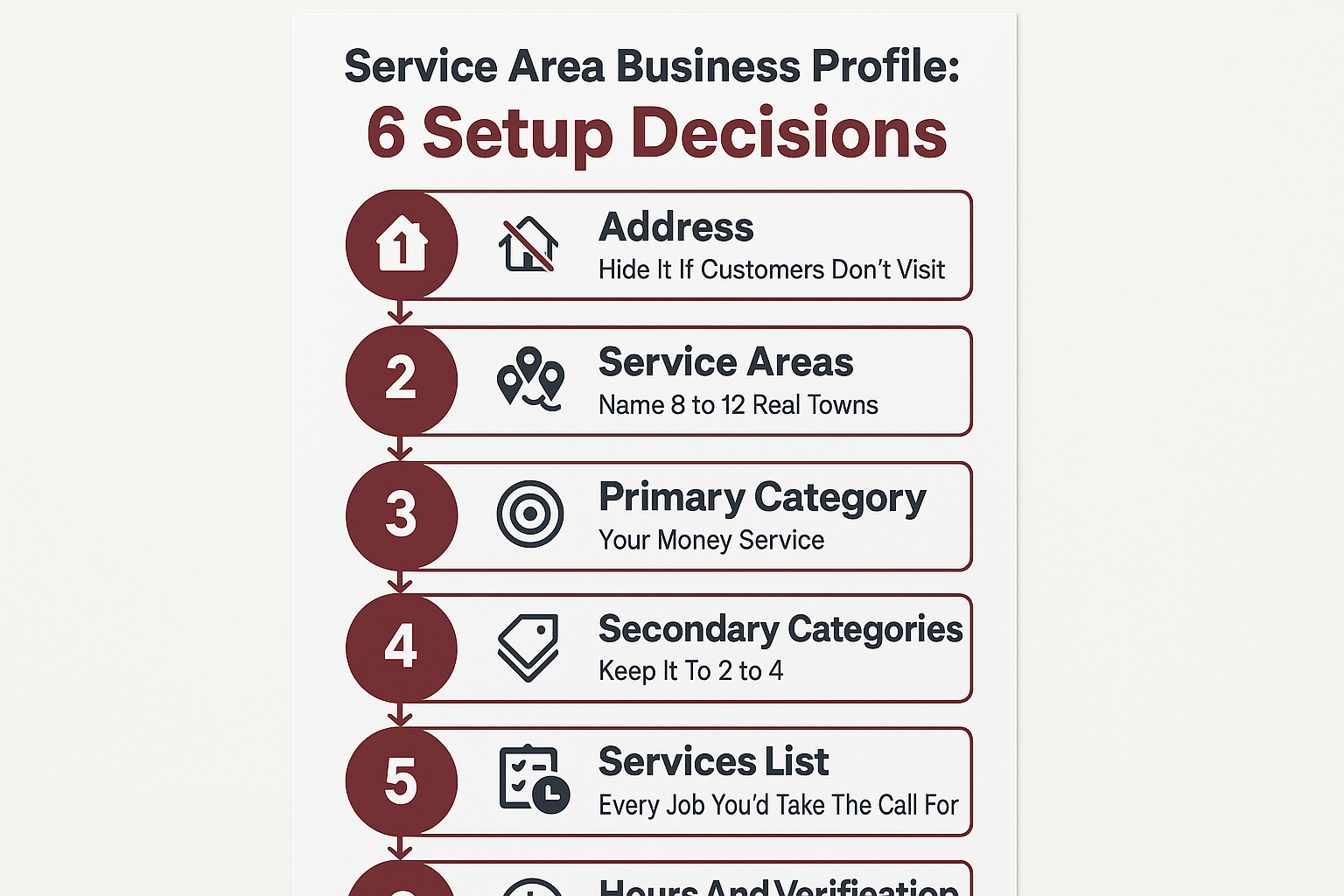
The Six Setup Decisions, In Order
This is the sequence I walk through on a profile audit before touching anything else.
The Q and A Feature Is Gone. Pre-Answers Live Somewhere Else Now.
Google retired the Questions and Answers feature on business profiles in late 2025. A lot of contractors still have old questions sitting there from strangers, half of them wrong, on a feature that no longer works the way it did.
Those answers now belong in three places:
- Profile posts, where you can address a common question directly and keep the profile active
- The services list, where a clear description kills the objection before the call
- FAQ content on your own site, which is what AI tools tend to quote from anyway
Two more fields worth ten minutes of your time. Hours need to reflect reality, including whether you take after-hours emergency calls, because a homeowner with sewage backing up into a tub is filtering on who is open right now. And verification status needs to be confirmed and current, since an unverified profile can lose editing access and stop showing in results until you fix it.
One of our clients put it plainly in a review: “He explains everything in detail.” That is all this is. Boring configuration decisions, made once, correctly.
Frequently Asked Questions About Service Area Business Profiles
Will hiding my address hurt my rankings in Maps?
No, not by itself. Service area businesses show up in the map pack all the time. Google still uses your address on file to judge distance, so hiding it does not extend your reach, but showing a home address does not extend it either.
Can I list a virtual office or a mailbox in Monterey to rank there?
Don’t. Google’s guidelines require a location you actually staff, and profiles get suspended for this. Recovering a suspended profile costs far more time than the fake address was ever worth.
How many service areas should a Salinas contractor list?
Usually 8 to 12 named towns, capped at where crews really drive. List Salinas, Marina, Seaside, Prunedale, Castroville and the like instead of just naming the county.
Can I change my primary category later?
Yes, and you should when your revenue mix shifts. Expect movement in what queries you show up for, so make one change at a time and give it a few weeks before judging it.
Do I still need service pages on my site if my profile is set up right?
Yes. The profile tells Google and AI tools what you do and where. Your site is what backs it up with detail, photos and pricing context. A strong profile pointed at a thin website tends to stall out.
Want a Second Set of Eyes on Your Profile Setup?
If you are running a trade business anywhere from Watsonville down to King City and you have not touched your profile configuration in a few years, it is probably costing you calls you never hear about. Phil Fisk keeps a short list of discovery calls open each month for Central Coast contractors who want to walk through the setup decisions above. Core6 Marketing is at (831) 789-9320 if you would rather just talk it through by phone.