
So, what is the difference between SEO and internet marketing? If you're a contractor in the Monterey Bay Area, you've probably heard these terms used interchangeably. But for your business, they mean very different things.
Think of it this way: SEO, or Search Engine Optimization, is the high-performance engine in your work truck. Internet marketing is the entire truck—the chassis, the wheels, the custom tool racks, and the branded wrap on the side. The engine is essential, but the whole truck is what gets you from a lead in Salinas to a finished job in Carmel-by-the-Sea.
Understanding this difference is key to creating a balanced marketing approach that gives you a real competitive advantage. When you combine a strong SEO foundation with a smart online marketing plan, you boost your visibility and start generating the high-quality leads that grow your business.
Defining SEO and Internet Marketing for Contractors
Whether you're a plumber in Salinas or a roofer serving Santa Cruz County, getting this distinction right is the first step toward spending your marketing budget wisely. Let's be clear: although the terms are often used as synonyms, they are not the same.
A strong SEO foundation makes every single dollar you put into other marketing efforts work harder and go further.
The Two Sides of the Same Coin
At its heart, SEO is all about getting your business to show up on Google when a local homeowner is actively searching for the services you offer. It's the groundwork.
Internet Marketing, on the other hand, is the complete game plan. It covers every online touchpoint you have with customers—from attracting them in the first place to keeping them as loyal clients. It uses a whole toolbox of strategies that go way beyond just search rankings. Our deep dive into SEO for contractors breaks down the specifics for your trade.
To make this crystal clear, let's look at a quick side-by-side comparison.
SEO vs Internet Marketing At a Glance
Here’s a simple table to break down the core differences between these two essential concepts for a local service business like yours.
| Aspect | SEO (Search Engine Optimization) | Internet Marketing (Digital Marketing) |
|---|---|---|
| Primary Goal | Increase visibility in organic (unpaid) search results on engines like Google. | Drive overall business growth through a wide range of online channels. |
| Main Activities | On-page optimization (keywords, content), technical site health, local listings (Google Business Profile), and building backlinks. | Paid advertising (PPC), social media campaigns, email newsletters, content creation, and reputation management. |
| Target Audience | Search engine algorithms and users actively searching for a solution. | A broad audience, including potential customers, past clients, and the local community. |
| Typical Cost | Primarily an investment of time and expertise for long-term, compounding results. | Involves direct ad spend and campaign management costs for more immediate, scalable results. |
Ultimately, SEO makes sure that when a homeowner in Monterey County has a problem, they can find you. Internet marketing is what convinces them to remember you, trust you, and choose you over the competition down the street.
If you want to understand how paid search ads fit into this bigger picture, this guide on the real SEO SEM meaning is a great resource.
What Is Search Engine Optimization (SEO)?
For a home service contractor, Search Engine Optimization (SEO) is designed to improve your ranking among search engines to push your business to the top of the results. It’s about getting found by the right person, in the right place, at the exact moment they need you. This is where local SEO becomes your most powerful tool.
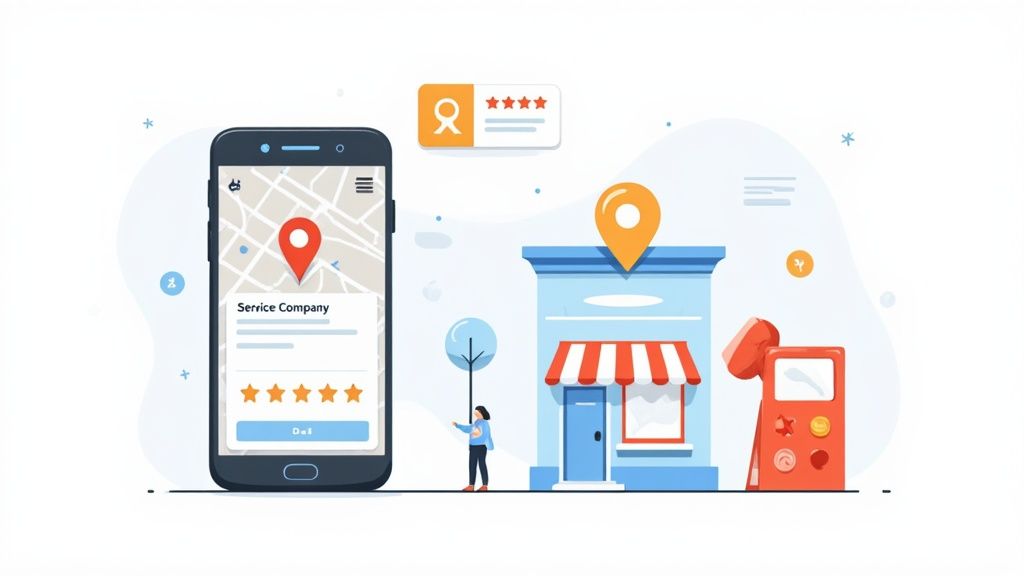
Think about it. A homeowner in Monterey has a burst pipe. They aren’t going to search for "plumber"; they’re frantically typing "emergency plumber near me" or "plumber in Monterey" into their phone. SEO is all the work you do behind the scenes to make sure your business is the one that pops up in those critical, location-specific searches, especially in the Google Maps pack.
The Core Components of Local SEO
A solid local SEO strategy for any contractor in San Benito or Santa Cruz County isn’t a one-and-done fix. It's a combination of ongoing efforts that build your digital visibility.
The goal is to dominate the unpaid search rankings so you can drive qualified, ready-to-buy customers straight to your phone.
Here are the key elements of SEO:
- Keywords: This is about thinking like your customer. Instead of just "HVAC," you need to target the exact phrases they use, like "Gilroy HVAC repair" or "air conditioner service in Hollister."
- Mobile-Friendly Websites and Content: Your customers are searching from their phones. If your website is a pain to use on mobile, you’ve lost that lead in seconds.
- Geographical Targeting: Your website's content must send clear signals to Google about the specific areas you serve, from Pacific Grove all the way to Watsonville.
- Structured Data with Schemas: This is technical backend code that helps Google understand exactly what kind of service you offer and where you're located.
- Building Relationships (Links): This comes down to earning links from other trusted local websites, like the Salinas Valley Chamber of Commerce or a local supplier, which builds your authority.
Why Mobile and Google Are Non-Negotiable
The dominance of Google, especially on mobile, makes this focus a no-brainer. While recent data varies, Google historically handles around 70% of desktop searches and a staggering 94% of mobile searches.
For a local contractor, these numbers mean one thing: if you’re not visible on a Google mobile search and in Google Maps, you’re basically invisible to the vast majority of your potential customers.
Good SEO isn't just about keywords. It's about building a digital presence that search engines recognize as the most relevant, trustworthy answer for a local customer's problem. Our complete guide on local SEO for contractors dives deeper into making your business the top choice in your service area.
What Is Internet Marketing?
If local SEO is the engine, then internet marketing is the entire operation. It's the branded wrap on your truck, the professional estimate you email a client, and the great review they leave you afterward.
Also called "digital marketing," it’s the full range of ways a company reaches potential customers online. While SEO is focused on bringing people to your site from search engines, internet marketing is about engaging them everywhere else.
The Channels That Drive Leads
For a contractor in Watsonville, this is how you get your phone to ring. A solid internet marketing plan uses a mix of channels that all work together to build your reputation and generate leads.
Here are the main channels you'll be working with:
- Paid Online Ads (PPC): This includes running geo-targeted ads on platforms like Google or Facebook. An HVAC tech in Monterey County could run a Google Ad campaign that only shows up for homeowners in specific zip codes searching for "furnace repair." PPC stands for Pay-Per-Click.
- Social Media Marketing: This is where you build your brand's personality and handle customer outreach. Posting before-and-after photos of a kitchen remodel in Carmel-by-the-Sea on Instagram helps you connect directly with the community.
- Email Marketing: This is one of the most cost-effective ways to stay in touch. Sending a monthly newsletter with seasonal tips (like "How to Prepare Your Pipes for Winter in Salinas") keeps you top-of-mind with past customers.
- Content Marketing: This is about creating useful articles and blogs that build your authority. A post titled "3 Signs Your Electrical Panel Needs an Upgrade" positions you as an expert, not just another contractor.
- Affiliate Marketing: While less common for contractors, this can involve building relationships with partners like real estate agents or property managers who refer your business.
Creating a Complete System
The real power kicks in when you combine these efforts. An SEO-optimized blog post attracts a new visitor from a Google search. A few days later, a targeted Facebook ad reminds them of your services. Finally, an email follow-up convinces them to book a consultation.
Each piece of your internet marketing strategy supports the others, creating a system that doesn't just find new leads but also nurtures them until they are ready to hire you. It’s a holistic approach that turns clicks into paying customers.
To see how these channels can be woven into a cohesive strategy, explore our detailed guide on digital marketing for contractors. It provides a clear blueprint for building a marketing machine that dominates your local service area.
Five Primary Differences Between SEO and Internet Marketing
To make smart decisions for your business, you have to understand the five key distinctions between SEO and internet marketing. They work together, but their jobs, costs, and targets are fundamentally different.
Let’s break down the five primary differences between SEO and internet marketing you need to know.

1. Internet Marketing Encompasses SEO Practices
The most important distinction is scope: Internet marketing is the broad plan, and SEO is just one piece of it. SEO can be applied within other marketing efforts, like using keyword strategy in your blog posts (content marketing) or landing pages for paid ads. Don’t treat SEO in isolation; it must work inside the broader digital marketing plan.
2. SEO Targets Search Engines While Internet Marketing Targets People
SEO largely focuses on optimizing your website's content and structure for search engine algorithms—using the right metadata and keywords so Google understands you. Internet marketing is aimed at actual human audiences. Your social media ads and content must speak to people in Santa Cruz, not just algorithms.
3. SEO Is a Tool While Internet Marketing Is a Process
Think of SEO as the techniques and tools used to make your webpages visible—like your optimized website and Google Business Profile. Internet marketing is the ongoing process of making your company visible and attractive via many channels, like running ad campaigns, posting on social media, and tracking leads. Think of SEO as component tactics inside the broader campaign.
4. The Costs of SEO and Digital Marketing Are Different
The financial models are worlds apart. SEO can be relatively low-cost if you handle the writing and keyword integration yourself, but it’s a long-term investment. Digital marketing has a variable cost depending on the scope. A PPC campaign for a plumber in Salinas, for instance, requires direct and continuous ad spend for immediate results.
5. SEO Takes Second Place to Quality Content Marketing
You may be tempted to stuff keywords, but Google’s algorithm now rewards high-quality, well-written content more than old-school tactics. With an estimated 84,000 searches happening on Google every second, your best strategy is content that engages real readers. Your emphasis must be on creating valuable content, with SEO as the tool to help people find it.
You can read more about these incredible Google search statistics to see the scale of the opportunity.
SEO and Internet Marketing Go Hand-in-Hand
Thinking of SEO and internet marketing as separate jobs is a mistake. Real growth happens when you integrate them. A Salinas plumber, for example, gets 70% of his leads via Google Maps—SEO ensures he shows up there. His internet marketing, through social media posts and email newsletters, helps build his brand and retain those customers.
Let’s imagine a roofing contractor in Pacific Grove who needs more leads. They kick things off by writing a helpful blog post, "Choosing the Right Shingles for Coastal Weather." This is where the magic starts.
From a Blog Post to a Lead Machine
First, SEO lays the groundwork. By optimizing that article for keywords like "roofing materials for coastal homes," the post begins to climb the ranks on Google. Soon, homeowners all over Santa Cruz County who are researching a new roof find this article, establishing the contractor as a local expert.
But that's just the start. This is where internet marketing steps in to amplify the results. Instead of just waiting for more search traffic, the contractor actively pushes that content out through different channels.
A great piece of content is an asset. SEO helps people find that asset on their own, while internet marketing proactively delivers it to them where they already are.
This creates a powerful cycle. The initial SEO work brings in organic traffic, and the internet marketing efforts drive even more visitors to the page, sending positive signals back to Google. You can find more details on building this kind of integrated system in our guide to a digital marketing strategy example.
The Amplification Effect in Action
This turns a single piece of content into a multi-channel marketing engine.
- Social Media Promotion: The blog post gets shared on Facebook and Instagram, targeting homeowners in zip codes around Monterey and Carmel-by-the-Sea.
- Email Newsletter: The article is featured in the monthly email to past customers, sparking potential referrals.
- Paid Advertising: The post becomes the landing page for a targeted Google Ads campaign, capturing leads from people actively searching for roofing solutions right now.
For practical applications, understanding how AI chatbots can enhance WordPress site SEO offers a modern example of integrating technology into your marketing efforts. Each part boosts the others, turning a simple blog post into a consistent source of new business.
Building Your Monterey Bay Marketing Plan
For contractors in the Monterey Bay Area—from Hollister to Carmel-by-the-Sea—a smart plan balances the budget between foundational SEO and broader internet marketing. Focus equally on both to boost your visibility and customer base.
The first step is an honest look at your online presence. This simple decision tree shows exactly where any contractor should start.
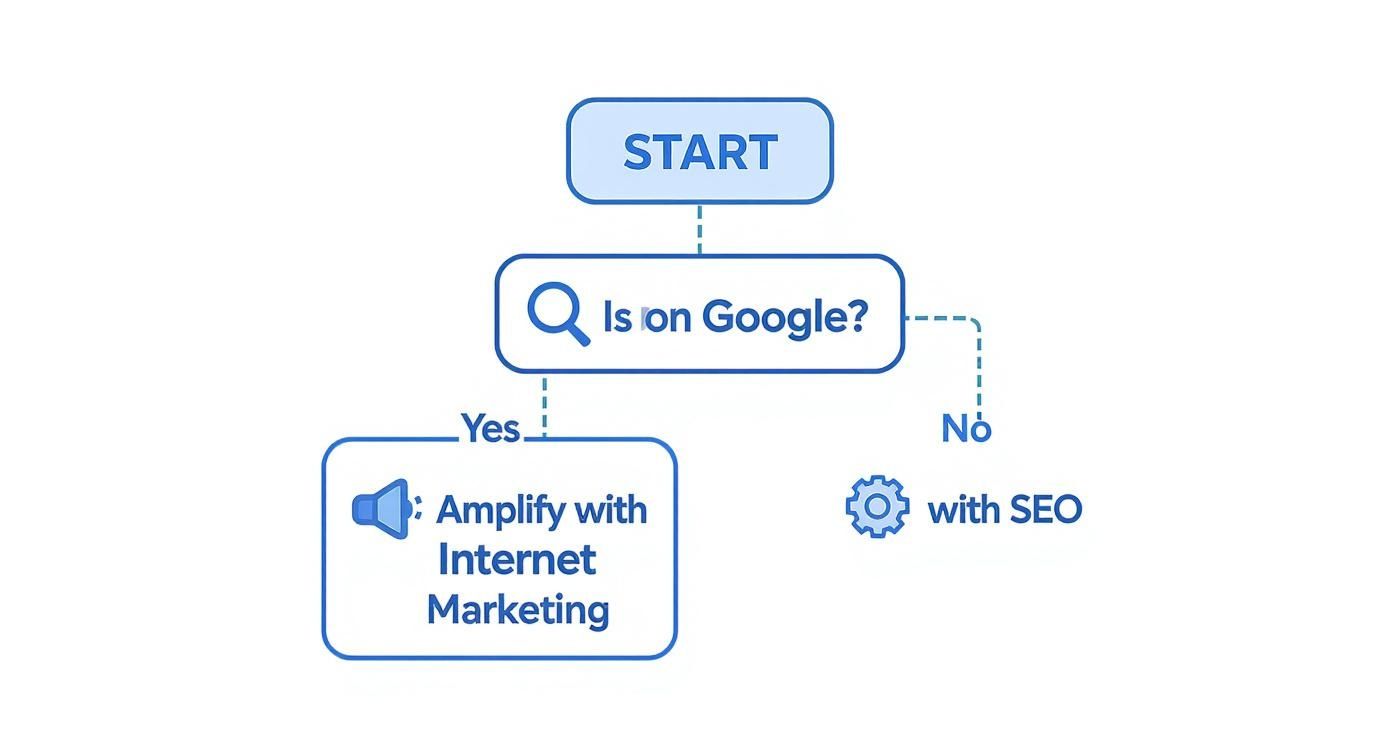
As the graphic shows, if customers can't find you on Google, your top priority must be building your presence with SEO. If you already have some visibility, it’s time to amplify that presence with internet marketing.
Creating a Cohesive Strategy
A truly successful marketing plan doesn’t treat these two areas as separate jobs. This is where modern tools become essential for getting ahead. As more customers use AI assistants to find services, just being visible on Google isn't enough. Our AI Search Sync at Core6 Marketing ensures you're found not just in traditional search, but also on emerging platforms like ChatGPT where your future customers are already asking questions.
Your Next Step to Local Dominance
Building this kind of marketing machine can feel overwhelming, but it doesn't have to be. It starts with a clear-eyed view of where you are now and a practical roadmap for where you want to go. For more information, contact Phil Fisk at Core6 Marketing.
By Phil Fisk, CEO, Core6 Marketing
Phil Fisk leads Core6 Marketing, a digital marketing agency specializing in helping home-service contractors in the Monterey Bay Area increase their visibility and generate measurable ROI. Contact us for a no-contract growth audit for your service business. Core6 Marketing | 1628 N. Main St #263, Salinas, CA 93906 | 831-789-9320 | [email protected] | https://core6.marketing/
Common Questions from Contractors
Which Is More Important for a New Contractor: SEO or Internet Marketing?
For a brand-new contractor just starting out in the Monterey Bay Area, your first move should always be foundational local SEO. Think about it: when a homeowner in Salinas or Santa Cruz has a burst pipe, they're grabbing their phone and searching Google. You have to be findable on Google Maps and in those local search results at that exact moment of need.
Once that foundation is solid and the calls are coming in, you can start layering in broader internet marketing tactics, like social media ads, to build your brand and attract clients across the region.
Can I Do My Own SEO?
You can certainly handle some of the basics yourself, like updating your website's text. But effective local SEO, especially in a competitive market like Monterey County, gets technical fast.
Things like schema markup, managing your business citations across dozens of directories, and building high-quality backlinks are specialized skills. To get top rankings and keep the leads flowing consistently, these tasks are often best left to an agency that lives and breathes this stuff.
How Long Does It Take to See Results From SEO?
SEO is a long game—it's about building sustainable, long-term growth. While you might see some positive movement in a few months, it typically takes a good 6-12 months to achieve the kind of significant, lasting results that really move the needle.
In contrast, paid internet marketing campaigns like Google Ads can start bringing in leads almost immediately. They offer a much faster return but require a constant ad spend to keep working.
What Is a Good Marketing Budget for a Small Contractor?
A solid starting point for most small contractors is to allocate 5-10% of your total revenue to marketing.
This budget should be split strategically. A portion needs to go toward foundational SEO to build your long-term visibility and online authority. The rest can be used for targeted internet marketing campaigns, like local service ads, to drive immediate, high-quality leads while your SEO gains momentum.
Ready to build a marketing plan that actually dominates your local service area? Contact Core6 Marketing for a personalized growth audit. We'll show you how our integrated approach can generate more of the right leads for your business.